


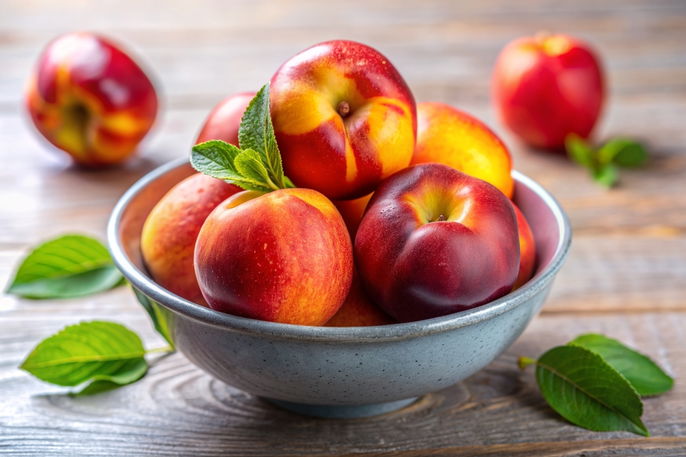
The nectarine is a fruit that comes from a natural genetic mutation of the peach. It has smooth, shiny skin that ranges from pink to reddish in color and a soft, juicy pulp.
Because it is rich in fiber, vitamin C, and carotenoids, the nectarine offers several health benefits, such as helping to control cholesterol, preventing premature aging, maintaining a healthy weight, and relieving constipation.
Nectarines have a naturally sweet flavor and can be eaten fresh or used in recipes for juices, salads, smoothies, jams, and ice cream.
Health benefits
The main health benefits of nectarines include:
1. Controlling cholesterol
Nectarines are high in fiber, which helps absorb fat in the intestines and regulate cholesterol and triglyceride levels in the blood.
2. Preventing premature aging
Nectarines contain beta-carotene, vitamin A, lutein, and zeaxanthin, which have antioxidant properties that protect the skin from damage caused by free radicals to help prevent premature aging.
3. Supporting weight maintenance and weight loss
Nectarines are low in calories and can be included in diets for weight loss or weight maintenance. Their fiber content also promotes fullness, reducing overall food intake.
To help maintain or lose weight, it’s important to include nectarines as one part of a balanced diet combined with regular physical activity.
4. Helping prevent anemia
The vitamin C in nectarines enhances the absorption of iron from food. Iron is an essential mineral for the production of hemoglobin, which helps prevent anemia. Check out other foods for anemia.
5. Relieving constipation
Because they are a good source of fiber, nectarines have a mild laxative effect that helps relieve constipation. Fiber increases stool bulk and stimulates gut motility, making bowel movements easier.
Also recommended: Natural Laxatives: 15 Fruits That Relieve Constipation tuasaude.com/en/natural-laxatives6. Helping lower the risk of cancer
The beta-carotene, lutein, and zeaxanthin in nectarines are natural pigments with antioxidant, photoprotective, and anti-inflammatory properties that may help reduce the risk of developing certain types of cancer.
7. Supporting eye health
Nectarines promote eye health because they contain lutein and zeaxanthin, carotenoids that protect the eyes from damage caused by free radicals, UV rays, and blue light from digital screens.
For this reason, nectarines may help prevent cataracts and age-related macular degeneration, a progressive condition that can lead to vision loss.
8. Preventing diabetes
The fiber in nectarines slows the absorption of carbohydrates from food, which helps regulate blood sugar levels and reduce the risk of insulin resistance and diabetes.
Also recommended: High Fiber Foods: Food List, Benefits and Types of Fiber tuasaude.com/en/high-fiber-foodsNectarine vs peach vs plum
Peaches have velvety skin and a sweet flavor. Nectarines, which result from a genetic mutation of peaches, also have a sweet flavor but with smooth, shiny skin instead.
Plums, on the other hand, have smooth, thin, and glossy skin, with a flavor that can range from sweet to slightly tart or tangy.
Nutrition facts
The following table provides nutritional information for one medium nectarine (142 g):
To get the most benefits from nectarines, it is important to include them as one part of a healthy diet combined with regular physical activity.
How to eat
Nectarines can be eaten with or without the skin, fresh, or used in recipes for juices, smoothies, cakes, salads, fruit salads, jams, or ice cream.
Healthy recipes
Some easy, healthy recipes using nectarines include:
1. Fruit salad
Ingredients:
-
½ apple with peel;
-
1 nectarine with peel;
-
½ a banana;
-
4 grapes;
-
Ground cinnamon to taste.
Directions:
Wash the apple, nectarine, and grapes thoroughly. Chop the apple and nectarine into small cubes and slice the grapes in half. Place them in a bowl. Slice the banana and mix with the other fruits. Add cinnamon, mix well, and refrigerate for 1 hour before serving.
2. Baked nectarines
Ingredients:
-
4 nectarines;
-
Ground cinnamon to taste;
-
Juice and zest of ½ lemon;
-
120 g (½ cup) of yogurt.
Directions:
Preheat the oven to 350°F (180°C). Wash the nectarines, cut them in half, and remove the pits. Place them on a baking tray with the cut side facing up, sprinkle with cinnamon, and bake for 10 minutes.
Remove from the oven and let cool slightly. Mix the lemon juice and zest with the yogurt, then spoon the mixture into the cavities of the nectarines where the pits were. Serve warm.
3. Nectarine salad
Ingredients:
-
4 nectarines;
-
4 cups arugula;
-
8 cherry tomatoes;
-
2 Tbsp olive oil;
-
3 Tbsp lemon juice;
-
Black pepper to taste.
Directions:
Wash the nectarines, tomatoes, and arugula thoroughly. Cut the nectarines in half, remove the pits, and slice them into wedges. Place them in a large dish. Halve the cherry tomatoes and add them along with the arugula leaves.
Prepare a dressing by mixing the lemon juice, olive oil, and black pepper. Drizzle over the salad and serve immediately.