


- A stool test can help detect infections, screen for colorectal cancer and digestive tract bleeding, and evaluate digestion and nutrient absorption.
- Collection and storage requirements vary by test, so it's important to follow the instructions provided with the collection kit or laboratory.
- Different stool tests evaluate different conditions, including infections, inflammatory bowel disease, malabsorption, and digestive tract bleeding.
A stool test may be ordered by a healthcare provider to help identify the cause of intestinal symptoms or digestive problems. It can detect infections, screen for colorectal cancer and digestive tract bleeding, and evaluate digestion and nutrient absorption.
There are several types of stool tests, including an ova and parasite test, a stool culture, and a fecal occult blood test. Depending on the test, the laboratory may request one to three stool samples collected on different days.
A stool sample should generally be taken to the laboratory immediately or refrigerated for delivery the following day. If the sample is placed in a container with a preservative, it may be stored at room temperature when immediate delivery is not possible.
How to collect
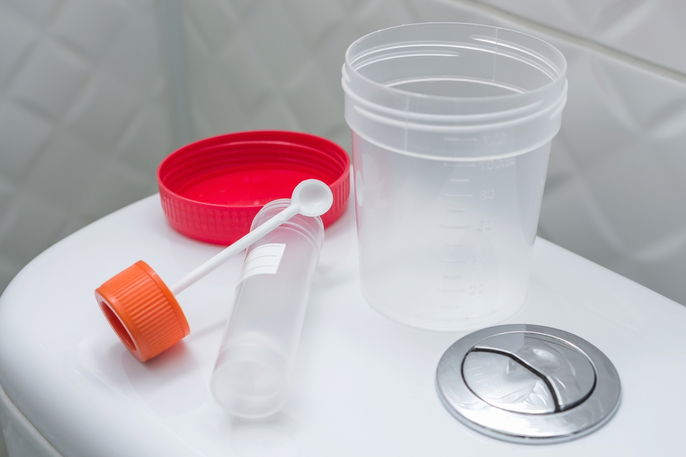
Follow the instructions provided with the collection kit, since collection and storage requirements vary by test. In general, the steps for completing a stool test include:
- Urinate before having a bowel movement to prevent urine from contaminating the stool.
- Collect the stool in a clean, dry collection container, a toilet collection hat, or on plastic wrap placed securely across the toilet bowl.
- Use the scoop or applicator provided with the kit to transfer the required amount of stool into the laboratory-supplied container.
- If worms or other unusual material are visible in the stool, contact the healthcare provider or laboratory for instructions before placing them in a separate container.
- Close the container tightly and label it with the information requested by the laboratory, which may include the full name, another patient identifier, and the collection date and time.
- If the container contains a preservative, add and mix the stool only as directed by the kit instructions.
- Discard the remaining stool in the toilet and flush.
- Place disposable collection materials in a plastic bag, seal the bag, and throw it away, unless the kit provides different disposal instructions.
- Wash your hands thoroughly with soap and water.
Take the sample to the laboratory as soon as possible. Refrigerate or store it at room temperature only if instructed to do so for that specific test.
The collection process is generally similar for adults and children, but the instructions supplied with the test should always be followed.
For a baby or child who wears diapers, line the diaper with clean plastic wrap to prevent the stool from being absorbed. Transfer the required amount of stool from the plastic-lined diaper to the collection container, and do not submit the diaper itself.
A toilet collection hat or securely placed plastic wrap may also make collection easier for people with limited mobility. The stool should be collected without allowing it to touch toilet water.
How much stool is needed?
The amount of stool needed depends on the type of test and the collection container provided by the laboratory.
Usually, only a small stool sample is needed. Use the scoop or applicator provided with the kit and add stool up to the indicated fill line, if present.
The required amount may differ for formed and liquid stool. Follow the instructions provided by the healthcare provider or laboratory, as submitting too much or too little may affect whether the sample can be tested.
Test results
Stool test results depend on the type of test performed.
A normal or negative result means that no abnormalities were found, such as blood, parasites, or disease-causing bacteria.
An abnormal or positive result means that the test detected one or more changes in the stool sample.
How to prepare
Before a stool test, laxatives should generally be avoided unless a doctor provides different instructions.
Depending on the type of test, a healthcare provider may also recommend avoiding certain foods or temporarily stopping medications such as antacids, antidiarrheals, antibiotics, antiparasitic drugs, or nonsteroidal anti-inflammatory drugs (NSAIDs).
Stool collection may need to be postponed during menstruation or when there is active bleeding from the anus, nose, or gums, as blood could contaminate the sample.
For a fecal fat test, the person may be instructed to follow a normal diet containing approximately 100 g of fat per day for 3 days before the test.
Preparing for a fecal occult blood test
Before a fecal occult blood test, red meat may need to be avoided for at least three days before sample collection. Vitamin C supplements may also need to be avoided.
It may also be necessary to avoid radishes, cauliflower, broccoli, beets, beans, peas, lentils, chickpeas, corn, olives, peanuts, spinach, and apples for 48 to 72 hours before the test.
Main tests
The main types of stool tests include:
1. Ova and parasite test
An ova and parasite test can detect parasite cysts or eggs, including those from protozoa and helminths that may cause intestinal infections. Learn more about intestinal worm symptoms and how the condition is treated.
2. Three-sample stool test
A three-sample stool test may be recommended to improve the detection of parasite cysts or eggs. In some cases, multiple stool samples may also be requested for other types of stool testing, depending on the laboratory protocol.
The samples are typically collected from separate bowel movements according to the instructions provided by the healthcare provider or laboratory.
If the laboratory provides collection containers with a preservative, transfer a portion of the stool into each container immediately after the bowel movement and mix it thoroughly with the preservative as directed.
If the laboratory provides containers without a preservative, follow the storage instructions included with the collection kit. Some tests require refrigeration, while others should be delivered to the laboratory as soon as possible.
3. Fecal occult blood test
A fecal occult blood test (FOBT) detects small amounts of blood in the stool that cannot be seen with the naked eye. It may be used to investigate possible bleeding in the digestive tract.
According to the U.S. Preventive Services Task Force (USPSTF), stool-based tests such as FOBT are recommended options for colorectal cancer screening in adults at average risk when performed at the recommended intervals.
The stool sample should be taken to the laboratory as soon as possible. If next-day delivery is permitted for the specific test, it should be stored according to the laboratory’s instructions.
4. Macroscopic stool examination
A macroscopic stool examination involves visually inspecting a stool sample before or alongside other laboratory tests. Whether this step is performed depends on the type of stool test ordered.
The laboratory may evaluate the sample’s consistency and note visible blood, mucus, pus, or unusual material. Visible worms or suspected parasites may also be submitted for identification.
These observations can help the laboratory select the most appropriate part of the sample for testing and may provide useful information for interpreting the results. However, visible changes alone cannot diagnose a specific digestive condition and must be considered together with laboratory findings and the person’s symptoms.
5. Stool culture
A stool culture is ordered to identify disease-causing bacteria in the stool. These bacteria may cause infections and gastroenteritis and can include Salmonella, Shigella, Campylobacter, and certain types of E. coli.
The stool should be placed in an appropriate container and sent to the laboratory within 24 hours. The person should not use laxatives, and the container should be kept refrigerated.
6. Fecal calprotectin test
A fecal calprotectin test measures the level of calprotectin in the stool. Calprotectin is a protein released by certain white blood cells when inflammation is present in the gastrointestinal tract.
According to the American Gastroenterological Association (AGA), fecal calprotectin is a useful noninvasive biomarker for evaluating intestinal inflammation and supporting the assessment and monitoring of inflammatory bowel disease.
It may be recommended when a person has symptoms such as blood in the stool, abdominal cramping, fever, or weight loss.
7. Rotavirus or adenovirus stool test
A rotavirus or adenovirus stool test is used to detect rotavirus or adenovirus in the stool. These viruses are common causes of viral gastroenteritis, particularly in infants and young children.
Stool should be collected and stored according to the instructions provided by the healthcare provider or laboratory, as collection and transport requirements vary by test. Identifying the virus can help confirm the cause of gastroenteritis and guide appropriate patient management.
8. Fecal fat test
A fecal fat test may be recommended to evaluate nutrient malabsorption. Malabsorption may occur with conditions such as celiac disease, malabsorption syndrome, pancreatitis, or cystic fibrosis.
This test, also known as a quantitative fecal fat test, involves collecting all stool produced over a 72-hour period. The samples are then analyzed to determine the amount of fat in the stool.
When a stool test is recommended
A stool test may be ordered as part of a routine evaluation or to investigate the cause of intestinal symptoms or digestive issues.
A healthcare provider may order a stool test to:
-
Detect infections
-
Screen for colorectal cancer and bleeding
-
Evaluate intestinal inflammation
-
Investigate problems with digestion and nutrient absorption
Healthcare providers commonly order stool tests when a person has prolonged diarrhea, blood or mucus in the stool, abdominal pain or cramping, nausea, vomiting, excessive gas, or fever.
Frequently asked questions
Some common questions about stool tests include:
1. Are there different types of stool tests?
Yes. A stool test is a general term for laboratory tests performed on a stool sample.
The specific name depends on what the test is checking for. Examples include a stool culture, fecal calprotectin test, and ova and parasite test.
2. What abbreviations are used for stool tests?
Common abbreviations used for stool tests include O&P, which refers to an ova and parasite test; FOBT, which refers to a fecal occult blood test; and FC, which refers to fecal calprotectin.
3. Do you need to fast before a stool test?
In general, fasting is not required before a stool test.
However, before a fecal occult blood test, certain foods may need to be avoided for approximately three days. Vitamin C and iron supplements may also need to be avoided.
For a fecal fat test, the person may be instructed to follow a normal diet containing approximately 100 g of fat per day for the three days before the test. This allows fat absorption to be evaluated accurately.
4. Can a stool sample be collected the day before?
Yes, a stool sample can usually be collected the day before it is delivered. However, it should ideally be taken to the laboratory as soon as possible after collection.
If the container will not be delivered until the following day, the stool should be stored correctly according to the type of test.
5. Can a stool test be performed during diarrhea?
Yes. A stool test can be performed when a person has diarrhea. In fact, diarrhea is one of the most common reasons a healthcare provider may order a stool test to check for bacterial, viral, or parasitic infections or inflammation in the digestive tract.
Both formed and liquid stool can be collected and analyzed by the laboratory.
Because liquid stool can be more difficult to collect, follow the collection instructions provided with the test kit or by the laboratory to help prevent contamination.
6. How should a stool sample be stored?
A stool sample should be stored according to the instructions provided with the collection kit or by the laboratory. Storage requirements vary depending on the type of test and whether the collection container contains a preservative.
If the sample is collected in a container without a preservative, it should generally be placed in a tightly closed container and refrigerated until it is taken to the laboratory. The sample should be delivered as soon as possible or within the timeframe specified by the laboratory.
If the collection container contains a preservative, add the stool sample and mix it as directed. Depending on the preservative and the test being performed, the sample may be stored at room temperature or refrigerated according to the laboratory's instructions.
7. Can a stool test be performed during menstruation?
A stool test is generally not recommended during menstruation. It is preferable to wait until menstruation has completely ended before collecting the sample.
Menstrual blood may contaminate the stool sample and interfere with the test results.
8. What diseases can a stool test detect?
A stool test may detect conditions such as:
-
Parasitic infections, including ascariasis, giardiasis, amebiasis, and tapeworm infection
-
Bacterial and viral infections, including bacterial gastroenteritis, adenovirus, rotavirus, and H. pylori infection associated with peptic ulcers
-
Cancer and abnormal growths, including colorectal cancer, gastric cancer, and intestinal polyps
-
Inflammatory bowel diseases, including ulcerative colitis and Crohn’s disease
-
Digestive and malabsorption disorders, including celiac disease, cystic fibrosis, and short bowel syndrome
A stool test may also help detect conditions that cause digestive tract bleeding, including hemorrhoids, anal fissures, diverticulitis, and gastrointestinal varices.
