


Rambutan (Nephelium lappaceum L.) is an exotic tropical fruit that offers several health benefits, including supporting immune function, lowering cholesterol, reducing cancer risk, and promoting weight loss.
These benefits come from its low calorie content and high levels of water, fiber, vitamin C, and bioactive compounds, which have antioxidant, satiating, and immune-regulating properties.
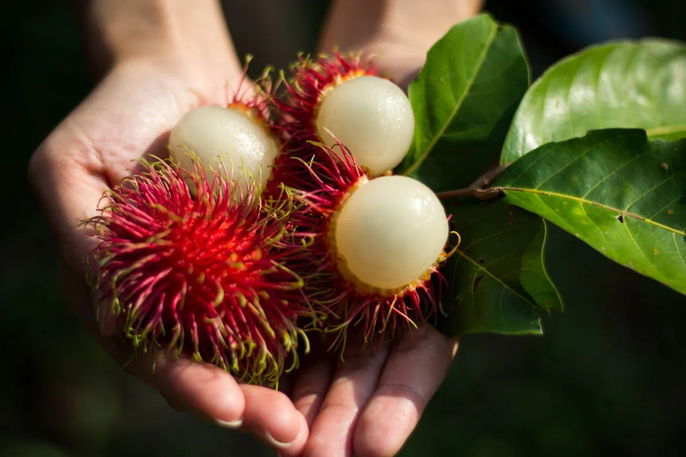
There are two main types of rambutan: yellow and red. The fruit has a juicy, sweet pulp that can be eaten fresh or used in salads and smoothies. Its peel is also used in food, cosmetic, and pharmaceutical products due to its medicinal properties.
Rambutan benefits
The main health benefits of rambutan include:
1. Helping regulate the immune system
Rambutan is rich in vitamin C, a nutrient that helps regulate the immune system by stimulating the proliferation of B and T defense cells in the body.
In addition, extracts from rambutan peel have antimicrobial properties, particularly against bacteria such as Pseudomonas aeruginosa, Vibrio cholerae, Enterococcus faecalis, Staphylococcus aureus, and Staphylococcus epidermidis, which can cause infections in various parts of the body.
2. Promoting weight loss
Rambutan may support weight loss because it is high in fiber, which slows digestion and helps control appetite between meals.
It also has a high water content and is low in calories, making it a great option for weight-loss diets.
To promote healthy weight loss, rambutan should be included as one part of a balanced diet combined with regular physical activity.
3. Reducing the risk of neurodegenerative diseases
Extracts from the pulp and peel of rambutan contain antioxidant compounds that help neutralize free radicals and protect cells from oxidative damage.
These properties may help reduce the risk of developing neurodegenerative diseases linked to cellular oxidation, such as dementia, Alzheimer’s disease, and Parkinson’s disease.
4. Helping regulate blood sugar levels
Rambutan peel extracts inhibit α-glucosidase, an enzyme involved in glucose metabolism, which helps regulate blood sugar levels.
For this reason, rambutan can help prevent insulin resistance and type 2 diabetes when consumed as part of a balanced diet and combined with regular exercise.
5. Helping prevent heart disease
Due to its antioxidant properties, rambutan may help prevent cardiovascular diseases such as atherosclerosis, heart attack, heart failure, and stroke.
This is because rambutan helps lower fat levels in the body, reducing LDL (“bad”) cholesterol and triglycerides in the blood.
6. Reducing the risk of cancer
Rambutan may help lower the risk of cancer because it contains ellagitannins, bioactive compounds with anticancer and antiproliferative properties.
These compounds help inhibit the growth of cancer cells, particularly those linked to oral carcinoma, cervical cancer, and osteosarcoma.
7. Improving intestinal health
Rambutan supports intestinal health thanks to its fiber content, some of which passes through the gut undigested. This increases stool bulk and promotes regular bowel movements, helping to prevent constipation.
8. Improving skin appearance
Rambutan peel extract contains antioxidant compounds that fight free radicals, helping prevent damage to skin cells.
For this reason, rambutan is often used in the cosmetic industry to make creams to improve skin appearance, prevent premature aging, and repair damage caused by ultraviolet (UV) rays from the sun.
9. Helping prevent anemia
Rambutan helps prevent anemia because it is rich in vitamin C, which improves the absorption of dietary iron. Iron is essential for the production of hemoglobin, the protein that transports oxygen in the blood. A lack of iron can lead to anemia.
Nutrition facts
The following table provides nutritional information based on a 100 g serving of rambutan pulp:
To get the most health benefits from rambutan, it should be eaten as part of a healthy, balanced diet along with regular physical activity.
Rambutan vs lychee
Lychee fruit is from the Sapindaceae family. It has a hard, rough skin that is difficult to peel, a juicy pulp, and a sweet, floral flavor.
Rambutan belongs to the same botanical family and has a similar sweet taste and juicy texture. However, it is larger than lychee, has a smaller seed, and its skin is covered with soft, hair-like spikes.
How to eat rambutan
With its sweet flavor and juicy pulp, rambutan can be eaten fresh or used in a variety of dishes such as salads, yogurt, smoothies, desserts, jams, or preserves.
To eat rambutan, peel or cut the fruit in half, remove the pulp, and carefully discard the seed.
There is no specific recommended amount of rambutan to consume in a day, but general dietary guidelines recommend 2 to 3 servings of fruit (about 160 to 240 grams) per day.
Side effects
Because of its high fiber content, excessive rambutan consumption may cause diarrhea, gas, or bloating.
The pulp of rambutan is safe to eat. However, its seeds have narcotic and analgesic properties that can cause drowsiness and, in severe cases, coma or even death.
Roasting the seeds may reduce their narcotic effects, but it is still unclear whether consuming roasted seeds is safe. Therefore, eating rambutan seeds is not recommended.