


- Ileostomy is a surgical opening that redirects stool and gas from the small intestine into an external bag.
- An ileostomy may be temporary or permanent, depending on the condition being treated and whether normal bowel function can be restored.
- People with an ileostomy need regular bag care, skin care, and hydration to help prevent leaks, irritation, infections, and dehydration.
Ileostomy is an opening in the abdominal wall, called a stoma, that is created during surgery. It redirects the small intestine when stool and gas cannot pass through the large intestine.
Instead of passing through the rectum, stool and gas leave the body through the stoma and are collected in an ileostomy bag. This procedure may be temporary or permanent.
An ileostomy is usually performed after digestive system surgery, especially for conditions like intestinal cancer, ulcerative colitis, or Crohn’s disease. Since stool is collected in an external bag attached to the body, proper care is needed to help prevent skin irritation and infections.
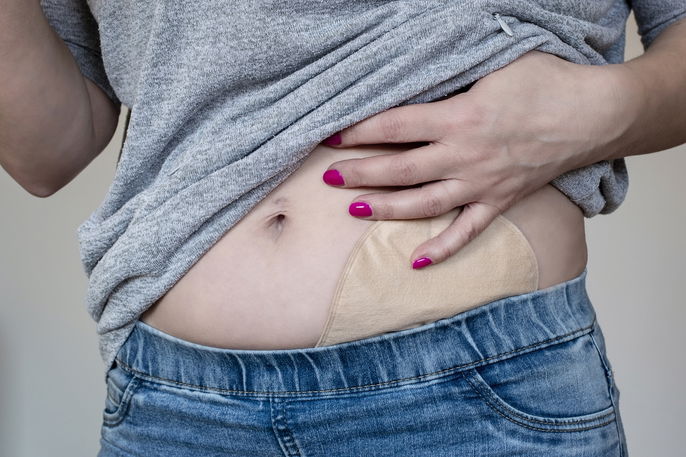
What is an ileostomy?
An ileostomy is used to redirect stool and gas from the small intestine when they cannot pass normally through the large intestine.
According to the American Cancer Society, an ileostomy connects the ileum, the last part of the small intestine, to an opening in the abdomen.
This opening, called a stoma, is usually created on the right side of the abdomen, just below the waistline.
When it is recommended
An ileostomy may be indicated in the following cases:
-
Recovery after surgery on the large intestine or rectum
-
Intestinal or rectal cancer
-
Ulcerative colitis
-
Bowel perforation
Depending on the cause, an ileostomy may be temporary, when the condition is treated and normal intestinal flow can return, or permanent, when it is not possible to restore normal bowel function.
Ileostomy vs colostomy
Both ileostomy and colostomy are openings in the abdomen that connect the intestine directly to the outside of the body, allowing stool to be collected in a bag.
The difference is that, in an ileostomy, the small intestine is connected to the abdomen. In a colostomy, the large intestine is connected directly to the abdominal wall.
What is ileostomy stool like?
In the large intestine, water is absorbed and microorganisms from the gut microbiota act on stool, making it thicker and more solid.
With an ileostomy, stool does not pass through the large intestine. For this reason, ileostomy stool is usually very liquid and acidic, which can cause significant skin irritation.
Do people with an ileostomy have bowel movements?
A person with an ileostomy does not pass stool through the anus. However, some mucus or discharge may come out if the rectum was not removed or closed during surgery.
A person may also feel the urge to have a bowel movement. However, stool does not come out through the anus and is instead collected in the ileostomy bag.
Main types
The main types of ileostomy are:
1. Temporary ileostomy
A temporary ileostomy may be recommended when the intestine needs to rest due to intestinal problems or after intestinal surgery.
This type of ileostomy may remain in place for 3 to 6 months and then be reversed. This means the small intestine is surgically reconnected to the large intestine, restoring normal bowel function and allowing stool to pass through the anus.
2. Permanent ileostomy
A permanent ileostomy is usually performed when the doctor removes all or part of the diseased large intestine and/or rectum.
In this type of ileostomy, the opening, or stoma, is not closed. It remains in place for life, and stool is collected in the ileostomy bag.
The type of ileostomy should be determined by a colorectal surgeon based on the condition being treated, the person’s age, and overall health
Ileostomy bag
An ileostomy bag is a special pouch used to collect stool through the opening of the small intestine in the abdomen.
This collection bag attaches to the skin, so specific care measures are needed to prevent skin irritation or infections.
Care measures
Some care measures for an ileostomy bag include:
-
Changing the ileostomy bag regularly, which may mean changing it several times a day
-
Emptying the stool from the bag into the toilet
-
Throwing the bag away after use to prevent infections, placing it in a plastic bag before putting it in the trash
-
Following the disinfection instructions if the ileostomy bag is reusable
-
Cleaning the stoma and the skin around it with a soft cloth dampened with warm water
-
Drying the skin well before applying a new bag so it sticks properly
-
Using a bag with an opening that fits the stoma correctly to prevent stool from leaking onto the skin, which can cause irritation or infection
In addition, avoid applying products such as moisturizers, creams, or oils to the skin, as they can make it harder for the bag to stick.
When should the bag be changed?
It is recommended to change the ileostomy bag when it is ⅓ to ⅔ full to prevent stool from leaking onto the skin and causing irritation or infections.
Skin care tips
The main care tips for the skin around the ileostomy include:
-
Cleaning the skin around the stoma whenever the bag is changed and drying it well before applying a new bag
-
Avoiding pulling the bag off abruptly to prevent skin irritation
-
Changing the ileostomy bag if there is any skin discomfort
-
Cutting the opening of the ileostomy bag to the correct size to prevent stool from coming into direct contact with the skin
-
Avoiding products that contain alcohol on the skin, as they can make the skin very dry
In some cases, the doctor may also recommend using a protective spray or ointment to help prevent skin irritation caused by ileostomy output.
Diet recommendations
Diet also plays an important role:
1. What to eat
An ileostomy diet varies from person to person based on individual food tolerance. It is recommended to introduce new foods one at a time in small amounts to observe how they affect stool output and consistency.
If stool is very liquid, foods such as white rice, cooked pasta, bananas, vegetable soups, and mashed vegetables like potatoes, carrots, zucchini, or squash may be recommended.
People with an ileostomy have a higher risk of dehydration because stool is more liquid and the body does not reabsorb as much water when stool does not pass through the large intestine. According to the United Ostomy Associations of America, people with an ileostomy may need to drink about 8 to 10 glasses of fluid per day.
2. What to avoid
During the first 4 to 6 weeks after ileostomy surgery, it is recommended to avoid foods that may block the stoma, such as mushrooms, nuts and whole seeds, coconut, dried fruit, grapes, cherries, or whole grain rice or bread.
In addition, whenever possible and according to individual tolerance, it is best to avoid very fatty or spicy foods, caffeinated drinks such as coffee, black tea, or green tea, alcoholic beverages, soda, and sparkling water.
Some foods may help reduce stool odor. These may include carrots, chayote, spinach, plain yogurt, whole curd without whey, apple peel tea, or mint tea.
When to see a doctor
It is important to see a doctor if you develop any of the following symptoms:
-
Irritation, blisters, redness, fluid, or itching on the skin around the stoma
-
Intestinal cramps lasting more than 2 or 3 hours
-
Nausea and vomiting
-
Bleeding from the stoma or blood in the bag
-
Watery stool for more than 5 to 6 hours
A doctor should also be consulted if there is any change in the size or appearance of the stoma.
