


- Eye pain, blurred vision, light sensitivity, or sores near the eye require prompt ophthalmologic evaluation.
- A painful, blistering rash that appears in a band on one side of the face or body may be shingles and should be evaluated early.
- Genital sores with severe pain, burning with urination, or flu-like symptoms may indicate a first herpes outbreak.
Herpes symptoms may include fluid-filled blisters, sores, or ulcers that usually appear on or around the genitals, mouth, lips, or eyes. These lesions can cause pain, burning, itching, or tingling, although herpes can affect other areas of the body as well.
Herpes simplex infections are caused by herpes simplex virus type 1 (HSV-1) or type 2 (HSV-2) and can cause genital herpes, cold sores, and ocular herpes. Before blisters or sores appear, a person may notice tingling, itching, discomfort, or pain in the affected area.
Herpes treatment should be guided by a healthcare provider and started as early as recommended, particularly when symptoms of an outbreak first appear. Antiviral treatment can help shorten outbreaks and reduce the severity of symptoms.
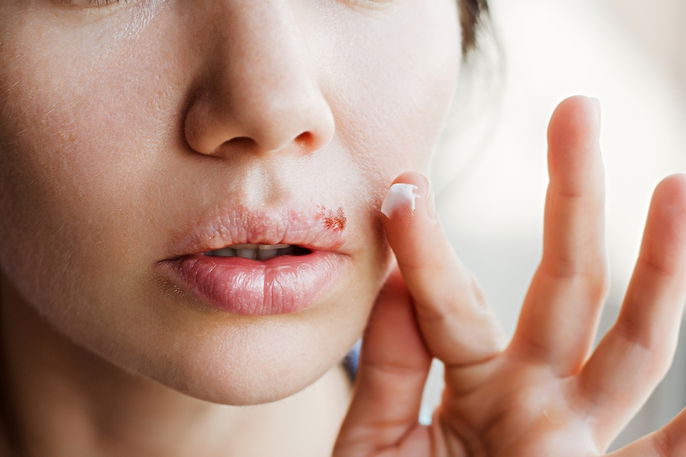
Main symptoms
The main symptoms of genital herpes, cold sores, ocular herpes, and shingles are:
1. Genital herpes
Genital herpes symptoms usually develop within several days after contact with the virus during unprotected sexual activity. The main symptoms include:
-
Small clusters of fluid-filled blisters that can break open and form sores
-
Ulcers with red borders
-
Itching, pain, and discomfort in the genital area
-
Burning with urination if the blisters are near the urethra
-
Burning and pain during bowel movements if the blisters are near the anus
-
Swollen lymph nodes in the groin
-
General discomfort and possible loss of appetite
Genital herpes sores can appear on the penis, vulva, vagina, perianal area, anus, urethra, or cervix. During the first outbreak, flu-like symptoms may also occur, including fever, chills, headache, muscle aches, and fatigue.
How to treat: Genital herpes is usually treated with oral antiviral medications such as acyclovir, valacyclovir, or famciclovir. According to the Centers for Disease Control and Prevention (CDC), daily suppressive antiviral therapy can reduce genital herpes outbreaks and may also lower the risk of transmitting HSV-2 to a sexual partner.
Genital herpes sores can also be painful. In these cases, a healthcare provider may recommend pain-relieving treatment to help reduce discomfort.
2. Cold sores
The main symptoms of cold sores include:
-
A sore on the lip
-
Tender blisters
-
Pain around the mouth
-
Itching and redness at the corner of the lip
Cold sores, also known as oral herpes or herpes labialis, may develop when the immune system of a person who carries the herpes simplex virus is weakened by illness or stress, for example.
Before a cold sore appears, a person may notice itching, tingling, and redness on the lips. Starting treatment at this stage may help limit the development of additional blisters and sores.
How to treat: Cold sores usually heal within about 7 to 10 days. Treatment may include a topical antiviral cream or an oral antiviral medication, such as acyclovir or valacyclovir, as directed by a healthcare provider.
3. Ocular herpes
Ocular herpes symptoms can occur in one or both eyes and may resemble conjunctivitis. The main symptoms include:
-
Increased sensitivity to light
-
Itchy eyes
-
Eye redness and irritation
-
Blisters or ulcers near the eye
-
Blurred vision
-
A sore or ulcer on the cornea
As soon as these symptoms develop, it is important to see an ophthalmologist so treatment can be started as quickly as possible. Early treatment can help prevent serious complications, including vision loss.
How to treat: Ocular herpes is generally treated with antiviral medication prescribed by an ophthalmologist. Depending on the type and location of the infection, treatment may include oral antiviral tablets or antiviral eye medications such as trifluridine ophthalmic solution or ganciclovir ophthalmic gel.
Antibiotic eye drops may also be prescribed if there is a secondary bacterial infection or a significant risk of one.
4. Shingles
Shingles symptoms can develop anywhere on the body, but the rash most commonly appears in a band on one side of the torso or face. The main symptoms include:
- Clusters of red, fluid-filled blisters that usually appear on only one side of the body
- Blisters that can break open and later form scabs
- Burning, tingling, or pins-and-needles sensations in the affected area
- Pain that can range from mild to severe
- Itching, redness, and swelling of the skin
- Small sores that may form as the blisters dry out
Several days before the rash appears, shingles may cause general discomfort, fever, headache, sensitivity to light, or increased skin sensitivity.
Shingles is caused by the varicella-zoster virus, the same virus that causes chickenpox. After chickenpox, the virus remains inactive in the body and can reactivate years later, particularly when the immune system is weakened.
How to treat: Shingles is treated with antiviral medications such as acyclovir, valacyclovir, or famciclovir, as prescribed by a healthcare provider. According to the CDC, these antiviral medications can speed the healing of shingles lesions and reduce the severity of acute pain.
Other medications or treatments may also be recommended to help relieve pain and skin discomfort.
For severe pain or postherpetic neuralgia, a healthcare provider may also prescribe certain anticonvulsants or antidepressants.
Confirming a diagnosis
To confirm a herpes diagnosis, it is best to see a healthcare provider, such as a primary care provider or dermatologist, who can evaluate the symptoms and determine whether testing is needed.
For genital herpes, you can see a primary care provider, gynecologist, dermatologist, or healthcare professional at an STI or sexual health clinic.
For ocular herpes, consultation with an ophthalmologist is recommended.
