


- Chickenpox causes an itchy, blistering rash and remains contagious until all blisters have dried and formed scabs.
- Babies, pregnant people, adults, and people with weakened immune systems have a higher risk of complications.
- Vaccination can prevent chickenpox or make the illness milder if infection occurs.
Chickenpox is an infection caused by the varicella-zoster virus. It can cause red spots, fluid-filled blisters, severe itching, scabs, and fever.
Symptoms usually develop 10 to 21 days after exposure to someone with chickenpox. Although the infection most commonly affects children, people of any age can develop it.
Anyone with symptoms of chickenpox should contact a primary care provider or pediatrician for an evaluation. Treatment may include oral medications, topical products, and self-care measures to relieve symptoms and help reduce the risk of complications.
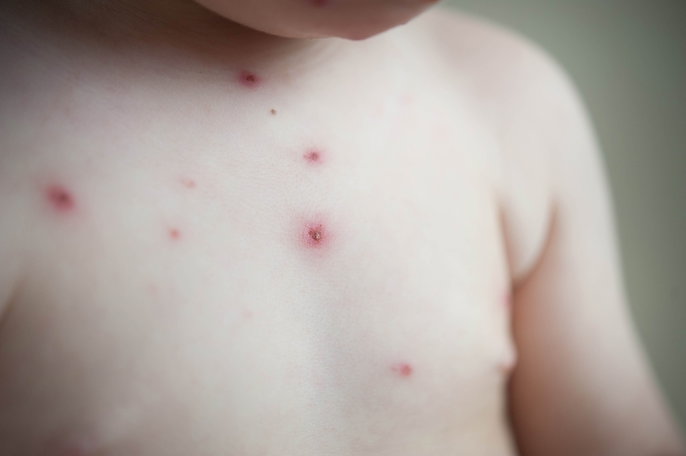
Chickenpox symptoms
The main symptoms of chickenpox include:
-
Fever
-
An itchy, red skin rash that may develop into fluid-filled blisters
-
Skin sores and scabs
-
Fatigue
-
General malaise
Chickenpox blisters usually appear first on the chest, back, and face. They may then spread to other parts of the body, including the mouth, eyelids, and genital area.
It generally takes about one week for the blisters to dry out and form scabs.
Symptoms in babies
Chickenpox symptoms in babies are generally the same as those listed above. However, a cough and runny nose may also appear before the blisters develop.
Symptoms may be mild in some babies, causing only a few skin sores. However, babies, particularly those younger than 1 year old, have a higher risk of developing complications from chickenpox.
Chickenpox during pregnancy
When chickenpox develops during the first 20 weeks of pregnancy, it may rarely cause congenital varicella syndrome in the baby.
This syndrome may cause low birth weight, skin scarring, and incomplete development or underdevelopment of the arms, legs, fingers, or toes.
A baby with congenital varicella syndrome may also have eye or central nervous system abnormalities. The effects vary depending on when the mother developed chickenpox during pregnancy.
Confirming a diagnosis
Chickenpox is usually diagnosed by a pediatrician or primary care provider based on the characteristic rash, symptoms, and medical history. In some cases, a dermatologist or infectious disease specialist may also be involved in the diagnosis.
When the diagnosis is uncertain or laboratory confirmation is needed, the healthcare provider may order testing. According to the CDC, polymerase chain reaction (PCR) is the preferred laboratory test because it can rapidly and accurately detect varicella-zoster virus DNA.
In some situations, blood tests such as an enzyme-linked immunosorbent assay (ELISA) may also be used to detect antibodies to the virus.
How it spreads
Chickenpox spreads through the air when an infected person coughs or sneezes. It can also spread through direct contact with the fluid from chickenpox blisters.
A person with chickenpox can spread the virus beginning about 1 to 2 days before the rash appears. They remain contagious until all of the blisters have dried and formed scabs.
During this time, they should avoid close contact with others and stay away from public places to reduce the risk of spreading the infection.
Treatment options
Chickenpox treatment may include oral medications, topical products such as creams or lotions, and self-care measures.
1. Oral medications
A healthcare provider may recommend acetaminophen to reduce fever. Aspirin should not be given to children with chickenpox, and ibuprofen should generally be avoided unless recommended by a healthcare provider. Oral antihistamines may also be recommended to help relieve itching.
People at increased risk of moderate to severe chickenpox may be treated with oral acyclovir or valacyclovir. Intravenous acyclovir is generally used for severe chickenpox or for people with weakened immune systems.
Antiviral treatment is most effective when started as early as possible, preferably within the first 24 hours after the rash appears.
People exposed to chickenpox who lack evidence of immunity, are at high risk of severe illness, and cannot receive the chickenpox vaccine may receive varicella-zoster immune globulin, known as VariZIG. It is given by intramuscular injection as soon as possible after exposure and may be administered within 10 days.
2. Ointments, creams, or lotions
Calamine lotion may be recommended to soothe the skin and relieve itching.
Blisters that become increasingly red, swollen, painful, or drain pus should be evaluated by a healthcare provider, as these may be signs of a bacterial skin infection. Topical antiseptics are not routinely recommended for chickenpox blisters unless specifically advised by a healthcare professional.
3. Self-care measures
Self-care measures include drinking plenty of fluids, taking cool baths, keeping the fingernails short and clean, and washing the hands regularly. If sores develop inside the mouth, avoiding salty or acidic foods may help reduce discomfort.
These measures may help relieve itching and reduce skin damage and the risk of bacterial infection caused by scratching the blisters.
People with chickenpox should avoid close contact with others while they are contagious, especially pregnant people, newborns, and people with weakened immune systems. Chickenpox remains contagious until all of the blisters have dried and formed scabs.
Chickenpox vaccine
The chickenpox vaccine protects against the varicella-zoster virus and can prevent chickenpox or reduce the severity of the infection. Vaccinated people who develop chickenpox usually have a milder illness.
According to the CDC, children in the United States should routinely receive the first dose of the chickenpox vaccine between 12 and 15 months of age and the second dose between 4 and 6 years of age.
Possible complications
Possible complications of chickenpox include bacterial skin and soft-tissue infections, pneumonia, and encephalitis.
Complications are more likely to occur in babies, adolescents, adults, pregnant people, and people with weakened immune systems. This includes people with HIV, cancer, or an organ transplant, as well as those receiving chemotherapy or taking immunosuppressive medications or high-dose systemic corticosteroids.
Can someone who had chickenpox develop shingles?
Yes. A person who has had chickenpox can later develop shingles because the varicella-zoster virus remains dormant in the body's nerve cells after the original infection.
Shingles is more likely to develop as people get older or when the immune system becomes weakened due to certain medical conditions or medications. Stress may also contribute in some cases.
