


Granola is a food that offers several health benefits, including relieving constipation, supporting muscle gain, preventing cardiovascular disease, and promoting weight loss.
These benefits are linked to the ingredients typically found in granola, such as oats, nuts, dried fruits, and seeds. These are good sources of carbohydrates, fiber, vitamins, and minerals, which have properties that help increase satiety, regulate cholesterol, and support healthy digestion.
Granola can be sweet or savory and is available in most grocery stores or health food shops. It can also be made at home and added to meals like yogurt, fruit, salads, or açaí bowls.
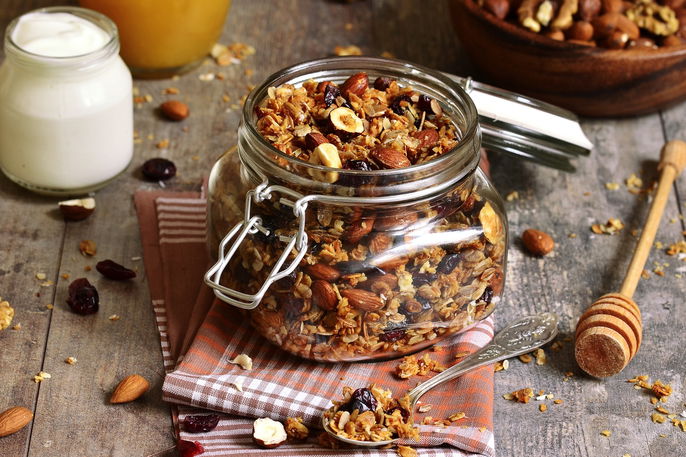
Healthy granola recipes
Granola can be consumed in a variety of ways:
1. Savory granola
Ingredients:
-
1 cup rolled oats
-
1/2 cup raw cashews
-
1/2 cup whole almonds
-
1/2 cup quinoa flakes
-
1/4 cup pumpkin seeds
-
2 tablespoons sesame seeds
-
2 sprigs fresh rosemary
-
2 tablespoons olive oil
-
1 teaspoon salt
-
Black pepper to taste
Instructions:
Preheat the oven to 350°F (180°C). In a bowl, mix all ingredients thoroughly and transfer to a baking sheet lined with parchment paper. Bake for 15 minutes or until crispy. Let cool and store in an airtight container at room temperature.
2. Low-carb granola
Ingredients:
-
1/2 cup Brazil nuts
-
1/2 cup cashews
-
1 cup rolled oats
-
1/2 cup puffed amaranth or amaranth flakes
-
2 tablespoons sunflower seeds
-
1 tablespoon sesame seeds
-
1 tablespoon coconut oil
-
2 tablespoons honey
-
1 teaspoon cinnamon
-
2 tablespoons raisins
Instructions:
Preheat the oven to 350°F (180°C). Chop or crush the nuts and combine with the oats, amaranth, sunflower seeds, and sesame seeds in a bowl. Add coconut oil, honey, and cinnamon, and mix well. Spread the mixture on a baking sheet lined with parchment paper and bake for 10 minutes. Remove from oven, stir in the raisins, and let cool before serving.
3. Gluten-free granola
Ingredients:
-
1/3 cup quinoa flakes
-
1 cup unsweetened corn flakes
-
1/2 cup unsweetened puffed rice
-
2 tablespoons coconut oil
-
3 tablespoons agave syrup or honey
-
2 tablespoons ground flaxseed
-
2 tablespoons shredded coconut
-
1 tablespoon crushed Brazil nuts
-
1 tablespoon chopped walnuts
-
3 tablespoons chopped dried fruit (raisins, prunes, apricots)
Instructions:
Preheat the oven to 350°F (180°C). In a bowl, mix melted coconut oil and agave syrup or honey and set aside. In another bowl, combine the puffed rice and corn flakes, then add the oil and syrup mixture and stir well. Spread on a parchment-lined baking sheet and bake for 10 minutes.
In a separate bowl, mix the flaxseed, coconut, nuts, and dried fruit. Remove the baking sheet from the oven, mix in the dry ingredients, and bake for another 8 minutes. Let cool and store in a glass airtight container.
Health benefits
The benefits of granola include:
1. Relieves constipation
Granola is high in fiber, which helps increase stool bulk and stimulate bowel movements. This makes it easier to pass stool and helps relieve constipation.
2. Supports weight loss
Granola helps promote weight loss because its fiber content increases the feeling of fullness, helping to control hunger and reduce overall food intake. For best results, it should be part of a healthy diet and paired with regular physical activity.
3. Prevents cardiovascular disease
The fiber in granola helps reduce the absorption of fat and cholesterol in the intestines, which lowers cholesterol levels in the body over time. This contributes to the prevention of cardiovascular conditions like atherosclerosis, heart attack, and angina.
Oats in granola are also rich in beta-glucans, a type of soluble fiber that reduces fat absorption in the intestine and helps lower LDL ("bad") cholesterol levels in the blood.
4. Supports skin and hair health
Granola contains ingredients like coconut, nuts, and chia seeds that are rich in selenium, zinc, vitamin A, and omega-3s. These nutrients help protect skin cells from free radical damage and support healthy hair growth.
5. Helps regulate blood sugar
Granola—especially unsweetened versions without added honey or sugar—can help regulate blood sugar levels, making it a good option for people with insulin resistance or diabetes.
6. Promotes muscle gain
Granola is a good source of energy-rich carbohydrates. When combined with regular physical activity, it supports muscle growth. Check-out other muscle-building foods you can add to your diet.
What is granola used for?
In addition to providing energy, granola contains fiber, vitamins, healthy fats, and minerals like calcium, phosphorus, selenium, zinc, and magnesium. These nutrients support satiety, digestion, antioxidant activity, and cholesterol regulation.
Does granola cause weight gain?
Granola does not cause weight gain when consumed in moderation as part of a healthy diet and active lifestyle. However, eating too much granola—especially if it contains high-calorie ingredients—and following an unbalanced diet can contribute to weight gain.
Nutritional information
The table below shows the nutritional values for a 30 g serving of homemade granola made with oats, corn flakes, flaxseed, cashews, Brazil nuts, dried apricot, raisins, and cinnamon:
Nutritional values can vary depending on the types and quantities of ingredients used in the recipe.
To get the most out of granola, it should be included as part of a balanced and varied diet alongside regular exercise.
How to make granola
To make granola at home, combine your chosen ingredients in a bowl and mix well. Spread the mixture on a baking sheet lined with parchment paper and bake at 350°F (180°C) for 15 to 60 minutes.
Granola can be made with seeds like chia, flaxseed, sesame, sunflower, or pumpkin; dried fruits; herbs; and nuts like peanuts, walnuts, cashews, almonds, or hazelnuts. It can also include rice flakes, oats, spices, and vegetable oils like olive oil or coconut oil.
How to eat granola
Granola is usually eaten for breakfast or as a snack. The typical recommended serving is 20 to 30 g per day, added to milk, yogurt, or fruit. However, the exact amount depends on individual nutritional needs.
Common questions about granola
1. Can people with diabetes eat granola?
Yes, people with diabetes can eat granola. It's rich in fiber, vitamins, and minerals. However, they should choose sugar-free or unsweetened versions. Homemade granola is often the best option. The amount consumed should be guided by a doctor or dietitian.
2. Can granola cause diarrhea?
Granola is high in fiber and can cause diarrhea if consumed in large quantities. Check-out foods for diarrhea that you can eat to help slow down bowel movements and add bulk to loose stools.
3. Can pregnant women eat granola?
Yes, pregnant women can eat granola. It's a good source of fiber, vitamins, and minerals that support both maternal health and fetal development.
4. Can granola cause constipation?
Granola may cause constipation if eaten in large amounts without sufficient water intake.
5. Can granola be eaten every day?
Yes, people without fiber-related health issues or ingredient allergies can eat granola daily in meals like breakfast, snacks, or supper.