


Child BMI (body mass index) is a tool used by healthcare professionals to assess whether a child’s weight is within the healthy range for their age and sex.
Calculating and evaluating BMI is important for monitoring growth and identifying possible changes in nutritional status. The World Health Organization (WHO) and the US Centers for Disease Control and Prevention (CDC) recommend using BMI in health checkups to identify early changes.
If the BMI is outside the healthy range, the doctor should identify the cause and guide treatment. No changes in diet or physical activity should be made without professional supervision to avoid health risks.
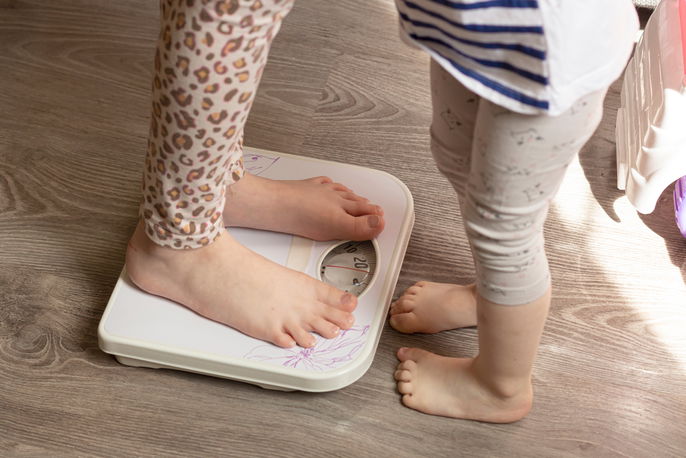
BMI calculator by age for children
To calculate BMI for children and teens, use the BMI calculator by age below:
The weight range is calculated using WHO Child Growth Standards, based on BMI for age. The range is divided into percentiles (P), with the minimum weight at the 10th percentile (P10), the ideal weight at the 50th percentile (P50), and the maximum weight at the 85th percentile (P85).
This calculator is not suitable for children under 5 years old. In these cases, it is recommended to follow the growth charts above or the pediatrician’s guidance. Learn more about the ideal weight for girls and boys under 5 years old.
If there are any questions about a child’s BMI, it is recommended to consult a pediatrician or nutritionist for a proper evaluation.
How to calculate BMI in children
BMI in children is calculated using the same formula as in adults, dividing weight in kilograms by height in meters squared. However, to interpret the result, it is necessary to compare it with percentile charts that take into account the child’s age and sex.
The steps to calculate BMI in children are:
-
Measure weight in kilograms.
-
Measure height in meters.
-
Apply the BMI formula: weight (kg) ÷ height (m²).
-
Compare the result with a BMI-for-age-and-sex chart to determine the percentile range.
A BMI between the 10th and 85th percentiles is considered healthy. Values below the 10th percentile may indicate underweight, while values above the 85th percentile may indicate overweight or obesity.
BMI is an easy-to-use tool, but it does not replace a full nutritional assessment, as it does not distinguish between muscle mass and fat or show fat distribution in the body.
BMI chart for boys and girls
The chart below shows the healthy BMI range (between P10 and P85) for girls and boys aged 5 to 18 years:
This chart is based on WHO growth charts for boys and girls aged 5 to 18 years. Values may vary slightly from month to month and should always be interpreted using the full official charts.
If the result is outside the healthy range, it is recommended to consult a pediatrician or nutritionist for a complete evaluation.
What to do if BMI is high or low
Main steps when BMI is outside the healthy range include:
-
Professional evaluation: A doctor or nutritionist should carry out a full assessment to determine if there is a health risk.
-
Identifying causes: Possible factors include genetic conditions, eating habits, physical activity levels, or hormonal issues.
-
Personalized intervention: Strategies depend on the cause and may include dietary changes, encouraging physical activity, medical follow-up, and, if needed, psychological support.
Changing weight without professional guidance can lead to nutritional deficiencies or growth problems. Support from a specialized healthcare team is essential.
The main risks of altered BMI in childhood include a higher chance of developing diseases such as type 2 diabetes and obesity, growth and development changes, and emotional or self-esteem problems related to body image.
When to see a doctor
It is recommended to consult a doctor or nutritionist when:
-
BMI remains persistently outside the healthy range.
-
There are rapid changes in weight or height without an apparent cause.
-
There is a family history of obesity, diabetes, or eating disorders.
-
Symptoms occur, such as fatigue, difficulty performing physical activities, or changes in eating behavior.
Early diagnosis and proper treatment help prevent short- and long-term complications.