


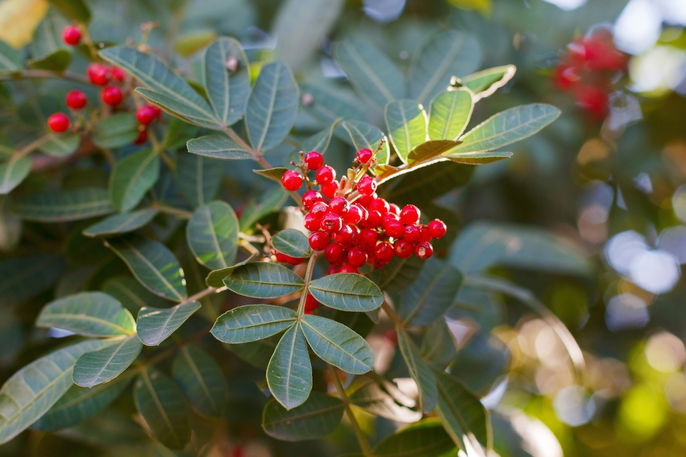
The Brazilian pepper tree, scientifically known as Schinus terebinthifolius, is a medicinal plant rich in flavonoids, saponins, terpenes, and tannins. These compounds give it anti-inflammatory, restorative, diuretic, healing, and antimicrobial properties. Because of these effects, it is widely used in traditional medicine as a natural remedy for fever, arthritis, and urinary tract infections.
The part of the Brazilian pepper tree most commonly used is the bark, which is typically prepared as a tea. However, it can also be used for sitz baths, compresses, or ointments.
This plant is available in herbal shops, natural food stores, compounding pharmacies, farmers' markets, and some local fairs. It should always be used under the guidance of a healthcare provider or licensed herbal medicine specialist.
Indications for use
The Brazilian pepper tree has astringent, restorative, diuretic, anti-inflammatory, antimicrobial, and healing properties. It’s commonly used to help treat:
-
Ulcers;
-
Arthritis;
-
Bronchitis;
-
Diarrhea;
-
Tendon strain;
-
Urinary tract infections, such as cystitis in women;
-
Vaginal inflammation or infection.
It may also help reduce fever and coughing.
Although it has many health benefits, this medicinal plant should not replace medical treatment and must only be used under the supervision of a healthcare provider or herbal medicine specialist.
How to use
The Brazilian pepper tree can be used as a tea, in sitz baths, compresses, or ointments, all prepared with the bark of the plant.
1. Brazilian pepper tree tea
Brazilian pepper tree tea can help relieve digestive problems such as heartburn, diarrhea, gastritis, and ulcers. It may also help in the treatment of urinary tract infections.
Ingredients:
-
100 g of powdered Brazilian pepper tree bark;
-
1 L (about 4 cups) of boiling water.
Preparation:
Add the powdered bark to the boiling water, stir, and let it steep. Drink about 3 Tbsp per day.
This tea can also be used for compresses to relieve arthritis pain. Soak a clean, dry cloth or gauze in the tea and apply it to the affected area.
2. Brazilian pepper tree bath
A bath made with Brazilian pepper tree bark may help relieve skin conditions or joint inflammation because of its anti-inflammatory, wound-healing, and antimicrobial effects.
Ingredients:
-
20 g of Brazilian pepper tree bark;
-
1 L of water.
Preparation:
Place the ingredients in a pot and boil for about 5 minutes. Strain, allow it to cool slightly, and pour the infusion over the affected area of the skin while gently massaging. Avoid contact with the eyes.
3. Sitz bath with Brazilian pepper tree
A sitz bath with Brazilian pepper tree bark may help fight bacteria and fungi and is commonly used in traditional medicine to support the treatment of vaginal infections and discharge.
Ingredients:
-
10 g of Brazilian pepper tree bark;
-
1.5 L of water.
Preparation:
Boil the water and add the bark. Let it boil for 10 minutes, then remove from the heat, strain, and pour the mixture into a basin. When the infusion has cooled slightly, sit in the basin and cleanse the genital area gently (do not wash inside the vagina).
This sitz bath can be done three times a day for three days.
Side effects
Possible side effects of using the Brazilian pepper tree include diarrhea, stomach pain, dermatitis, and irritation in the mouth or throat, especially when used in larger amounts than recommended.
Its use should always be guided by a healthcare provider or licensed herbal medicine specialist.
Contraindications for use
The Brazilian pepper tree should not be used by children or people who are pregnant or breastfeeding. It should also be avoided by people with very sensitive skin.
In addition, people with gastrointestinal problems should only use the Brazilian pepper tree under medical supervision, since the plant has laxative effects that can increase the risk of side effects such as diarrhea or stomach pain.
It is important to emphasize that the Brazilian pepper tree should only be used when prescribed by a healthcare provider or licensed herbal medicine specialist.
Of note: Brazilian pepper tree (Schinus terebinthifolia) is classified as an invasive species in many U.S. states (including Florida and Texas) and is illegal to grow, sell, or transport in those areas due to environmental laws. Always check local regulations before any use.