


One of the health benefits of blackberries is that they contains antioxidant and antimicrobial compounds, which means they can be used as a compliment to the medical treatment of gingivitis, sore throat and mouth ulcers.
This fruit is also rich in flavonoids, anthocyanins and phenolic acids, which can help to treat and prevent illnesses like diabetes, heart attacks, atherosclerosis and high blood pressure.
Blackberries can be purchased at grocery sores, farmer’s markets and natural health products. They can be eaten naturally in their fruit form, or used in desserts and juices. Blackberry leaves, roots and stalks can be used to prepare teas and even wound dressings.
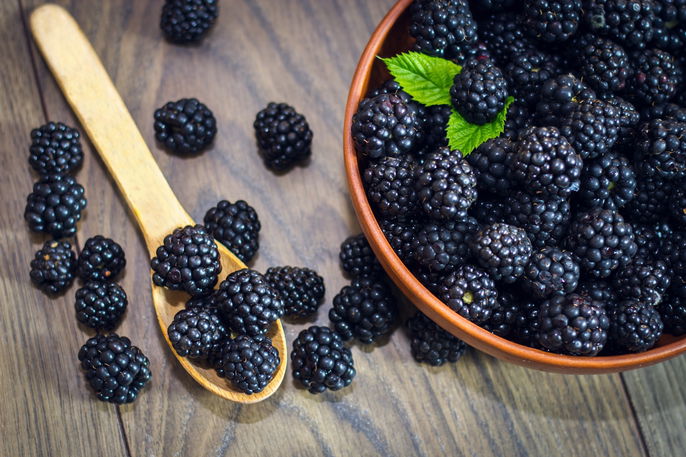
Health benefits
Health benefits that blackberries can offer include:
1. Promoting weight loss
Blackberries have a low glycemic index due to their high quantities of fiber. They help to keep you full and decrease your hunger between meals, which may facilitate weight loss.
Check out other fruits for weight loss that are low calorie options to include in your daily diet.
2. Preventing cardiovascular disease
Blackberry fruits and leaves are rich in phenolic acids, carotenoids, flavonoids, anthocyanins, and bioactive compounds with anti-inflammatory properties. All of these compounds can contribute to blood vessel health and prevent illnesses like heart attacks and high blood pressure.
Blackberries also contain antioxidants that prevent the oxidation of fat cells, which help to regulate "bad" cholesterol (LDL) and triglyceride levels. This can help to prevent atherosclerosis and stroke.
3. Preventing diabetes
Because it has high fiber content, blackberries have a low glycemic index. This helps to regulate blood sugar levels, which can prevent insulin resistance and diabetes. Check out other high fiber fruits that you can include in your daily diet.
Also recommended: 15 Fruits For Diabetics (& Fruit to Avoid) tuasaude.com/en/best-fruits-for-diabetics4. Preventing early aging
Blackberries are rich in flavonoids, anthocyanins and phenolic acids, as well as bioactive compounds. These components work to fight free radicals associated with skin damage, flaccidity and wrinkles.
5. Helping with diarrhea recovery
Blackberries, particularly their leaves, contain flavonoids, tannins, saponins, glycosides and bioactive compounds with anti-inflammatory and astringent properties. These can relieve intestinal inflammation, which can help speed-up diarrhea recovery. Learn more about about other foods to eat when recovering from diarrhea and how to prepare them.
6. Combating constipation
Blackberries have high quantities of soluble and insoluble fibers, which add bulk to the stool and improve natural intestinal movements. These factors can contribute to the prevention and treatment of constipation. See other naturally laxative foods that you can eat to manage constipation.
7. Preventing cancer
Blackberry fruit and leaves may help to prevent cancer as they contain antioxidants that fight the free radicals that damage healthy cells. Blackberries can help to prevent the growth and spread of cancerous cells.
Furthermore, blackberries can help to strengthen the immune system, reducing the risk of certain types of cancer (like esophageal, uterine and breast cancer).
8. Helping to treat infections
Blackberries contain high levels of compounds with antimicrobial and anti-inflammatory properties, like anthocyanins, tannins and carotenoids. These help to strengthen the immune system and help to prevent and treat infections like sore throats, canker sores and gingivitis.
9. Maintaining optimal eye health
Blackberries help to maintain eye health as they are a natural source of lutein and zeaxanthin. These are carotenoids that help protect the eyes from UV rays and blue light emitted from cellphones and computers. This type of damaging light can lead to macular degeneration, an eye disease that leads to progressive vision loss.
10. Preventing osteoporosis
Blackberries help to prevent osteoporosis due to their great quantities of vitamin K. This vitamin is necessary for the absorption of calcium into the bones, and is essential for optimal bone health in adults.
Nutritional information
The following table outlines the nutritional information in 100 g of blackberries (which equals to about 25 small blackberries):
To obtain all health benefits of blackberries, it is important to incorporate them into a healthy active lifestyle with a varied diet.
How to eat
Blackberries can be consumed in their natural state, added to yogurts and oatmeal, or used to make desserts, sauces and juices.
Blackberry leaves, roots and stalks can be used to make teas to relieve menopause symptoms, combat diarrhea and treat infections like gingivitis or strep throat.
Blackberries can also be used to make a poultice or dressing to promote wound healing. Simply place six fresh blackberry leaves in a pot with 2 tablespoons of water. Heat the mixture over low heat until the water evaporates and the leaves become mushy. Crush the leaves in the pot, let them cool and smear them on gauze. Place the gauze over the wound and, once it has cooled, repeat the procedure, changing the gauze, twice.
Healthy blackberry recipes
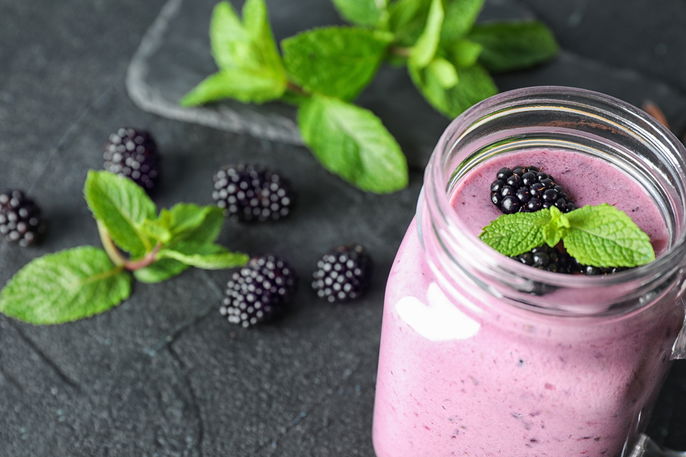
Some healthy and delicious recipes that use blackberries are:
1. Blackberry tea
Ingredients:
- 1 teaspoon of fresh blackberry leaves
- 200 ml of water
How to prepare:
Boil the water in a pot. After removing the heat, add the blackberry leaves, cover and infuse for 5 minutes. Strain and drink immediately. You can drink up to 3 cups of this tea per day.
2. Frozen berry smoothie
Ingredients:
- ½ a cup of frozen blackberries
- ½ a cup of frozen strawberries
- 1 small frozen bananas
- 1 serving (170 g) of natural yogurt (170g)
How to prepare:
Dice the bananas and place all the ingredients in a blender. Mix until you reach your desired consistency.
3. Blackberry juice
Ingredients:
- 100 g of fresh blackberries
- 1 cup of water
- Ice cubes (optional)
How to prepare:
Wash the blackberries and place in a blender. Add the water and ice, and mix for 3 minutes. Then transfer to a cup and serve.
4. Blackberry and raspberry jelly
Ingredients:
- 500 g of fresh blackberries
- 500 g of fresh raspberries
- 500 g of coconut sugars
How to prepare:
Wash and dry the berries. Place all the ingredients in a pot and cook on low heat, making sure to keep stirring until the sugar melts. Once it starts to bubble, lower the heat and allow to cook for 1 hour, stirring occasionally. When the mixture reaches a jelly consistency, remove from heat. Allow to cool and then transfer to a container with a lid. This jelly can be stored in a refrigerator.
Side effects and contraindications
Blackberries should be consumed in moderation, as large quantities can lead to diarrhea.
Blackberry leaves, roots or stalks should not be consumed by children, and should be avoided during pregnancy or when breastfeeding.
Additionally, people with hypoglycemia or who are taking medication to manage diabetes or high blood pressure should consult a doctor before drinking blackberry tea.