


Zumba is a physical activity that combines aerobic exercise with Latin dance moves. This workout offers many benefits, such as strengthening the heart, boosting mood, helping with depression, and toning muscles.
Zumba classes also support weight loss by speeding up metabolism and burning a high number of calories. For the best results, it is important to practice regularly and pair the activity with a balanced, healthy diet.
Also recommended: Weight Loss Diet: Lose Weight Safely (Food List + Free Meal Plan!) tuasaude.com/en/weight-loss-dietZumba is suitable for people of all ages. However, a medical check-up is recommended before starting classes to assess overall health and heart condition.
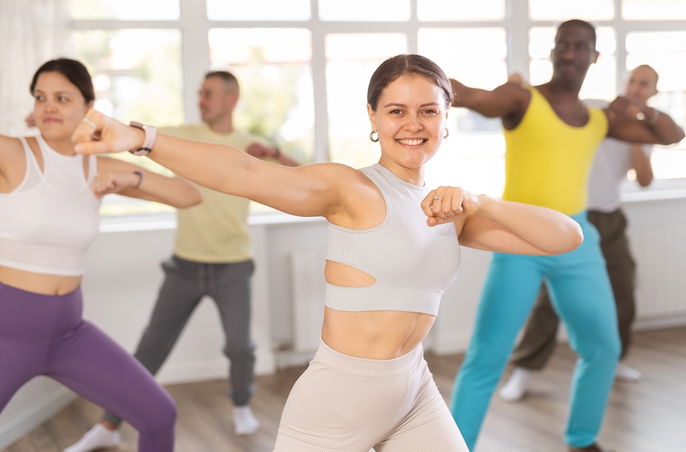
Health benefits
Zumba provides several health benefits, including:
- Speeds up metabolism and supports weight loss, as the aerobic exercises increase heart rate and fat burning.
- Reduces fluid retention by improving blood circulation.
- Strengthens the heart, since the fast pace of the workout boosts cardiovascular endurance.
- Relieves stress, thanks to group classes with lively music that trigger the release of endorphins and boost energy.
- Improves coordination, as rhythmic movements help develop body control and motor skills.
- Enhances balance, with routines that include jumps, spins, and frequent changes in steps.
- Increases flexibility, since classes also involve stretching exercises.
- Tones muscles, working the arms, core, back, glutes, and legs.
- Improves mood and helps reduce symptoms of depression, as it increases serotonin, the hormone linked to well-being.
- Boosts energy and motivation, because the release of endorphins and the upbeat atmosphere of the class increase vitality.
- Helps reduce chronic pain, as endorphins released during classes promote a sense of well-being.
In addition, zumba classes can help lower blood pressure and improve memory, cognition, and sleep quality.
To enjoy these benefits, it is recommended to practice zumba regularly, maintain a healthy and balanced diet, and include other exercises that help strengthen and develop muscles.
Does zumba help with weight loss?
Zumba can support weight loss by increasing fat burning and speeding up metabolism. This helps the body shed excess weight. However, zumba is most effective for weight loss when combined with a balanced, healthy, and low-calorie diet.
For even better results, it is recommended to include strength training exercises, such as weight training, along with zumba in a regular fitness routine.
Also recommended: 10 Exercises to Lose Belly Fat (plus Aerobic Workouts & Tips) tuasaude.com/en/exercises-to-lose-belly-fatCalories burned
Zumba classes can burn lots of calories, but the amount of calories burned varies depending on the intensity and duration of the class:
This chart shows how many calories are burned during a zumba class for people weighing between 110 and 155 pounds. The number of calories burned can vary based on weight, as well as age, gender, body composition, and the intensity of the class.
Calorie burn calculator
Enter your details in the calculator below to find out how many calories are burned during exercise:
The calorie burn calculator is a guidance tool only. It does not provide a diagnosis and is not a substitute for advice from a fitness professional, nutritionist, or endocrinologist.
Is zumba a cardio workout?
Zumba is considered both a cardio and aerobic exercise. It works the cardiovascular and respiratory systems, increases overall body endurance, tones muscles, and improves flexibility.
Zumba classes alternate between fast and slower songs, with movements that range from high to moderate intensity, offering an interval-style workout.
Both kids and adults can take zumba classes. However, because the pace can be intense, it is best to start slowly and gradually increase the intensity. If muscle or joint pain, nausea, or severe shortness of breath occurs, the class should be stopped.
Who should avoid zumba
There are generally no strict restrictions for zumba classes. However, people with joint problems or serious heart conditions should avoid this activity.
This is because zumba increases the workload on the heart and blood vessels, and the constant movements can worsen joint injuries.
For this reason, it is recommended to consult a cardiologist or general practitioner before starting zumba classes to assess overall health and cardiovascular condition.