


- Seek medical care if elbow pain is severe, follows a fall or sudden injury, or comes with visible deformity, significant swelling, or inability to move the arm normally.
- Get evaluated if symptoms spread into the hand with persistent numbness, tingling, or weakness, or if grip strength drops enough to affect daily tasks.
- Schedule a clinician visit if pain lasts more than a few weeks despite rest and cold compresses, or if symptoms keep getting worse with routine activities like lifting, typing, or opening doors.
Tennis elbow, or lateral epicondylitis, is an inflammatory condition that affects the tendons, which connect muscle to bone. It causes pain on the outside of the elbow that can spread into the forearm or wrist.
The pain from this condition can make it harder to move the elbow normally and may limit everyday activities.
Tennis elbow is more common in people who play tennis, but it can also affect anyone who does repetitive arm and wrist motions. Diagnosis is typically made by an orthopedic surgeon or primary care provider, who can recommend treatment options such as anti-inflammatory medicines and physical therapy.
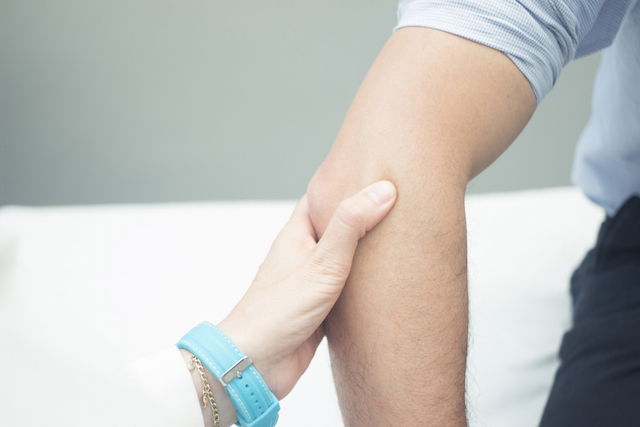
Common symptoms
The main symptoms of lateral epicondylitis (tennis elbow) are:
-
Pain or a burning sensation on the outer side of the elbow, especially when the palm is facing up;
-
Numbness or tingling in the forearm, wrists, or hands, especially when the elbow is bent;
-
Pain that worsens with a handshake, opening a door, combing hair, writing, or typing;
-
Stiffness or pain when straightening the arm;
-
Swelling and tenderness to touch around the elbow joint;
-
Pain that radiates to the forearm or wrist;
-
Reduced strength in the arm or wrist, which can make it difficult to hold a glass of water.
When elbow pain occurs on the inner side, it may indicate medial epicondylitis (Golfer's elbow), with pain often worsening during activities like weight training.
Symptoms of lateral epicondylitis can start gradually over weeks or months and should be evaluated by a primary care provider or orthopedic surgeon.
Confirming a diagnosis
Lateral epicondylitis is diagnosed by an orthopedist based on symptoms, a review of activities that may be contributing to the problem, and a physical exam. According to the American Academy of Orthopaedic Surgeons (AAOS), pain during wrist extension against resistance on physical exam supports the diagnosis of tennis elbow.
The doctor may also order imaging tests such as an X-ray, ultrasound, MRI, or CT scan to evaluate tendon and muscle damage.
Main causes
Although it is commonly called tennis elbow, lateral epicondylitis is not limited to people who play tennis. It most often develops from repetitive movements that strain the tendons in the area, leading to irritation and inflammation.
Factors that may contribute to lateral epicondylitis include:
-
Work activities involving repetitive motions or lifting, such as carpentry, plumbing, gardening, painting, typing, drawing, or frequent writing;
-
Age (more common between 30 and 50 years, but it can happen at any age);
-
Sports that involve equipment and forceful arm or wrist motion, such as tennis, baseball, squash, or shot put.
It may also occur with activities that involve repeated elbow bending, such as playing the violin.
Treatment options
Treatment for lateral epicondylitis is guided by an orthopedic surgeon and focuses on reducing tendon inflammation and relieving symptoms. Recovery can take weeks to months, depending on symptom severity and how consistently treatment is followed.
Treatment for lateral epicondylitis may include:
1. Rest
Resting the elbow can reduce pain and help the tendon recover. This usually means avoiding or reducing activities that require repeated elbow bending for several weeks to months, as advised by a healthcare provider.
2. Cold compresses
Cold compresses can help decrease pain and swelling by reducing local inflammation.
To use a cold compress, place ice in an ice pack or use a chilled gel pack. Wrap it in a clean, dry towel, then apply it to the affected area for 15 to 20 minutes, two to three times a day.
3. Medications
A healthcare provider may recommend oral anti-inflammatory medicines such as ibuprofen or naproxen to reduce inflammation in the tendons and relieve pain.
These medicines are usually used for a short time because they can cause side effects such as stomach pain, nausea, increased gas, gastritis, dizziness, vertigo, or increased blood pressure.
Topical anti-inflammatory medicines applied to the elbow may also be recommended, such as diclofenac gel.
4. Physical therapy
Physical therapy may be recommended and should be guided by a physical therapist. Treatment commonly includes stretching and strengthening exercises for the forearm muscles to improve flexibility, support elbow stability, reduce pain, and improve movement.
The plan is individualized and may include modalities such as TENS, ultrasound, laser, shockwave therapy, or iontophoresis, depending on the physical therapist’s assessment.
A physical therapist may also recommend kinesiology tape to help limit stress on the irritated tissues and support symptom improvement.
Cross-friction massage techniques may also be used to help support recovery.
5. Corticosteroid injection
A doctor may recommend a corticosteroid injection into the painful area around the elbow when other treatments have not provided enough relief.
These injections are often referred to as “cortisone shots” and typically involve a corticosteroid medication.
6. Platelet-rich plasma
Platelet-rich plasma (PRP) is prepared from a person’s own blood and processed in a lab, then injected by a doctor into the elbow area.
This injection is done in a medical setting and is intended to support tendon healing and reduce pain from lateral epicondylitis.
7. Surgery
Surgery for lateral epicondylitis may be recommended when symptoms persist and other treatment options have not been effective, even after 6 to 12 months of treatment.
The procedure typically involves removing damaged tissue from the elbow. Physical therapy is usually recommended after surgery to support recovery.