


Teas for coughs made with eucalyptus, cinnamon or thyme help to thin out secretions to make them easier to cough up. Teas can help to fight respiratory infections and improve coughing, which makes them a great home remedy to treat symptoms of the cold or flu.
You should also increase your fluid intake to thin out secretions, which makes them easier to cough up. Increasing your fluids also helps to soothe the throat to relieve coughing. Other measures to keep in mind when treating a cough are to avoid windy currents and avoid walking barefoot.
It is important to see your doctor for assessment and treatment before other symptoms appear or worsen, like fever or difficulty breathing.
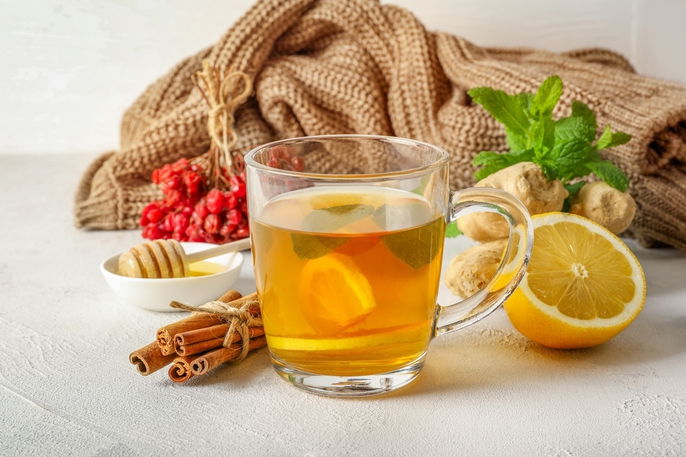
1. Cinnamon, clove and lemon tea
Cinnamon and cloves contain bactericide properties that help to eliminate the microorganisms responsible for the cough. Cinnamon also contains several health benefits that can help with other issues. The lemon and honey contain expectorant properties as well as vitamin C, which help to strengthen the immune system.
This cinnamon, clove and lemon tea recipe has soothing properties that help to decrease coughing. It can be prepared as follows:
Ingredients
- 1 cinnamon stick
- 3 cloves
- 1 slice of lemon
- 1/2 liter of water (about 2 cups)
Directions
Place all the ingredients in a small pot and allow to boil for 5 minutes. Then allow it to cool, strain, and sweeten with 1 tablespoon of honey. You can drink 2 cups of this tea per day.
This home remedy is contraindicated for babies under 1 year, as they are unable to consume honey. You can offer a honey-free version of this tea instead.
2. Eucalyptus tea
Eucalyptus tea can be used to treat respiratory illnesses in general, as it contains properties that prevent the spread of microorganisms that cause infections. It also helps to liquefy the mucus and is additionally an anti-inflammatory, which all help to relieve cough.
Ingredients
- 1 tablespoon of eucalyptus leaves
- 1 liter (4 cups) of boiling water
Directions
Place the eucalyptus leaves in the previously boiled water, then allow to soak for 10 minutes. Then strain, and drink 3 cups of this tea per day.
Eucalyptus tea should not be taken by pregnant or breastfeeding women, or by children under the age of 2. Check out other ways to treat coughs in babies. It is also contraindicated for people with hypertension or by people who take anti-epiletics or sedatives, as eucalyptus can interfere with the efficacy of these medications.
3. Thyme tea
Thyme contains properties that help to combat bacteria, thin out secretions and help to expel them. This tea is a great option for treating respiratory illnesses, like bronchitis and coughing, as it helps to relax muscles in the respiratory airway.
Ingredients
- 1 tablespoon of thyme
- 1 liter (4 cups) of boiling water
Directions
Place the thyme into the previously boiled water and allow to soak for about 10 minutes. Then strain and drink up to 3 times per day.
You should consult your doctor if you are pregnant or breastfeeding before taking this tea. While it is not totally contraindicated in these situations, it can cause effects to both the mother and baby if not taken under medical supervision. If you are pregnant, learn about other ways you can get rid of a cough.
4. Carrot syrup for child cough
A great home remedy to stop coughing in children is pure carrot juice, as it contains a high concentration of vitamin C. It is also a natural antitussive and can help reduce coughing flare-ups that can persist for weeks after a flu
Ingredients
- 1 medium-sized carrot
- Honey
Directions
Grate the carrot and place in a cup in the fridge. After a few minutes, the grated carrot will start to release a juice, which should be strained, then mixed with equal parts of honey. This juice can be taken several times per day.
Honey should only be used by children over 1 year of age, as honey may cause botulism in young babies. You can offer just the carrot juice instead.
5. Nettle tea for allergy coughs
Allergy coughs are characterized by a persistent cough that is not associated with cold and flu. In this case, nettle tea is a great option to treat the cough.
Nettle is a medicinal plant that contains anti-histaminic properties, which help to fight many allergies. It is effective for the treatment of dry coughs, and can be used by children. You should consult the child’s pediatrician before starting treatment with tea, however, to confirm whether the cough is allergy-related. Read more about other common causes of a persistent cough.
Ingredients
- 1 tablespoon of dry nettle leaves
- 200 ml (1 cup) of water
Directions
Place the water in a pot and allow to boil. When it starts to bubble, remove from heat and add the nettle. Then cover the pot and allow to cool. Strain and drink up to 2 cups per day. You can sweeten with a teaspoon of honey.
This home remedy should be avoided by breastfeeding or pregnant women, and by people with a history of heart failure, kidney failure, hypertension or diabetes.
6. Mint tea
Mint tea can be used to relieve coughs, sore throats and colds. The essential oils that it naturally contains, like menthol, have anti-inflammatory and analgesic properties help to reduce inflammation in the throat and respiratory tract.
In addition, mint has naturally antibacterial and immunological properties, which can help to speed-up the recovery from a cold or flu.
Ingredients
- 6 chopped mint leaves
- 150 ml of boiling water
Directions
Add the mint to the boiling water and let it steep for 5 to 10 minutes. Strain, sweeten to taste and drink 3 to 4 cups a day.
Mint should not be consumed by people with severe avid reflux or a hiatal hernia. It should also not be consumed by children under 5 years old.
Mint may not be completely safe for pregnant women, especially when consumed in large quantities, as it can cause uterine contractions or bleeding. It should be avoid in breastfeeding women, as there is not enough information about the safety of mint in this population.
7. Ginger tea with echinacea
Ginger tea with echinacea has anti-inflammatory, expectorant and anti-allergenic properties, helping to relieve coughs.
Ingredients
- 1 cm of ginger;
- 1 teaspoon of echinacea leaves;
- 1 cup of water.
Directions
Place the echinacea leaves and ginger in the boiling water, cover and let them steep. Then strain and drink immediately.
Ginger is not recommended for anyone with a history of gallbladder stones or hemorrhagic conditions, or who use anticoagulant medications.
During pregnancy, echinacea should not be added to this tea. The maximum consumption of ginger should be 1 gram per day, for a maximum period of 3 consecutive days.
8. Licorice tea
Licorice tea helps to reduce throat irritation, in addition to contributing to the elimination of phlegm, being a very useful herb for treating respiratory problems. Read more about the health benefits of licorice and how to consume it.
Although honey can also be beneficial for relieving coughs and throat irritation, this ingredient should be avoided by anyone who is allergic to honey, pollen or propolis.
Ingredients
- 1 tablespoon of licorice root;
- 1 cup of boiling water;
- Honey to sweeten to taste.
Directions
Add the licorice to the boiled water, cover and steep for 10 minutes. Strain, sweeten with honey and drink up to 2 times a day.
Licorice tea should not be consumed by pregnant or breastfeeding women, nor by people with heart problems.
9. Oregano tea
Oregano tea has properties that increase the production of lung secretions, which can help to relieve dry coughs caused by the common cold and illnesses like bronchitis, sinusitis and laryngitis. It also contains antibacterial properties.
Also recommended: Oregano Benefits: 9 Science-Backed Health Effects & How to Use tuasaude.com/en/oreganoIngredients
- 1 tablespoon of fresh or dried oregano;
- 1 cup of boiling water.
Directions
Place the oregano in the cup of boiling water and let it steep for 5 to 10 minutes. Then strain and drink 2 to 3 cups a day.
Oregano is not recommended for people who are ad risk for developing allergies to any plant in the Lamiaceae family, which includes oregano.
Oregano tea is contraindicated during pregnancy as it can increase the risk for a miscarriage. It should also not be consumed while breastfeeding.
10. Dill tea
Dill has antispasmodic and expectorant properties that can be used to treat dry and productive coughs.
Ingredients
- 1 tablespoon of dill leaves and seeds;
- 1 cup of boiled water.
Directions
Place the dill in the cup of boiled water and steep for 15 minutes. Then strain and drink.
Dill can cause a drop in blood sugar, and should be used with caution by diabetics or who anyone who medications to lower blood sugar.
It should also not be consumed during pregnancy or breastfeeding.
11. Pomegranate tea
Pomegranate tea is rich in polyphenols, flavonoids, alkaloids and triterpenes, which are substances with antioxidant and anti-inflammatory action. They can help to relieve a sore throat and relieve painful coughs.
Ingredients
- 10 grams of pomegranate peel
- 1 cup of water.
Directions
Add the pomegranate peels to a pot with the water. When it starts to bubble, boil it for another 5 minutes and then remove from heat. After this time, cover the pot and let the tea steep for 5 minutes. Wait for it to cool and then drink it 2 to 3 times a day.
Pomegranate tea should not be used by children under 2 years old, pregnant or breastfeeding women or by people who have gastritis or stomach ulcers, as it can cause stomach irritation.
12. Lemon and honey tea
Lemon and honey tea helps to relieve coughs, by loosening phlegm, clearing the airways of any irritants and soothing the throat.
Lemon also has anti-inflammatory and immune-boosting properties, while honey has antimicrobial action that helps to hydrate the throat, which can relieve coughs caused by the flu, a cold or a sore throat.
Also recommended: Benefits of Honey: Health Effects & Natural Properties tuasaude.com/en/benefits-of-honeyIngredients
- Juice squeezed from ½ a lemon
- 1 teaspoon of honey;
- 1 cup of water.
Directions
Boil the water, remove from heat and add the lemon juice and the teaspoon of honey, mixing well. Wait for it to cool and drink.
Lemon and honey tea should not be consumed by anyone who is allergic to lemon, honey, pollen or propolis. Because it contains honey, this tea should not be consumed by children under 1 year of age.
13. Basil tea
Basil tea has a bronchodilator and relaxing effect on the bronchial muscles, which can help combat respiratory problems and improve coughs caused by flu, colds, asthma, bronchitis or respiratory infections.
Ingredients
- 10 fresh or dried basil leaves
- 1 cup of water
Directions
Heat the water, and once it starts to boil, remove from heat. Pour the boiling water over the basil leaves in a cup. Cover and steep for 5 to 10 minutes. Then strain, wait for it to cool and drink 1 cup, up to 3 times a day.
Basil tea should not be consumed by pregnant or breastfeeding women, as it can impact the baby's development.
This tea should also be used with caution by people who are taking medication for diabetes or high blood pressure, or anticoagulants. It should only be used as approved by a doctor.