


Splenectomy is surgery to remove the spleen, either partially or completely. It may be recommended for certain cancers, abdominal injuries that damage the spleen, or blood disorders such as sickle cell anemia.
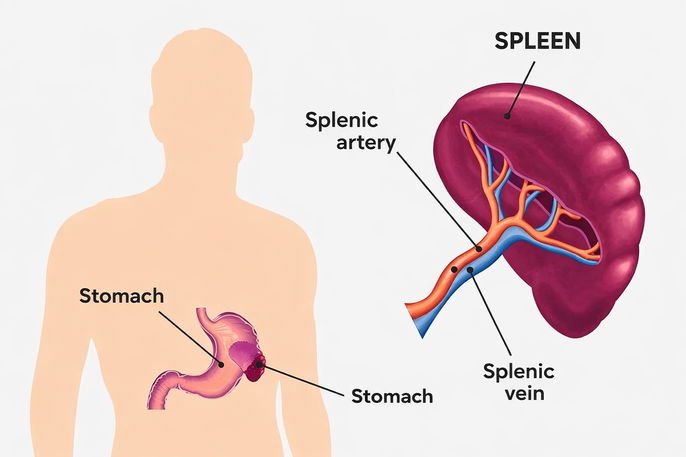
The spleen is located in the upper left side of the abdomen. It helps filter the blood, supports immune function by producing antibodies, and plays a role in protecting the body from infections.
A splenectomy can be performed laparoscopically (using several small incisions) or via open surgery, which requires one larger abdominal incision. The choice depends on the patient's specific condition and the urgency of the procedure.
Indications for surgery
Splenectomy may be recommended in the following situations:
-
Ruptured spleen caused by abdominal trauma;
-
Blood disorders, such as sickle cell anemia, thalassemia, idiopathic thrombocytopenic purpura (ITP), polycythemia vera, hereditary spherocytosis, and autoimmune hemolytic anemia;
-
Splenic abscess;
-
Enlarged spleen, known as splenomegaly;
-
Certain types of cancer, such as leukemia, spleen cancer, Hodgkin lymphoma, non-Hodgkin lymphoma, and pancreatic cancer;
-
Cysts or benign tumors in the spleen.
Depending on how severe the spleen changes are and the risk they may pose, a doctor may recommend removing part of the spleen or the entire organ.
Preparing for surgery
Before a splenectomy, a doctor may order blood tests and imaging (such as an ultrasound or CT scan) to check overall health and look for other issues, such as gallstones.
Doctors also recommend avoiding smoking and, when advised, temporarily stopping certain long-term medications under medical guidance.
In addition, vaccines and antibiotics may be recommended in the weeks before the procedure to help lower the risk of infection.
Spleen removal
Spleen removal surgery can be done in two ways:
1. Laparoscopic splenectomy
In most cases, splenectomy is done using laparoscopy. This technique uses three small openings in the abdomen to insert a small camera and surgical instruments to remove the spleen.
This procedure is done under general anesthesia, typically takes about 3 hours, and usually requires a hospital stay of about 2 to 5 days.
Laparoscopic splenectomy is generally considered safe and less invasive, with less pain and a smaller scar. Recovery is usually faster, which can help a person return to daily activities sooner.
2. Open splenectomy
In some cases, especially in a medical emergency, open surgery may be needed. This involves a larger cut in the abdomen to remove the spleen.
Because the incision is larger, recovery tends to be slower. A hospital stay of about 5 to 7 days is usually needed.
Risks and complications
After spleen removal surgery (splenectomy), pain and difficulty with daily activities are common. Some people need help from family for tasks like personal hygiene.
Although laparoscopic surgery is considered safe, possible complications include a hematoma, bleeding, or pleural effusion. Open surgery may involve higher overall risk.
Aftercare instructions
After the spleen is removed, the body’s ability to fight infections decreases. Other organs, especially the liver, may increase antibody production to help protect against infections.
Because of this, the body may be more prone to infections caused by pneumococcus, meningococcus, and Haemophilus influenzae. For this reason, a healthcare provider may recommend:
-
Getting vaccines that protect against pneumococcus, meningococcus, and Haemophilus influenzae type b (Hib), ideally at least 14 days before an elective splenectomy; if not given before surgery, they may be given after surgery as soon as the person is medically stable, according to CDC guidance;
-
Following the recommended pneumococcal vaccination schedule based on age, risk factors, and vaccination history;
-
Taking long-term preventive antibiotics when recommended by a healthcare provider based on individual risk.
It is also important to maintain a healthy diet, avoid foods high in sugar and fat, exercise regularly, avoid sudden temperature changes to help reduce colds and flu, and avoid taking medications without medical guidance.