


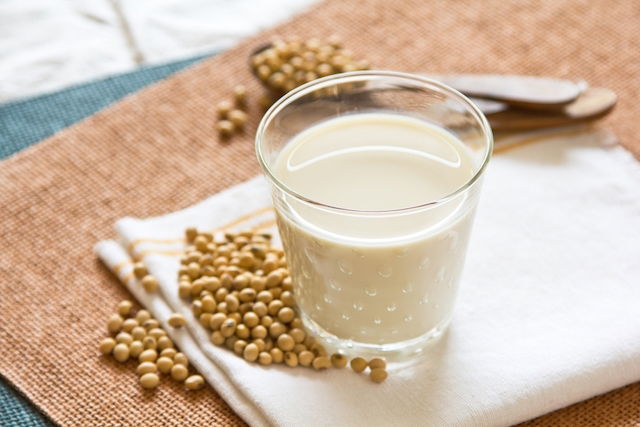
Soy milk is a beverage that provides a wide range of health benefits, including decreasing the risk of cardiovascular disease and cancer, helping alleviate symptoms of menopause, and preventing osteoporosis.
The benefits of soy milk come from nutrients like proteins and minerals and phenolic compounds like isoflavones that possess antioxidant, anti-inflammatory, and antitumoral properties.
Soy milk can be found in supermarkets and health food stores and can also be made at home. It can be consumed on its own or used in recipes for smoothies, ice cream, or yogurt.
Health benefits
Health benefits of soy milk include:
1. Lowering the risk of cardiovascular disease
Soy milk helps lower the risk of cardiovascular diseases like stroke, heart attack, and coronary heart disease.
This is because soy is low in saturated fat and contains isoflavones, which are phenolic compounds that help lower levels of LDL ("bad") cholesterol and triglycerides in the blood, in addition to increasing levels of HDL ("good") cholesterol.
2. Preventing osteoporosis
Soy milk contains calcium and phosphorous that help maintain healthy bones and prevent osteoporosis, broken bones, and fractures.
The isoflavones present in soy milk may also help protect against the loss of bone mass caused by the decrease in estrogen related to menopause.
3. Supporting weight loss
Soy milk helps with weight loss by being low in fat and calories.
Weight loss is only possible, however, by following a healthy diet and exercising regularly.
4. Decreasing the risk of cancer
Soy milk may help decrease the risk of certain types of cancer, such as breast cancer and prostate cancer, due to the presence of genistein, an isoflavone that can inhibit the growth of cancer cells.
However, there is still no scientific evidence to prove that soy milk decreases the risk of cancer.
5. Alleviating symptoms of menopause
Soy milk can help alleviate menopause symptoms, such as hot flashes and night sweats. This is because the isoflavones in soy milk have a similar structure to estrogen, a hormone produced by the ovaries that decreases significantly after menopause.
6. Maintaining muscle mass
The proteins in soy milk are important for the formation of muscle tissue and can help maintain muscle mass.
To help preserve muscle mass, soy milk should be included as one part of a healthy, well-balanced diet in combination with regular physical exercise.
How to make at home
To make soy milk at home, all you need is 1 cup of soybeans and 1½ cups of filtered water.
The following are step-by-step instructions for making soy milk at home:
- Rinse the soybeans under running water;
- Add the soybeans to a bowl of water and let soak for 8 hours;
- Drain and rinse well;
- Combine the soybeans and the filtered water in a blender and blend until smooth;
- Strain the liquid using a fine cheesecloth;
- Transfer the liquid to a pot and boil for 10 minutes, stirring occasionally to prevent the mixture from sticking to the bottom;
- Let cool and place in a bottle or jar with a lid.
Store in the refrigerator and drink within 4 days.
The residue leftover from the soybeans can be used in recipes for bread, cakes, cookies, and veggie burgers, for example.
Nutrition facts
The following table provides nutritional information for a 100 mL serving of soy milk:
In order to obtain all of the benefits listed above, it is also important to follow a healthy diet in combination with regular physical exercise.
How to consume
Soy milk can be consumed on its own or added to recipes for smoothies, cakes, bread, sauces, soufflés, yogurt, or ice cream.
Is soy milk bad for you?
In general, soy milk is not bad for you and is safe for the majority of people, however it can be harmful to individuals with soy allergies.
Soy milk can also be harmful to people with thyroid problems or iodine deficiency by interfering with thyroid medications and inhibiting the action of thyroperoxidase, an enzyme responsible for the production of thyroid hormones.
Frequently asked questions
Some frequently asked questions about soy milk include:
1. Can babies drink soy milk?
Soy milk should not be given to babies under 12 months of age; however, soy-based formulas may be prescribed by a doctor for infants that cannot breastfeed and have an allergy to cow's milk protein or lactose intolerance.
2. Can people with cancer drink soy milk?
Despite a common belief that soy milk should not be consumed by people with cancer, this is not actually correct. This is because moderate consumption of natural soy products like soybeans, soy milk, and tofu have low levels of phytoestrogens.
Additionally, while phytoestrogens have a similar effect to estrogen, they do not affect estrogen production in the body. For this reason, people with cancer can drink soy milk.
3. Is soy milk bad for men?
Because it contains isoflavones, it is believed that soy products (like soy milk) could cause the development of female characteristics in men, such as breast growth and lower testosterone.
However, recent studies show that soy does not affect levels of testosterone or androgens in men, making soy milk safe for consumption.