


A postpartum workout can help strengthen the core and pelvic floor while improving posture and overall well-being after childbirth. It can also relieve stress, boost mood, support better sleep, and assist with gradual and healthy weight loss.
Most people can start a postpartum workout about 15 days after a vaginal birth or 6 to 8 weeks after a C-section, as long as an OBGYN has approved physical activity. Early guidance helps avoid strain during recovery and reduces the risk of complications.
Postpartum workout options include pelvic floor exercises, core strengthening movements, and structured workout plans for the early, intermediate, and advanced recovery stages. These routines can be done at home and should be stopped if pain, vaginal bleeding, or pelvic discomfort occurs.
Pelvic floor exercises
Some pelvic floor exercises that can be done include:
1. Basic perineum contraction exercise
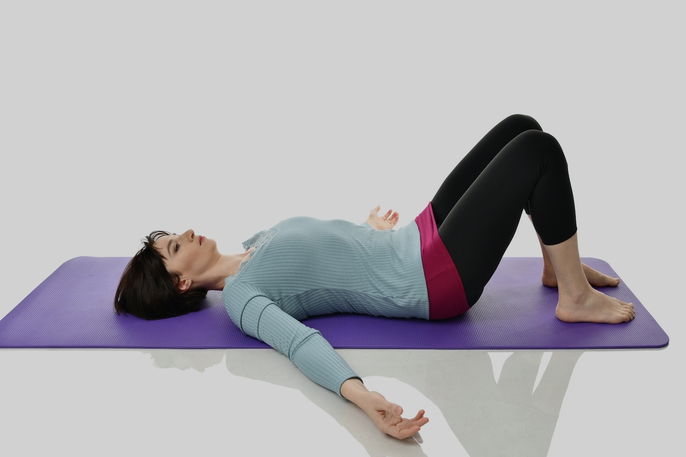
A basic perineum contraction exercise can be done immediately after giving birth to help strengthen the pelvic floor and combat urinary incontinence.
How to perform: Lie on your back and bend your legs. Contract your perineum for 5 to 10 seconds as if you were holding in urine. At the same time, contract your anus as if you were trapping your stool, then relax. Do 10 sets of 10 contractions, completed throughout the day.
2. Advanced perineum contraction exercise
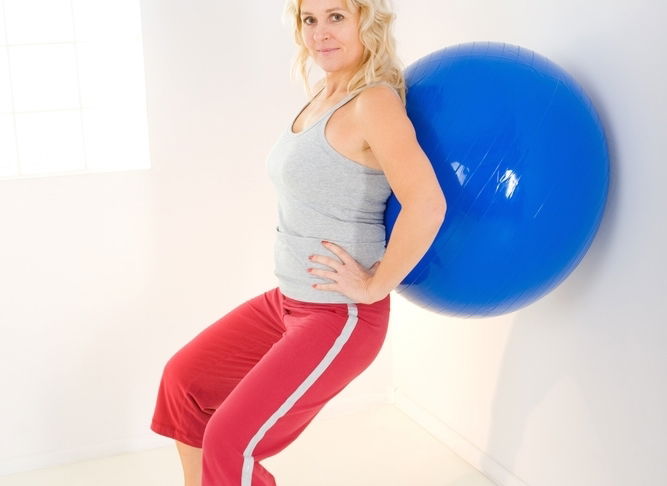
An advanced perineum contraction exercise works the pelvic floor muscles and also helps in strengthening the abdomen. This exercise is done with the help of a yoga ball.
How to perform: Stand in front of a wall, and place a yoga ball between the wall and your back. With your feet shoulder-width apart, contract your pelvic floor and abdomen. Bend your knees and lower to the ground as if you were sitting on an invisible chair. Be sure to keep the ball in contact with your lower back, so that your lower spine curves naturally around the yoga ball. Hold this position for 5 seconds and the return to the starting position. Repeat the exercise 3 times.
3. Kegel exercises
Kegel exercises are a great way to strengthen the pelvic floor muscles. They can be done to treat urinary incontinence and improving the quality of sex.
Core exercises
Once approved by your OBGYN, you can start to incorporate core exercises into your postpartum workout 2 to 3 times a week. They can be done in 3 sets of 10 to 20 repetitions for each exercises.
1. Glute bridges
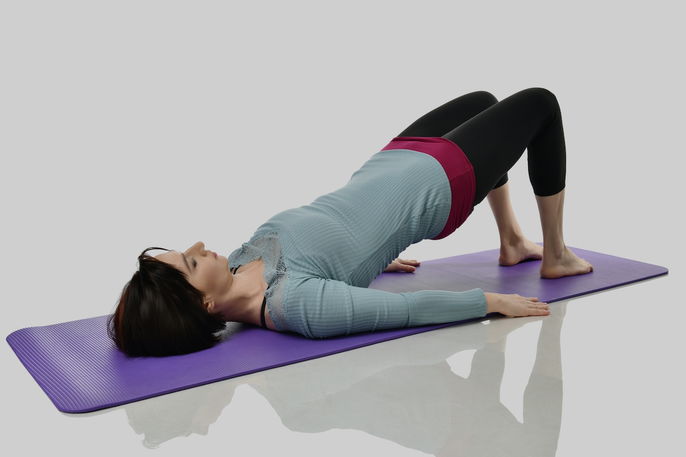
A glute bridge is an exercise that helps to strengthen the abdomen, glutes and thighs, as well as helping to stabilize the pelvic floor.
How to perform: Lie on your back with your arms at your side. Bend your knees and with your feet flat on the floor. Contract your pelvis, abdomen and glutes and raise your hips off the floor with your. Hold this position for 10 seconds, lower your hips to the starting position, and repeat.
2. Yoga ball leg raises
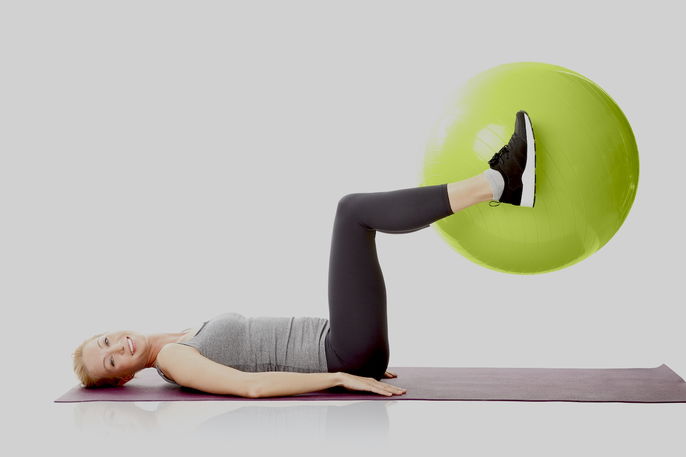
Leg raises are a great way to strengthen the core and can be done with the help of a yoga ball.
How to perform: Lie on your back with your arms at your side. Place a yoga ball between your ankles. Raise your legs with the ball between them, bending at the knees, then slowly lower to the starting position. Relax and repeat the movement 10 to 15 times.
3. Plank
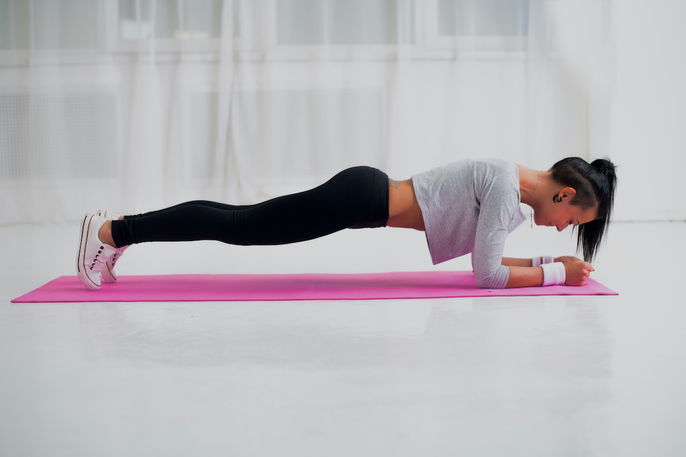
A plank is an exercise that helps to strengthen your core, improve posture, boost metabolism, and assist with overall body balance.
How to perform: Lie on your stomach and then raise your body from the floor, supporting your weight on your forearms and toes. Keep your abdomen contracted and your head and neck aligned with your spine. Hold this position for 30 to 60 seconds. To make this exercise easier, you can also support your weight from your forearms and knees, instead of your forearm and toes.
4. Hypopressive exercises
Hypopressive exercises are great for incorporating into a postpartum workout to tone your abs, strengthening the pelvic floor, combating urinary incontinence and improving local blood flow, which can improve sexual performance.
Read more about the hypopressive exercises that you can perform and how to do them.
Postpartum workout plans
These postpartum workout plans can help strengthen the pelvic floor and core, improve posture, boost stamina, and support recovery at different stages after giving birth.
1. Early Stage
This stage is typically done from 0 to 6 weeks after a vaginal birth or from 6 to 12 weeks after a C-section, as long as your OBGYN has approved physical activity.
The goal of this stage is to gently activate the pelvic floor and core, support posture, and improve circulation. Workouts in this stage can be performed 3 to 4 times per week and usually take about 10 to 15 minutes.
Warm-up (2 minutes)
-
Slow diaphragmatic breathing
-
Gentle shoulder rolls and neck circles
Main routine
-
Basic perineum contractions: 10 sets of 10 contractions spaced throughout the day, holding each contraction for 5 to 10 seconds
-
Kegel exercises: 2 to 3 sets of 10 repetitions, holding each contraction for 5 seconds
-
Glute bridges: 2 sets of 10 to 12 repetitions, holding the lift for 5 to 10 seconds
-
Modified plank from knees: 2 holds of 10 to 20 seconds
Cool down (1 minute)
-
Deep belly breathing
-
Gentle pelvic tilts while lying down
Movements should be slow and controlled to protect healing tissues. You should stop the exercises if you experience abdominal pressure, pelvic heaviness, or any vaginal bleeding. This stage focuses on healing and reactivation rather than intensity, and exercises should feel light and comfortable.
2. Intermediate Stage
This stage is typically started around 6 to 12 weeks after a vaginal birth or after 12 weeks following a C-section, provided your OBGYN has cleared you for more structured exercise.
The goal of this stage is to strengthen the pelvic floor and core while rebuilding stamina and stability. These workouts can be performed 3 to 4 times per week and last about 15 to 20 minutes.
Warm-up (2 minutes)
-
March in place
-
Gentle torso rotations
-
Deep breathing with light abdominal engagement
Main routine
-
Advanced perineum contraction exercise using a yoga ball: 3 repetitions, holding each squat for 5 seconds
-
Glute bridges: 3 sets of 12 to 15 repetitions with a 2 to 3 second hold at the top
-
Yoga ball leg raises: 3 sets of 10 to 15 repetitions
-
Full plank on forearms and toes: 2 holds of 20 to 40 seconds, or modified from knees
-
Hypopressive exercises: performed for about 5 minutes with focus on technique
Cool down (1 to 2 minutes)
-
Light hip, lower back, and chest stretches
-
Slow, controlled breathing
Intensity should increase gradually while still protecting the pelvic floor. You should stop the exercises if you notice abdominal doming, increased pelvic pressure, pain, or vaginal bleeding. If any discomfort develops, it is best to return to early-stage exercises until symptoms improve.
3. Advanced Stage
This stage is generally appropriate for people who are at least 3 months postpartum, have completed the earlier stages comfortably, and have been cleared by their OBGYN for more challenging workouts.
The goal of this stage is to build full-body strength, improve endurance, and restore functional movement patterns. Exercises can be performed 3 to 5 times per week and sessions usually last 20 to 25 minutes.
Warm-up (3 minutes)
-
Brisk marching or light jogging in place
-
Arm circles and gentle spinal rotations
-
Deep breathing while engaging the abdominal muscles
Main routine
-
Advanced perineum contraction exercise with yoga ball: 3 to 5 repetitions, holding each squat for 5 to 8 seconds
-
Glute bridges: 3 sets of 15 to 20 repetitions, adding a longer hold or single-leg variation if approved
-
Yoga ball leg raises: 3 sets of 12 to 15 repetitions with slow, controlled lowering
-
Full plank: 2 to 3 holds of 30 to 60 seconds
-
Hypopressive exercises: performed for 5 to 8 minutes
-
Optional bodyweight movements if approved, such as wall sit holds, step-ups, or standing core rotations
Cool down (2 minutes)
-
Gentle stretches for the lower back, glutes, chest, and hip flexors
-
Slow breathing to relax the core and pelvic floor
Exercises in this stage may feel more challenging but should still be pain-free and should not cause bulging in the abdomen or pressure in the pelvic area. You should pause or modify the routine if you feel pulling at the C-section scar, leaking urine, pelvic heaviness, or sharp discomfort. Gradual progression remains important even at this stage to protect pelvic floor and core health.