


A lump on the side of the neck is often caused by swollen lymph nodes, which can happen when the body is fighting an infection like the flu, tonsillitis, or an ear infection. These lumps may feel tender or painful and usually go away once the infection is treated.
A lump on the side of the neck could also be a thyroid nodule, a muscle knot, or a sebaceous cyst. These conditions are usually harmless, but may require medical evaluation if the lump causes pain, grows in size, or does not resolve on its own.
In more serious cases, a lump on the side of the neck can be a sign of cancer, particularly when accompanied by symptoms like difficulty swallowing, persistent fatigue, or unexplained weight loss. Seeing your primary care provider can help identify the underlying cause and ensure the most appropriate treatment, which may involve medication, warm compresses, or minor surgery.
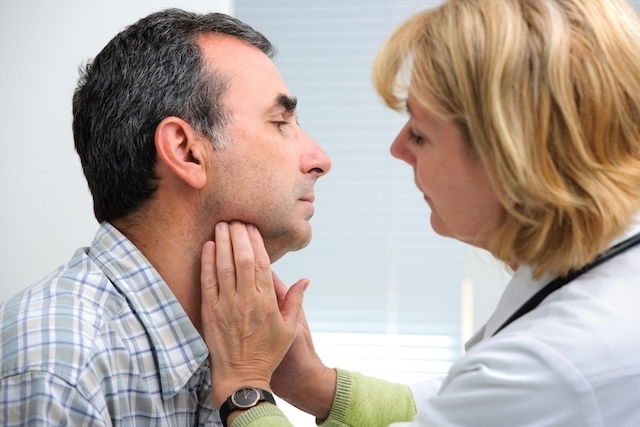
Main causes
A lump on the side of the neck can develop due to several different conditions, ranging from mild infections to more serious health problems. These include:
1. Lymph nodes
When lymphatic ganglions become inflamed, they form lymph nodes that can be felt as lumps under the skin. These lumps can emerge on the back of the neck or along the side behind the ears. Lymph nodes often cause pain and discomfort when palpated.
Swollen lymph nodes can occur due to infection or inflammation, like a tooth infection, the flu, tonsillitis or an ear infection. The lymph nodes themselves usually do not require treatment, and will often disappear once the underlying problem is treated.
If the lymph node does not resolve with time, or if you have other symptoms, you should see your doctor for an assessment. Persistently swollen lymph nodes can be a symptom of a more serious condition like sarcoidosis or Hodgkin’s lymphoma.
What to do: You are advised to rest and drink plenty of fluids. It is important to identify what caused the swollen lymph nodes, as treatment with specific medication may be necessary. The doctor may recommend analgesics or anti-inflammatories to help with any discomfort or sensitivity in the area.
In addition, you can place eucalyptus tea compresses directly on the lymph node to reduce inflammation.
2. Thyroid nodule
When a lump is noted near the front of the neck, it may be a sign of a thyroid nodule, which should be assessed by an endocrinologist. Generally, thyroid nodules do not cause symptoms, but some people may experience a sore throat, throat swelling, or difficulty breathing or swallowing.
If you feel a nodule, you should consult your endocrinologist, who may order testing like a biopsy to determine whether the nodule is benign or if there is a risk for cancer.
What to do: If the nodule is benign and there are no other symptoms or changes to thyroid hormones, you should be monitored through annual ultrasounds and blood work. However, if you do have symptoms, hormonal changes, or a potential risk of cancer, your doctor may recommend treatments such as levothyroxine, radioactive iodine, or surgery to remove the nodule.
Also recommended: 8 Thyroid Symptoms That Could Signal a Thyroid Problem tuasaude.com/en/symptoms-of-thyroid-problems3. Neck contracture
Contractures, or knots, can cause a painful lump in the neck. They form when the muscle contracts incorrectly and is unable to return to its resting position. These lumps are typically firm and painful and can significantly limit neck movements.
What to do: To treat a muscle contracture in the neck, you should bathe in warm water, apply warm compresses in the affected area, massage the region with anti-inflammatory creams, and stretch the neck as much as possible. Muscle relaxants may be prescribed by a doctor to help with discomfort.
If the knot does not resolve on its own within 7 days or is gradually worsening, you should see a doctor or physical therapist for further interventions.
4. Sebaceous cyst
Another possible cause for a lump on the neck is a sebaceous cyst. These cysts form beneath the skin due to built-up sebum, which is an oily substance produced by the skin to protect and lubricate hair follicles.
Sebaceous cysts are small, soft, and usually not painful. However, if they become inflamed, they can cause redness, pain, and heat in the area.
What to do: Treatment for sebaceous cysts should be managed by a dermatologist. A small procedure to remove the cyst may be necessary.
5. Cancer
In more serious cases, the appearance of a lump on the neck can be a sign of cancer. Cancerous lumps will cause other symptoms, like hoarseness, difficulty swallowing, the sensation of a lump in the throat, frequent choking, weight loss for no apparent reason, and general malaise. Neck tumors may develop in local tissues such as muscles, lymph nodes, skin, or the thyroid, or they may represent metastases from another site.
Learn more about cancer symptoms and what signs to look out for.
What to do: Nodules that appear with the above symptoms should be assessed by a doctor as soon as possible, so that a diagnosis can be confirmed and treatment can be started promptly.
6. Mumps
Mumps is associated with a lump between the ear and chin that occurs due to inflammation of the parotid glands. These glands produce saliva, but can become swollen from an infection by the Paramyxoviridae virus. In addition to the lump on the side of the neck, many people also experience fever and pain in the area.
What to do: Treatment for mumps is usually aimed at symptom relief. A doctor may prescribe analgesics, like acetaminophen, to reduce discomfort. Rest and hydration are also essential to support your body as it fights to eliminate the virus.
7. Lipoma
A lipoma is a type of cyst that can appear anywhere on the body, like the neck, shoulders, arms, back, abdomen and thighs. It is made up mainly of fat cells.
Lipomas grow over time and are usually not associated with any symptoms. They can be palpated under the skin and feel like a soft lump. If the lipoma continues to grow to a significant size or if it causes tissue obstruction or compression, it may cause symptoms like redness and increased temperature in the area.
What to do: Treatment for a lipoma consists of a small surgical procedure to remove it. This is done under local anesthesia and usually leaves behind just a small scar.