


Lipedema is an abnormal accumulation of fat in the legs, hips, and ankles, causing symptoms like difficulty walking, a feeling of heaviness in the legs, and localized pain and swelling.
Lipedema is characterized by a disproportionate and symmetrical distribution of fat in the lower body as compared to the upper body, although it can also affect the arms. It is more common in women. While the exact cause of lipedema is unknown, it is believed to be related to genetic, metabolic, hormonal, or inflammatory changes.
Treatment of lipedema is managed by a primary care provider or vascular surgeon and may involve lymphatic drainage massage or compression therapy to reduce swelling and discomfort; physical therapy; or even liposuction in the most severe cases.
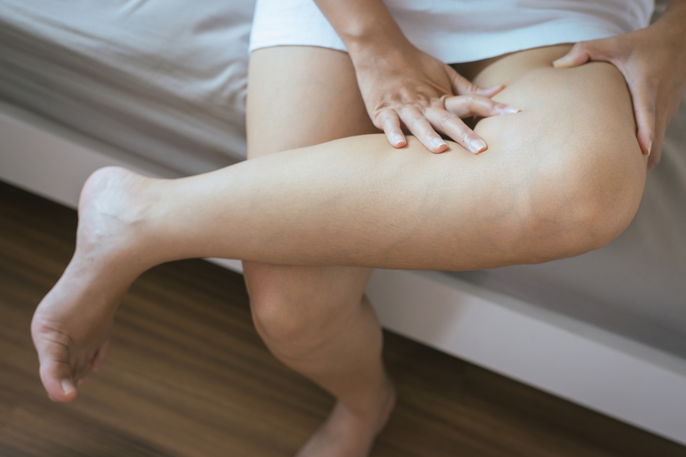
Common symptoms
The main symptoms of lipedema are:
- Abnormal buildup of fat in the legs, buttocks, hips, and ankles;
- Localized swelling and tenderness and pain with walking;
- Difficulty walking due to fat accumulation;
- Palpable nodules underneath the skin;
- Joint pain;
- Loss of skin elasticity;
- Feeling of heaviness in the legs;
- Red or purple spider veins;
- Pockets of fat above or below the knees.
Without treatment, the accumulation of fat cells caused by lipedema can put pressure on the lymphatic vessels that are responsible for draining fluid from the tissues into the blood vessels.
This can cause a buildup of fluid in the legs, known as lymphedema, that can increase the risk for infections and prolong wound healing.
Stages of lipedema
The following table breaks down the different stages of lipedema, which are defined by certain characteristics:
Lipedema is a chronic, progressive condition that evolves over time, starting with stage I and eventually advancing to stage IV when left untreated.
Confirming a diagnosis
The diagnosis of lipedema is made by a primary care provider or vascular surgeon based on symptoms, medical history, and a physical exam that involves feeling for lipedema nodules under the skin.
Your provider may also order exams like an ultrasound, magnetic resonance imaging (MRI), computerized tomography (CT), dual energy X-ray absorptiometry (DEXA), or bioimpedance spectroscopy (BIS).
These exams allow the doctor to confirm the diagnosis and rule out other health conditions with similar symptoms, such as lymphedema, obesity, and lipomas.
Your provider may also order additional tests to determine the cause of the lipedema, such as liver and kidney function tests, thyroid tests, a lipid profile, and a fasting insulin level.
Possible causes
The exact cause of lipedema is not completely understood, however it is believed to be related to genetic factors, as the condition tends to run in families.
Another factor that may contribute to the development of lipedema is hormone changes related to puberty, pregnancy, or menopause.
Treatment options
The treatment of lipedema is managed by a primary care provider or vascular surgeon, with the goal of alleviating symptoms, preserving mobility, and preventing evolution of the disease.
The main treatments for lipedema are:
1. Physical exercise
Exercise helps reduce inflammation, improve lymphatic drainage, and decrease fibrosis.
Regular physical exercise, as recommended by your doctor, helps to alleviate symptoms like pain, discomfort, and a sense of heaviness in the legs, in addition to improving mobility.
Some exercises that may be recommended for lipedema include swimming, water aerobics, walking, cycling, dance, stretching, yoga, and Pilates.
2. Lymphatic drainage massage
Lymphatic drainage massage may be indicated by your doctor to help the body eliminate excess fluid and toxins and improve drainage.
This treatment also reduces inflammation, swelling, and fibrosis, helping to relieve pain and discomfort.
Lymphatic drainage massage should be done by a physical therapist or other healthcare provider who is specialized in the treatment of lymphedema.
3. Compression therapy
Compression therapy for lipedema involves the use of compression stockings or other compression garments, including compression tights, shorts, or sleeves.
Compression therapy allows for better lymphatic drainage, helping to reduce swelling in the legs and arms.
4. Physical therapy
Physical therapy may also be prescribed by your doctor for the treatment of lipedema, and involves exercises to improve blood flow and fluid drainage to help relieve symptoms.
In addition to exercises, your physical therapist can also perform lymphatic drainage massage or use devices like pneumatic compression or endermotherapy.
5. Diet
A specialized diet for lipedema developed by a registered dietitian can be used in combination with other lipedema treatments to reduce inflammation in the body and help lead to weight loss.
Diets that have demonstrated superior results in the treatment of lipedema include the keto diet, which helps with the breakdown of fat cells, and the low-carb diet, which is typically indicated if results from the keto diet are unsatisfactory.
Be sure to talk to your healthcare provider or a registered dietitian before starting these diets.
6. Medications
GLP-1 agonists, such as semaglutide, liraglutide, or tirzepatide, may be prescribed to control diabetes and/or help with weight loss.
These medications are not officially approved for the treatment of lipedema, however they may be used by people with obesity or type 2 diabetes.
GLP-1 agonists should be used only as indicated by a primary care provider or an endocrinologist, and may reduce the amount of fat cells and fibrosis associated with lipedema and help alleviate symptoms.
7. Bariatric surgery
Bariatric surgery may be recommended for people with lipedema who have other comorbidities like prediabetes, diabetes, or an increased risk for cardiovascular disease.
This surgery is not a cure for lipedema, however, as lipedema fat is more resistant and may even become more visible following weight loss.
For this reason, bariatric surgery is only recommended in certain cases. Following surgery, it is recommended to continue with other treatments like exercise, lymphatic drainage massage, compressive therapy, and a well-balanced diet.
8. Liposuction
Liposuction may be indicated when other non-invasive therapies have proven ineffective at relieving symptoms.
This type of treatment involves removal of excess fat while sparing the lymphatic vessels, helping to alleviate symptoms and improve quality of life.
Is it curable?
Lipedema is not curable, however it is possible to control progression of the disease with treatments prescribed by your doctor or other healthcare provider, which help to reduce symptoms and improve quality of life.
