


Iodine rich foods mainly include seafood and products made with iodized salt. These foods naturally contain higher levels of iodine, an essential mineral that helps the thyroid work properly. Some dairy products, eggs, and vegetables also contribute smaller amounts.
Your body needs iodine to produce thyroid hormones, which regulate metabolism, support growth and development, and help control body temperature. Getting the right amount is important because both too little and too much iodine can affect thyroid function.
Iodine deficiency can lead to goiter and in some cases hypothyroidism. On the other hand, consuming very high amounts can cause toxicity, which may trigger symptoms like burning in the mouth or throat, fever, stomach pain, nausea, vomiting, diarrhea, and coma in severe cases.
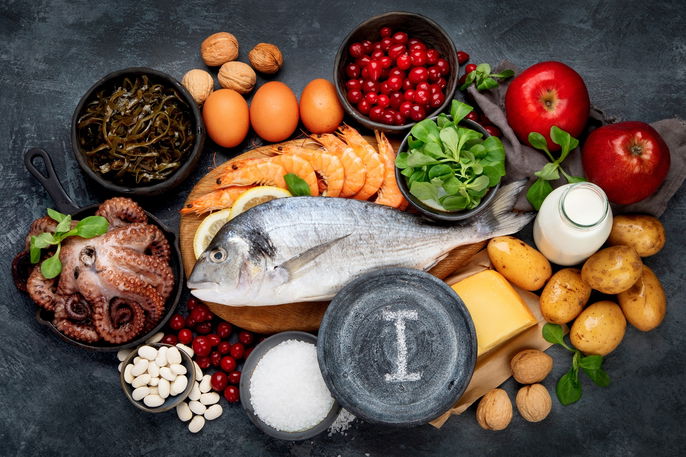
Foods rich in iodine
The table below lists foods naturally high in iodine:
Although they are not considered iodine rich foods, items like hard boiled eggs, milk, yogurt, and cheeses such as ricotta, feta, cheddar, mozzarella, and parmesan also provide moderate amounts of this mineral.
Some vegetables such as asparagus, broccoli, Brussels sprouts, kale, carrots, lettuce, tomatoes, and spinach contain iodine too, but only in small quantities.
Which fruits contain iodine
Fruits that contain small amounts of iodine include grapes, mangoes, pears, peaches, bananas, oranges, avocado, melon, and pineapple. However, fruits in general are not major sources of iodine.
Recommended amount of iodine
Recommended daily intake varies by age. For children, the suggested amount ranges from 90 to 150 mcg.
For adults, the daily recommended amount is typically between 120 and 290 mcg.
Iodine deficiency
Low iodine intake can lead to hypothyroidism and goiter. This happens when the thyroid gland has to work harder to absorb iodine and produce enough hormones, which causes it to become enlarged.
Iodine deficiency can result from eating too few iodine containing foods. It can also occur in groups with higher needs, such as pregnant women and infants.
Excess iodine
Chronic excessive iodine intake is uncommon but can occur when large amounts are consumed regularly. This may increase the risk of hyperthyroidism, hypothyroidism, goiter, or thyroid cancer.
Acute excessive intake can cause iodine toxicity, leading to burning in the mouth, throat, or stomach, fever, abdominal pain, nausea, vomiting, diarrhea, and in severe cases coma.