


Insoluble fiber is a type of non-digestible carbohydrate that offers many health benefits, such as improving bowel function and helping with weight loss or weight control.
These benefits occur because insoluble fiber increases stool bulk, stimulates bowel movements, supports gut microbiota, and takes up space in the stomach, which helps you feel full.
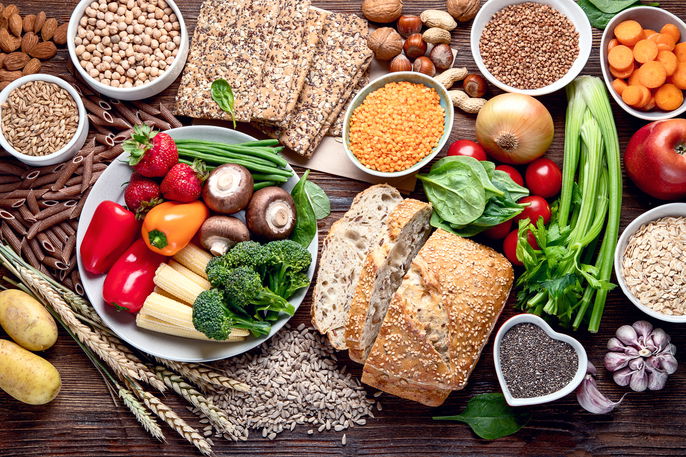
Insoluble fiber is found mainly in foods like wheat bran, brown rice, and some fruits eaten with the skin, such as pears, plums, apples, and berries.
Health benefits
The main benefits of insoluble fiber are:
1. Maintaining regular bowel movements
Insoluble fiber does not dissolve in water and is not fully fermented, so it stays largely intact, adding bulk and weight to the stool and helping keep bowel movements regular.
According to the National Institute of Diabetes and Digestive and Kidney Diseases, getting enough fiber can help prevent and treat constipation by making stool easier to pass.
2. Preventing intestinal diseases
By softening the stool and making it easier to pass, insoluble fiber reduces excessive straining and the risk of blockages, helping to prevent intestinal problems such as diverticular disease and hemorrhoids.
3. Reducing the risk of type 2 diabetes
Eating enough fiber, including insoluble fiber, is linked to better insulin sensitivity, which can help lower the risk of type 2 diabetes.
4. Protecting against cardiovascular disease
Consuming insoluble fiber may help protect against cardiovascular disease because gut bacteria can break it down and produce short‑chain fatty acids, such as acetate, propionate and butyrate.
These fatty acids have anti-inflammatory effects and may help reduce cholesterol production in the liver while also helping regulate energy metabolism and immune function, which supports cardiovascular health.
5. Supporting weight control and weight loss
By physically taking up space in the stomach and intestines, insoluble fiber increases satiety and helps delay hunger.
For this reason, insoluble fiber may help reduce calorie intake throughout the day, which can support weight control or weight loss.
6. Lowering the risk of colon cancer
Insoluble fiber may help reduce the risk of colon cancer because it speeds up intestinal transit time, reducing how long carcinogenic compounds stay in contact with cells in the intestinal wall.
In addition, insoluble fibers such as hemicellulose and resistant starch can be fermented by the gut microbiota, producing butyrate, a fatty acid that interrupts the multiplication of colorectal cancer cells and induces programmed cell death in these cells.
Food sources
The table below lists key sources of insoluble fiber and their fiber content per 100 g.
There is no specific recommendation for insoluble fiber alone. According to the National Academies of Sciences, Engineering, and Medicine, the general recommendation for total fiber intake, which includes insoluble fiber, is 25 g per day for adult women and 38 g per day for adult men.
Insoluble vs soluble fiber
Insoluble fiber does not dissolve in water and passes through the digestive system nearly intact, retaining water in its structure without losing its shape. In general, insoluble fiber is only minimally fermented, although some hemicelluloses and resistant starch can be fermented by gut microbiota in the colon.
This type of fiber works mainly by speeding up the movement of food through the intestines and increasing stool bulk, which makes bowel movements easier.
Soluble fiber, on the other hand, dissolves in water and turns into a thick, gel-like substance. Many types of soluble fiber are fermentable and serve as food for beneficial bacteria in the large intestine, producing gases and short-chain fatty acids.
Soluble fiber works mainly by slowing gastric emptying and digestion, which allows nutrients to be absorbed more slowly.
Fiber supplements
In some cases of chronic constipation or diarrhea, a doctor or registered dietitian may recommend fiber supplements to help regulate bowel movements.
These supplements may be found as capsules or powders that can be mixed with water, tea, or juice. Examples include Metamucil, Benefiber, and Citrucel.
However, these supplements should only be used with guidance from a doctor or registered dietitian.
