


- A bulge or lump in the groin with pain, pressure, or heaviness that worsens with coughing or lifting is a common sign of an inguinal hernia.
- A hernia may be pushed back in temporarily, but surgery is usually needed for a permanent repair and to help prevent it from coming back.
- Urgent medical care is needed for sudden severe groin pain, vomiting, a firm hernia that won’t go back in, or increasing redness and swelling, as these can be signs of strangulation.
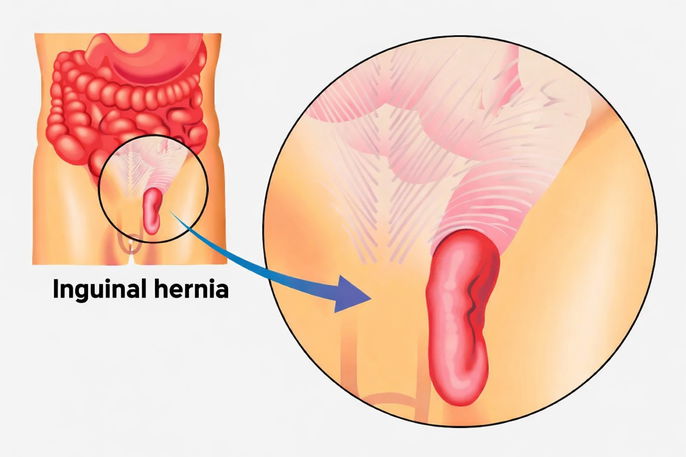
An inguinal hernia is a condition in which part of the intestine pushes through a weak area of the abdominal wall near the groin. It often causes a visible lump, groin pain, or a feeling of heaviness that may worsen with coughing, lifting, or other physical effort.
An inguinal hernia develops when there is a defect or weakness in the lower abdominal muscles, allowing tissue to bulge outward. It is more common in young children and older men, and in many cases the swelling can be pushed back in temporarily.
Although symptoms may seem mild at first, an inguinal hernia can lead to serious complications such as strangulation, when the intestine becomes trapped and loses blood supply. Treatment usually involves surgical repair to return the intestine to its normal position and strengthen the abdominal wall to prevent recurrence.
Main symptoms
The most common symptoms of an inguinal hernia include:
- A lump or swelling in the groin area;
- Pain or discomfort in the groin, especially when standing, bending, or lifting;
- A feeling of heaviness or pressure in the groin;
- Pain that may radiate to the testicles in men.
In babies, a hernia can be harder to spot because the bulge in the groin may not be noticeable, even during diaper changes. However, it may become more visible when the baby cries, coughs, or strains during a bowel movement, as these actions increase pressure in the abdomen.
According to the National Institute of Diabetes and Digestive and Kidney Diseases (NIDDK), a doctor can often manually reduce an inguinal hernia back into the abdominal wall. However, if it becomes stuck (incarcerated), it risks strangulation, cutting off blood flow to the trapped tissue.
Surgery is required for permanent repair. If the hernia cannot be pushed back, seek immediate care due to the high risk of strangulation, where trapped intestine may lose blood supply and suffer tissue death (necrosis).
Signs of a strangulated hernia
To identify a strangulated hernia, watch for these key symptoms:
-
Sudden, severe pain at the hernia site;
-
Persistent vomiting;
-
Constipation or inability to pass stool/gas;
-
Redness, tenderness, or swelling in the groin or hernia area.
Seek emergency care immediately if these occur, as strangulation is a surgical emergency. According to the American College of Surgeons, sharp abdominal pain and vomiting can be warning signs of a strangulated hernia and require immediate medical attention.
Strangulation is more common in babies because the hernia can be hard to recognize, so treatment may be delayed and the condition can worsen. For this reason, you should take your baby to a pediatrician as soon as possible if you suspect a hernia.
Common causes
An inguinal hernia develops when a weakened abdominal wall allows intestine to push against the muscle and protrude through under the skin. This can only occur with abdominal muscle weakness, which is more common in people who have:
-
Increased abdominal pressure from chronic cough or constipation;
-
Congenital defects in the abdominal area (common in children);
-
Obesity or hypertension;
-
A smoking habit.
Hernias are also far more frequent in young children and older adults due to natural fragility in the abdominal wall.
Main types
There are two main types of inguinal hernias:
- Direct inguinal hernia: More common in adults and older people, it develops after abdominal strain, such as lifting heavy objects;
- Indirect inguinal hernia: More common in babies and young children, it stems from a congenital defect in abdominal wall development.
In both cases, surgery repositions the protruding intestine and strengthens the abdominal wall to prevent recurrence.
Confirming a diagnosis
An inguinal hernia is usually diagnosed during a physical exam. A healthcare provider examines the groin area and may ask the patient to cough or tighten the abdominal muscles to see if the hernia becomes more visible.
In some cases, imaging tests such as an ultrasound may be needed to confirm the diagnosis.
Surgical treatment
Inguinal hernia repair surgery, also called inguinal hernioplasty, is the most effective treatment, especially for symptomatic patients. It's typically done under spinal anesthesia and takes about 2 hours.
This surgery can be performed traditionally, with an incision at the hernia site to reposition the intestine, or laparoscopically, using 3 small incisions. The laparoscopic approach often includes placing a synthetic mesh to reinforce weak abdominal muscles and prevent recurrence. The choice depends on the hernia type and the patient's overall health.
Recovery
Recovery from hernioplasty is typically quick. However, since the procedure is usually performed with traditional surgery, expect a 1- to 2-day hospital stay for monitoring vital signs and observing for complications.
After returning home, certain precautions are important, especially during the first 2 weeks:
-
Avoid bending at the waist until the incision fully heals;
-
Do not lift anything heavier than 2 kg (about 4.5 lbs);
-
Avoid sleeping on your stomach;
-
Eat more high-fiber foods to prevent constipation and straining during bowel movements.
During the first month, heavy physical activity and long periods of sitting should also be avoided, which is why driving is usually not recommended.
Possible complications
The most serious complication of a hernia is strangulation, which occurs when part of the intestine becomes trapped in the abdominal wall and loses its blood supply. Without blood flow, the intestinal tissue can die, leading to severe pain, nausea, vomiting, and difficulty passing stool or gas.
Strangulation usually happens when an inguinal hernia is not treated. This is a medical emergency, and immediate care in an emergency room is needed to prevent permanent tissue damage. If part of the intestine has died, surgery may be required to remove the affected section.
An inguinal hernia can also extend into the scrotum, causing a scrotal hernia. In these cases, complications may include not only intestinal strangulation but also possible effects on sperm production and storage, which can increase the risk of infertility.
Prevention tips
A hernia cannot always be prevented, but certain habits may help lower the risk, including:
-
Exercising regularly (at least 3 times a week) to keep abdominal muscles strong;
-
Eating a high-fiber diet with plenty of vegetables to help prevent constipation and straining;
-
Avoiding very heavy lifting, especially without assistance.
Quitting smoking and maintaining a healthy weight can also help reduce pressure on the abdominal wall and lower the chance of developing a hernia.