


Impetigo is a contagious skin infection that causes small red sores and blisters that burst and form a golden or honey-colored crust, most often around the nose and mouth. It mainly affects children but can occur at any age, spreading easily through direct contact with the sores.
This infection is caused by bacteria such as Streptococcus pyogenes or Staphylococcus aureus, which enter the skin through small cuts, insect bites, or rashes. The main symptoms of impetigo include redness, itching, fluid-filled blisters, and swollen lymph nodes near the infected area.
Treatment for impetigo usually involves topical antibiotics like mupirocin or retapamulin for mild cases, or oral antibiotics when the infection is widespread. With proper treatment and good hygiene, the infection typically heals within a few days, and isolation for at least 24 hours after starting antibiotics helps prevent it from spreading.
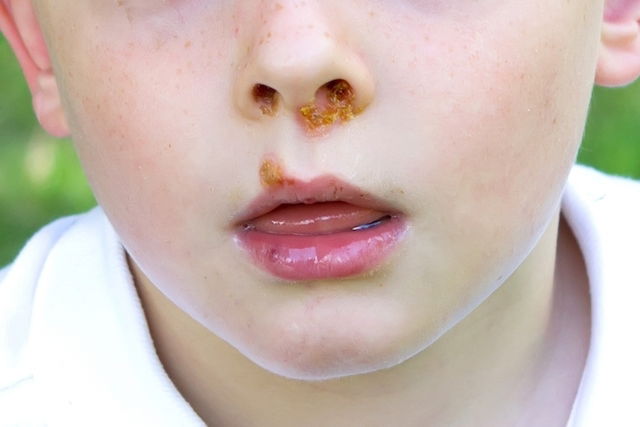
Impetigo symptoms
The main symptoms of impetigo include:
-
Red sores surrounded by irritated skin;
-
Blisters filled with yellowish or orange fluid;
-
Golden-colored crusts;
-
Itching around the sores;
-
Swollen lymph nodes near the infected area.
Impetigo often appears on exposed parts of the body, such as the face, arms, and legs, most especially around the mouth, nose, and scalp.
Confirming a diagnosis
Impetigo is usually diagnosed by a pediatrician or dermatologist during a physical exam of the skin lesions, which is often enough to identify the infection.
In some cases, a healthcare provider may collect a sample from the sore to send to the lab for testing in order to determine which bacteria are causing the infection and to choose the most appropriate antibiotic.
Different types
There are three main types of impetigo, which differ in how deeply they affect the skin and how the sores appear. These include:
1. Bullous impetigo
Bullous impetigo causes fluid-filled blisters that burst and form crusts. Despite their appearance, these sores typically heal without leaving permanent marks.
This type is less common and mainly affects newborns and young infants.
2. Non-bullous impetigo
Non-bullous impetigo spreads easily and appears as small sores that develop golden crusts, which is why it’s also called “crusted impetigo.”
It mainly affects children and may cause swelling of nearby lymph nodes. The skin generally heals well without leaving scars.
3. Ecthyma
Ecthyma is a more severe form of impetigo that affects deeper layers of the skin.
It causes painful open sores filled with pus and covered by thick yellowish crusts that take longer to heal and may leave scars.
Main causes
Impetigo is caused by bacteria that naturally live on the skin, mainly Streptococcus pyogenes (strep A) or Staphylococcus aureus, which usually don’t cause illness.
The infection occurs when these bacteria enter the skin through small injuries such as cuts, insect bites, or rashes.
However, impetigo can also develop without visible skin injuries, especially after other skin conditions like chickenpox, eczema, scabies, or lice.
Risk factors include being between 2 and 5 years old, having close contact with an infected person, being elderly, or having autoimmune conditions.
Treatment options
Treatment for impetigo should always be guided by a pediatrician or dermatologist and may include the following:
1. Antibiotic ointments
Antibiotic ointments are recommended for mild infections with few lesions. They are applied directly to the skin, usually twice a day, for about 5 days.
Commonly used ointments include mupirocin and retapamulin. These medications help the sores heal faster and prevent the infection from spreading to other parts of the body.
Before applying the ointment, it’s recommended to gently wash the affected area with water and mild soap if there are small crusts. For larger crusts, avoid removing them and apply the ointment directly.
In some cases, a healthcare provider may recommend using saline solution to soften the crust and improve medication absorption.
2. Oral antibiotics
Oral antibiotics, in pill or liquid form, are prescribed when impetigo is more widespread or involves multiple lesions. They help control the infection and prevent complications.
Common options include cephalosporins, clindamycin, and trimethoprim-sulfamethoxazole (TMP-SMX). Amoxicillin-clavulanate (Augmentin) may also be prescribed, especially for infants and children.
Treatment typically lasts 7 to 10 days. Even if the skin improves earlier, it’s essential to complete the full course of antibiotics to prevent recurrence or bacterial resistance.
3. Hygiene care
During impetigo treatment, good hygiene practices are very important. Covering the sores with bandages or clothing helps prevent the spread of bacteria.
If the sores are touched or scratched, hands should be washed thoroughly afterward. It’s best to avoid scratching or touching the lesions to keep the infection from worsening.
During this time, it’s important to avoid swimming in pools, using shared bathtubs, or sharing personal items such as towels, clothing, or bedsheets.
The doctor may also recommend using antiseptic solutions like povidone-iodine (Betadine) to clean the area and reduce the risk of new infections.
Is impetigo contagious?
Impetigo is highly contagious and can easily spread through contact with the sores or contaminated objects such as towels, clothing, or bedsheets.
Because of this, isolation is recommended for at least 24 hours after starting antibiotics, keeping the sores covered, maintaining good hygiene, and avoiding sharing personal items.
Prevention measures
To prevent impetigo, maintaining good hygiene habits is essential, such as washing hands frequently or using hand sanitizer when soap and water aren’t available.
Keeping nails short helps prevent scratches that could open the skin and allow bacteria to enter.
Another way to prevent impetigo is to clean and cover any cuts or scrapes with mild soap, water, and a bandage.
It’s also important to avoid scratching rashes or irritated areas, such as in cases of eczema or chickenpox, to keep the infection from developing or spreading.