


Home remedies for the flu include medicinal herbs such as turmeric and star anise, which have anti-inflammatory and antimicrobial properties that can help relieve symptoms like sore throat, cough, and nasal congestion.
It’s also important to include foods like oranges and lemons in your diet, as they are rich in vitamins and minerals that strengthen the immune system and help your body recover faster from the flu.
These natural remedies should not replace medical treatment prescribed by a doctor. They should only be used as complementary options to help improve symptoms and support recovery.
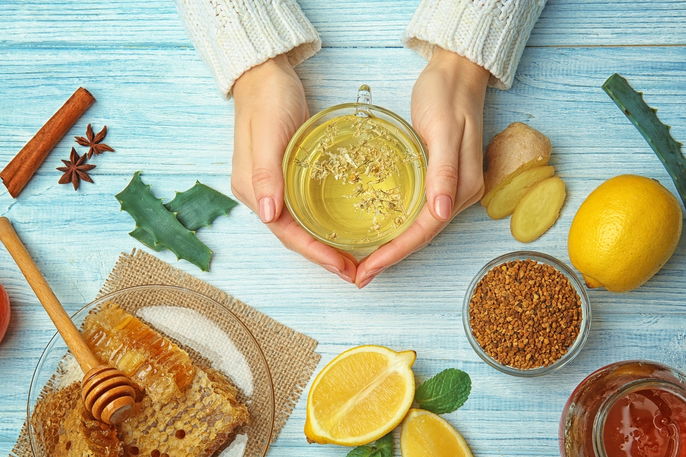
1. Ginger and lemon tea
Ginger and lemon tea contains gingerol, vitamin C, and zingerone, compounds with anti-inflammatory, antimicrobial, and antioxidant effects that help relieve flu symptoms such as throat irritation and cough.
Ingredients:
-
¾ inch of fresh ginger or 1 tablespoon of powdered ginger
-
A few drops of lemon juice
-
1 cup (200 ml) of water
Preparation:
Add the ginger to the boiling water and let it simmer for 10 to 15 minutes. Allow it to cool slightly, strain, add lemon juice, and drink up to 3 cups per day.
Who should avoid it: This tea should not be consumed by children under 6 years old, people taking anticoagulants, or those with gallstones or bleeding disorders. Pregnant women and people taking medication for high blood pressure or diabetes should only drink it under medical supervision.
2. Orange, lemon, and honey drink with propolis
This juice is rich in antioxidants and anti-inflammatory compounds such as vitamin C and flavonoids, which help strengthen the immune system and fight the flu virus. Although propolis is not approved by the FDA for medical treatment, it has been traditionally used to support immune function, and further studies are needed to confirm its effects.
Ingredients:
-
2 oranges
-
1 lemon
-
1 teaspoon of honey
-
2 drops of propolis extract (optional)
Preparation:
Squeeze the oranges and lemon into a glass, add honey and propolis extract, mix well, and drink immediately.
Who should avoid it: People who are allergic to honey, bees, or propolis should avoid this drink. Pregnant or breastfeeding women should consult a doctor before consuming it.
3. Green tea with honey
Green tea contains flavonoids and catechins, which have antioxidant and anti-inflammatory properties that help support the immune system. Honey also has antimicrobial effects and can soothe flu-related cough and sore throat.
Ingredients:
-
1 teaspoon of green tea leaves
-
1 teaspoon of honey
-
1 cup of boiling water
Preparation:
Add the green tea leaves to boiling water, cover, and let steep for 5 to 10 minutes. Strain, allow it to cool slightly, sweeten with honey, and drink.
Who should avoid it: This tea is not recommended for pregnant or breastfeeding women, children, or people with thyroid, kidney, liver, or stomach problems such as gastritis or ulcers. People taking medication for diabetes, hypertension, or anticoagulants should consult a doctor before drinking it.
4. Garlic and lemon tea
Garlic contains allicin and other sulfur compounds with antimicrobial, anti-inflammatory, and antioxidant properties that help strengthen the immune system and ease symptoms like headaches and nasal congestion.
Ingredients:
-
1 garlic clove
-
1 cup (200 ml) of water
-
1 tablespoon of lemon juice
Preparation:
Boil the water, then add the crushed or chopped garlic and let it steep for 5 to 10 minutes. Strain, add lemon juice, and drink warm.
Who should avoid it: Not recommended for pregnant or breastfeeding women, children under 2 years old, or people with gastritis, ulcers, low blood pressure, or bleeding disorders. Those taking blood pressure or anticoagulant medications should only drink this tea under medical supervision.
5. Guaco (Mikania glomerata) tea with honey
Guaco tea has expectorant, anti-inflammatory, and bronchodilator properties that can help relieve cough and mucus buildup.
Ingredients:
-
1 tablespoon (about 3 g) of dried guaco leaves
-
½ cup (150 ml) of boiling water
-
1 tablespoon of honey
Preparation:
Add the guaco leaves to the boiling water, cover, and let steep for 5 to 10 minutes. Strain, add honey, and drink 2 to 3 cups per day.
Who should avoid it: Not suitable for children under 3 years old, pregnant or breastfeeding women, or people with liver disease, diabetes, cancer, or tuberculosis. People taking anticoagulants, antibiotics, or anti-inflammatory medications should consult a doctor before consuming it.
6. Thyme tea
Thyme tea is a natural remedy that may help relieve cough and congestion due to its expectorant, antimicrobial, and anti-inflammatory properties. It’s a safe, FDA-recognized herbal supplement that supports respiratory health and immunity.
Ingredients:
-
1 tablespoon of dried thyme leaves
-
1 cup (150 ml) of boiling water
-
1 tablespoon of honey
Preparation:
Add the thyme leaves to boiling water, cover, and let steep for 5 to 10 minutes. Strain, add honey, and drink up to 3 cups per day.
Who should avoid it: People allergic to thyme or other Lamiaceae family plants should avoid it. Pregnant or breastfeeding women, as well as those taking anticoagulants or antihypertensive medications, should consult a doctor before using it.
7. Warm milk with ginger and star anise
Warm milk can soothe the throat and relieve symptoms like a runny nose, sore throat, and cough. Ginger and star anise contain anti-inflammatory and antiviral compounds that support immune defense.
Although star anise is not FDA-approved for medical treatment, it contains shikimic acid, which has been studied for its antiviral potential.
Ingredients:
-
1¼ cup (300 ml) of milk
-
¾ inch of fresh ginger
-
1 teaspoon of ground star anise
Preparation:
Add all ingredients to a saucepan and simmer for 10 minutes. Once the milk starts bubbling, let it cook for 2 more minutes. Allow to cool slightly, sweeten with honey, and drink warm before bedtime.
Who should avoid it: Not suitable for people with milk allergies or lactose intolerance, children under 6 years old, people on anticoagulants, or those with gallstones or bleeding disorders. Pregnant women and people with high blood pressure or diabetes should only drink this under medical guidance.
8. Star anise tea
Star anise tea may help relieve flu symptoms because it contains shikimic acid, a compound with antiviral properties.
Ingredients:
-
1 teaspoon of ground star anise or 2 whole star anise pods
-
1 cup (250 ml) of boiling water
Preparation:
Add the star anise to boiling water, cover, and let steep for 10 minutes. Strain and drink 2 to 3 cups per day.
Who should avoid it: Not suitable for pregnant or breastfeeding women, children, or people with high estrogen levels.
9. Turmeric tea
Turmeric has strong antioxidant, anti-inflammatory, and antimicrobial effects that can help strengthen the immune system and relieve sore throat caused by the flu.
Ingredients:
-
½ teaspoon of turmeric powder
-
¾ cup (150 ml) of boiling water
Preparation:
Add turmeric to boiling water, cover, and let steep for 10 to 15 minutes. Drink 2 to 3 cups per day until symptoms improve.
Who should avoid it: Not recommended for people with stomach ulcers, gallstones, or those taking anticoagulants. Pregnant or breastfeeding women should only drink turmeric tea with medical advice.
10. Orange peel tea with cinnamon and honey
Orange peel tea is rich in vitamin C and flavonoids, which have antioxidant properties that strengthen immune cells and help the body recover from the flu.
Ingredients:
-
1 tablespoon of fresh or dried orange peel (without the white pith)
-
¾ cup (200 ml) of boiling water
-
1 small cinnamon stick
-
1 teaspoon of honey
Preparation:
Wash and peel the orange. Add the peel and cinnamon stick to boiling water, cover, and let steep for 5 to 10 minutes. Strain, add honey, and drink warm.
Who should avoid it: People with stomach or intestinal ulcers should avoid this tea.
11. Acerola juice
Acerola is rich in succinic acid, flavonoids, and vitamin C, compounds with antioxidant and immune-supporting properties that help the body fight the flu virus.
Ingredients:
-
½ cup of fresh acerola cherries
-
1 cup (250 ml) of water
-
1 teaspoon of honey
Preparation:
Wash the acerolas and blend them with water. Strain, sweeten with honey, and drink immediately.
Who should avoid it: People allergic to cherries or honey should avoid this juice. Pregnant or breastfeeding women should consult a doctor before consuming it.
12. Fresh orange juice
Fresh orange juice is a rich source of vitamin C and antioxidants that help support immune defense and may assist the body in recovering from the flu. It’s also a good alternative to acerola juice when fresh acerolas are unavailable.
Ingredients:
-
2 oranges
-
1 cup (250 ml) of water
-
1 teaspoon of honey
Preparation:
Squeeze the oranges, mix with water and honey, and drink right away.
Who should avoid it: People allergic to citrus fruits or honey should avoid this juice. Those with acid reflux may also need to limit intake to prevent symptom aggravation.