


High-fiber foods, like fruit, vegetables, legumes and grains, are an essential part of a healthy diet. They can help to promote gut health and prevent health conditions like constipation, diabetes and cardiovascular diseases.
High-fiber foods contain lactulose, inulin and resistant starch, which have a prebiotic effect that feed the good bacteria that is naturally found in the gut. Healthy gut bacteria is important for optimal intestinal function and immunity.
Fiber is a type of carbohydrate that is naturally found in plant-based foods. It is not easily digested in the body, and therefore passes intact through the stomach and intestines to be eliminated in the stool.
List of high-fiber foods
Food that are high in fiber that you can include in your diet are:
1. Fruits
Fruits, like persimmon, guava, papaya, pear and plum, are high in soluble fiber. This is a type of fiber that dissolves in water and forms a gel in the stomach, which takes longer to digest and keeps you fuller for longer.
Also recommended: High Fiber Fruits: 25 Examples Plus Recommended Daily Intake tuasaude.com/en/high-fiber-fruitHow to consume: the minimum daily recommendation of fruits is 2 to 3 servings per day, which is equivalent to about 160 to 240 g per day. To obtain all the benefits fiber of fiber from fruit, the fruit you consume should be eaten raw, with its peel, pulp and seeds when appropriate.
2. Whole grains
Whole grains, like brown rice, wheat bran, rye, oats and whole wheat bread, are rich in insoluble fiber.
These foods help to prevent or treat constipation, as they add bulk to the stool and stimulate natural bowel movements.
How to consume: Whole grains can be added to any meal or snack, and should be consumed with plenty of water.
3. Legumes
Beans, chickpeas, soybeans, lentils and peas are high-fiber legumes that help to balance intestinal flora. If consumed frequently on a long term basis, they can be beneficial for preventing bowel cancer.
Legumes are also rich in resistant starch, a type of carbohydrate that is not digested and acts similarly to fiber in the body.
How to consume: the recommended amount of legumes is 3 tablespoons per day. They can be added to salads, soups and in the preparation of breads, spreads, desserts, hamburgers, pasta and pizzas.
4. Vegetables
Vegetables, like cabbage, broccoli, beets, pumpkin, chicory, okra, carrots, tomatoes, onions and peppers, are high in fibers that help to control blood cholesterol levels. They can be beneficial for preventing cardiovascular disease.
How to consume: the daily recommendation for legumes is 2 to 3 servings per day, which is equivalent to between 160 and 240 g per day. Vegetables can be added to any meal or snack, and eaten in the form of salads, soups, pâtés, roasts and stews.
5. Seeds
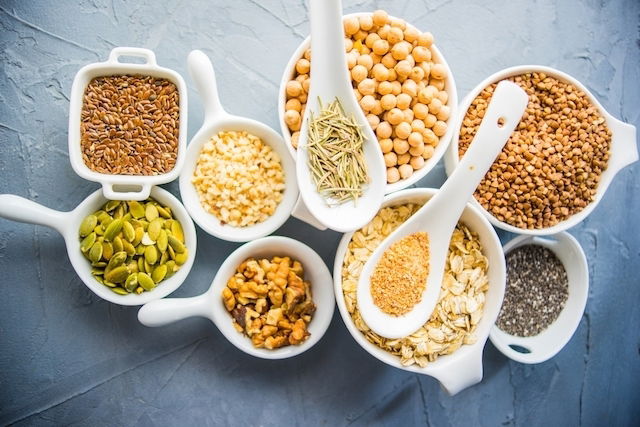
Seeds like flaxseeds, sesame seeds, pumpkin seeds, sunflower seeds and chia seeds are high-fiber foods that can keep you full and help to manage appetite.
How to consume: the recommended amount of seeds you should consume per day is 30 grams or about one tablespoon. The seeds can be eaten alone as a snack, or added to salads, breads, cakes, pasta, soups and yogurt.
Also recommended: tuasaude.com/en6. Nuts
Nuts, or dried fruits, such as almonds, Brazil nuts, cashew nuts and walnuts, are high-fiber foods that can help to promote gut health, prevent cardiovascular diseases and regulate blood cholesterol levels.
How to consume: the recommended amount of nuts per day is 30 g, which is equivalent to about a handful of peanuts, 25 almonds, 15 cashews, 20 hazelnuts, 15 macadamias, 2 tablespoons of pine nuts and 6 whole walnuts.
Health benefits
The main health benefits of fiber are:
- Combating constipation, as it speeds up intestinal flow and adds bulk to the stool.
- Keeping you full, as it forms a type of gel in the stomach, which takes longer to digest.
- Regulating blood sugar levels, as it slows down carbohydrate absorption in the gut, which controls glucose and insulin spikes.
- Reducing cholesterol and triglyceride levels, as it reduces fat and cholesterol absorption in the gut.
- Maintaining gut health, as they feed the healthy bacteria naturally found in the gut. This can reduce inflammation and improve your immunity, preventing diseases such as diverticulitis and ulcerative colitis.
- Controlling some types of diarrhea, especially those caused by bacterial infections. Diarrhea can be managed with prebiotic fibers, which are naturally found in foods like chicory, garlic and artichoke;
- Reducing the risk of chronic diseases like obesity, diabetes, heart disease, high blood pressure and colon cancer.
To obtain all the benefits that high-fiber foods have to offer, it is necessary to consume them on a daily basis and to include them in a healthy, balanced diet.
It is important to remember that fiber should be consumed with plenty of water to ensure that these fibers are hydrated in the gut, and easier to eliminate in the stool.
Types of fiber
Dietary fibers can be classified as soluble or insoluble:
1. Soluble fiber
Soluble fiber can dissolve in water, which forms a gel that remains longer in the stomach and intestine. This helps to keep you fuller for longer, regulating glucose levels and reducing cholesterol levels.
Soluble fiber is fermented by good bacteria in the gut, which is benficial for maintaining your gut health and preventing diseases like Crohn's disease, ulcerative colitis, irritable bowel syndrome and colorectal cancer.
Examples of soluble fibers include pectin and inulin, which is naturally found in fruits, vegetables, legumes, seeds and cereals, such as oats, wheat germ, barley and rye.
2. Insoluble fiber
Insoluble fiber does not dissolve in water and its fermentation in the intestinal microbiota is limited. When it reaches the large intestine, insoluble fiber speeds up intestinal transit and add bulk to the stool. It acts as a natural laxative, which can be beneficial for preventing constipation, hemorrhoids and intestinal inflammation.
Examples of insoluble fibers are cellulose and lignin, which are naturally found in whole grains, seeds, oilseeds and the peels of various types of fruits and vegetables.
3. Resistant starch
Although it is not technically a fiber, resistant starch acts similarly to fiber. Resistant starch is a type of carbohydrate that is not digested by the intestine.
Therefore, resistant starch serves as food for bacteria in the large intestine, protecting against colon cancer and helping to reduce blood cholesterol levels.
Resistant starch is found in foods such as green bananas, beans, lentils, potatoes, whole grains, pasta cooked al dente,
Recommended daily amount
Daily fiber recommendation will depend on your age or sex, as outlined in this table:
Pregnant women should consume 28 g of fiber per day, while breastfeeding women should aim for 19 g of fiber per day.
When you are unable to ingest the recommended amount of fiber per day through your diet, fiber supplements in capsule or powder form, may be recommended by your doctor or registered dietitian.