


Heart healthy foods, such as apples, flaxseed, and oats, are rich in fiber, which can help balance blood cholesterol levels and may reduce the risk of heart disease.
Other heart healthy foods, including tuna, red grapes, and açaí, provide beneficial nutrients and compounds such as omega-3 fatty acids and polyphenols. These substances have antioxidant and anti-inflammatory properties that can help support healthy arteries and blood circulation.
Heart healthy foods should be part of an overall healthy diet to support cardiovascular health. Regular physical activity at least 3 times per week can also help improve blood circulation and cardiovascular fitness.
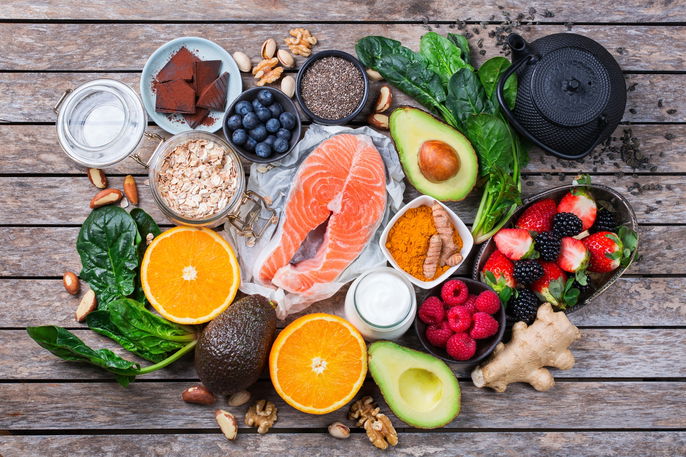
Foods for heart health
Heart healthy foods include:
1. Olive oil
Olive oil is a heart healthy food because it contains vitamin E and healthy unsaturated fats, including omega-3 and omega-6 fatty acids. These nutrients can help improve blood cholesterol levels, support healthy circulation, and reduce the risk of atherosclerosis.
To include olive oil in your diet, you can add 1 tablespoon to meals, such as by using it to dress salads or vegetables at lunch or dinner.
2. Dark chocolate
Dark chocolate with at least 70% cocoa is considered a heart healthy food because of its high cocoa content. Cocoa contains compounds with antioxidant and anti-inflammatory properties that help protect cells from oxidative damage and support healthy blood circulation.
To get the benefits of dark chocolate, it is recommended to eat about 20 to 30 g per day of chocolate containing at least 70% cocoa. It can be eaten on its own or paired with fruit, yogurt, or nuts.
3. Apples
Apples are considered a heart healthy food because they contain pectin, a type of fiber that can help reduce cholesterol absorption and may lower the risk of cardiovascular disease.
Apples also contain flavonoids and carotenoids. These bioactive compounds have antioxidant properties that help reduce lipid oxidation and support healthy cholesterol levels.
Apples can be eaten fresh on their own, as a dessert or snack, or added to yogurt, salads, or juices.
4. Tuna
Tuna is a heart healthy food because it is rich in omega-3 fatty acids, a type of healthy fat with anti-inflammatory, antioxidant, and antithrombotic properties.
Because of these properties, tuna can help support healthy blood circulation and cholesterol levels. This may help reduce the risk of conditions such as atherosclerosis, high blood pressure, and heart attack.
According to the American Heart Association, eating 2 servings of fish per week, particularly fatty fish, is recommended as part of a heart-healthy dietary pattern. One serving of tuna is about 3 ounces (85 g), and it can be baked or grilled.
5. Flaxseed
Flaxseed is a heart healthy food because it is rich in fiber, selenium, vitamin E, and omega-3 fatty acids. These nutrients have antioxidant and anti-inflammatory properties that can help lower blood cholesterol, improve circulation, and reduce inflammation.
Flaxseed is best consumed ground because whole flaxseeds may pass through the digestive tract without all of their nutrients being absorbed.
The recommended amount of ground flaxseed is 1 tablespoon per day. It can be added to yogurt, juices, smoothies, or salads.
6. Oats
Oats are a heart healthy food because they are rich in avenanthramides, phenolic compounds with antioxidant properties. These compounds help fight excess free radicals and may help reduce the risk of conditions such as atherosclerosis and high blood pressure.
Oats are also rich in fiber, which can help control cholesterol by reducing the absorption of fat and cholesterol in the intestines.
To get the benefits of oats, 1 to 2 tablespoons can be consumed per day. They can be added to smoothies, fruit salads, yogurt, oatmeal, breads, cakes, or cookies.
7. Red grapes
Red grapes are rich in resveratrol, tannins, and anthocyanins, which are bioactive compounds with antioxidant and anti-inflammatory properties. These compounds can help control LDL cholesterol levels, making red grapes a heart healthy food.
Although there is no specific recommended amount of grapes, the general recommendation is to eat 2 to 3 servings of fruit per day, corresponding to about 160 to 240 g of fruit.
Grapes can be eaten fresh with the skin or used in juices, fruit salads, popsicles, and salads.
8. Walnuts
Walnuts are a heart healthy food because they are rich in omega-3 fatty acids. These healthy fats can help lower LDL cholesterol and support healthy HDL cholesterol levels.
Walnuts also contain polyphenols with antioxidant and anti-inflammatory properties. These compounds help support healthy blood vessel function and cardiovascular health.
To get the benefits of walnuts, you can eat one serving per day, or about 1 ounce (28 g). This is equivalent to approximately 5 to 6 walnuts, which can be eaten raw or roasted, on their own, or added to yogurt, fruit, or salads.
9. Açaí
Açaí is rich in anthocyanins and omega-9 fatty acids, as well as polyphenols with antioxidant and anti-inflammatory properties. These compounds can support healthy blood circulation and blood pressure, making açaí a heart healthy food.
Açaí can be eaten with yogurt, granola, oats, almonds, and fruit. It can also be used in preparations such as popsicles, breads, pies, and tapioca.
10. Tomatoes
Tomatoes are considered a heart healthy food because they are rich in lycopene, a powerful antioxidant. Lycopene helps support artery health and may help reduce the risk of cardiovascular problems such as heart failure, heart attack, and stroke.
Lycopene becomes more bioavailable when tomatoes are cooked, such as when they are used in tomato sauce.
Tomatoes can be eaten raw or cooked in a variety of dishes, including salads, soups, stews, juices, and sauces.
11. Spinach
Spinach is rich in vitamin C, lutein, quercetin, and kaempferol. These nutrients and polyphenolic compounds have antioxidant properties that help protect blood vessel cells from free radicals and may help reduce the risk of cardiovascular diseases such as atherosclerosis, heart attack, and stroke.
Spinach can be eaten raw or cooked in preparations such as salads, juices, pies, stews, and soups.
12. Avocado
Avocado is rich in monounsaturated and polyunsaturated fats. These healthy fats can help lower total cholesterol, triglycerides, and LDL cholesterol, supporting overall heart health.
Avocado is also rich in carotenoids, potassium, and folate, nutrients that support healthy blood circulation. Because of these benefits, avocado is considered a heart healthy food.
Avocado can be eaten fresh or added to salads, smoothies, and creamy preparations.
Foods to limit for heart health
Foods that can negatively affect heart health include:
-
Ultra-processed foods, such as ready-made sauces, instant noodles, sweetened cereal products, breakfast cereals, packaged cookies, and chips
-
Alcoholic beverages, such as beer, wine, vodka, and brandy
-
Foods high in added sugar, such as ice cream, soda, packaged juices, and chocolate-flavored drink mixes
-
Processed meats, such as bacon, sausage, ham, hot dogs, bologna, salami, and processed turkey breast
According to the American Heart Association, limiting foods high in saturated fat, added sugar, and sodium is an important part of a heart-healthy eating pattern. Alcohol should also be limited if consumed.
