


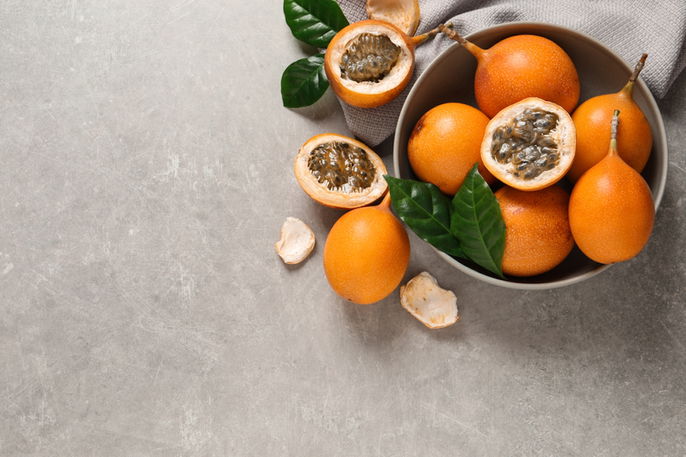
Granadilla, also known as sweet passion fruit or parcha dulce, is a tropical fruit that can help promote weight loss, regulate blood pressure, support growth and development in children, and reduce stress and anxiety. These benefits come from its high content of nutrients, fiber, and antioxidant compounds.
The scientific name of granadilla is Passiflora ligularis, and it belongs to the same family as passion fruit (Passiflora edulis). However, they are different species, so granadilla and passion fruit are not the same fruit, although they share many similar properties.
Granadilla is commonly eaten fresh or used to prepare juices, jams, and desserts.
Health benefits
Granadilla offers several health benefits, including:
1. Helping regulate blood pressure
Granadilla is rich in potassium, a mineral that helps the body eliminate excess sodium through urine. This helps maintain healthy blood pressure levels, making it a good option for people with hypertension.
2. Supporting weight loss
Granadilla is high in fiber, which helps increase the feeling of fullness between meals and control appetite, making it helpful for weight loss.
3. Regulating digestion
The fiber found in granadilla helps regulate digestion by forming the stool and stimulating bowel movements, which makes it easier to pass stool and helps prevent constipation.
4. Reducing anxiety and stress
Granadilla contains flavonoids, which act on the nervous system to promote relaxation and help reduce anxiety and stress.
5. Preventing premature aging
Because it is rich in antioxidants, especially vitamins A and C, regular consumption of granadilla helps protect skin cells from free radicals, preventing sagging, wrinkles, and premature aging.
6. Supporting children’s growth
Granadilla provides calcium, magnesium, iron, and phosphorus, which are essential minerals for bone health and growth in children. These nutrients also help maintain bone strength and prevent conditions such as osteopenia and osteoporosis in older adults.
7. Boosting the immune system
Granadilla is a good source of vitamins C and A, which help strengthen the immune system and reduce the risk of common infections like colds and flu.
Granadilla properties
Granadilla has antioxidant, anti-inflammatory, immune-boosting, anti-obesity, antihypertensive, digestive, and anxiolytic properties. These effects come from its content of vitamins A and C, minerals such as potassium, calcium, magnesium, and phosphorus, and bioactive compounds like flavonoids.
Nutritional information
The table below shows the nutritional composition of 100 g of granadilla:
To get the full benefits of granadilla, it should be eaten as part of a balanced diet and paired with regular physical activity.
How to eat
Granadilla can be eaten fresh by cutting the fruit open and scooping out the seeds with a spoon. It can also be used to make natural juices, compotes, jams, or desserts.
The dried peel can be ground and added to smoothies, cereals, or yogurt to increase fiber and nutrient intake.
The general recommendation for fruit intake is 2 to 3 servings per day. One medium granadilla, weighing about 100 g, counts as one serving.
Healthy recipes
Granadilla can be incorporated into the following recipes:
1. Granadilla water
Ingredients:
-
1 cup of granadilla pulp
-
1 liter of water
-
Sweetener, such as stevia
How to prepare:
Blend all the ingredients, strain, and serve with ice.
2. Mango and granadilla popsicles
Ingredients:
-
100 g of granadilla pulp
-
1 mango (pulp only)
-
200 g of plain yogurt
How to prepare:
Blend all the ingredients together, pour into popsicle molds or small containers, and freeze for at least 3 hours. Another option is to blend only the yogurt and mango first, then add the granadilla pulp at the end to keep the seeds whole.