


- Exploratory laparotomy is an abdominal surgery used to directly examine organs and help diagnose or treat severe pain or internal bleeding when imaging tests are not enough.
- Recovery often starts with several days of hospital monitoring, with total healing commonly taking about 4 to 6 weeks, depending on the reason for surgery and overall health.
- Seek urgent care for fever over 100.4°F (38°C), worsening abdominal pain, swelling, blood or pus at the incision, black or bloody stools, persistent vomiting, or signs of pulmonary embolism like chest pain or shortness of breath.
Exploratory laparotomy is a type of surgery where a surgeon makes an incision in the abdomen to look directly inside the abdominal cavity. It is used to find the cause of severe abdominal pain or abdominal bleeding when imaging tests have not provided a clear diagnosis.
This procedure may also be performed as an emergency treatment for severe abdominal trauma, such as injuries from a car accident or a major blunt impact. In these cases, there may not be enough time to complete all diagnostic tests before surgery.
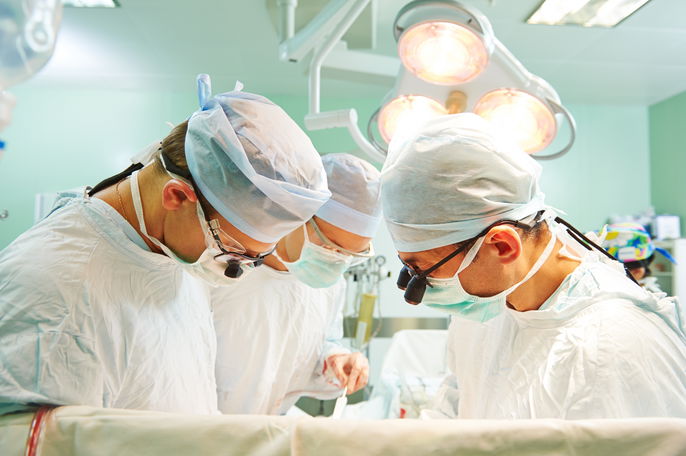
A surgeon performs an exploratory laparotomy in an operating room under general anesthesia. Hospital observation is typically recommended afterward to allow close monitoring of recovery and to reduce the risk of complications such as bleeding or infection.
What it does
Exploratory laparotomy allows the doctor to examine organs in the abdominal cavity, such as the intestines, stomach, liver, gallbladder, pancreas, spleen, kidneys, bladder, and reproductive organs.
This makes it possible to identify, diagnose, and treat the cause of abdominal pain or bleeding.
It is most often planned in advance (elective), but it may also be used in emergencies, such as abdominal trauma from a car crash or blunt-force injury.
When it's indicated
Exploratory laparotomy may be indicated in the following situations:
-
Suspected internal abdominal bleeding;
-
Abdominal trauma from car accidents or blunt-force injuries;
-
Infection in the peritoneal cavity;
-
Gastrointestinal perforation or obstruction;
-
Complicated appendicitis, or inflammation of the intestine or pancreas;
-
Liver abscess;
-
Symptoms suggestive of cancer, especially in the pancreas or liver;
-
Presence of adhesions.
It may also be used to investigate certain conditions in women, such as endometriosis or endometrioma, ovarian or uterine cancer, and ectopic pregnancy.
However, in many cases, laparoscopy is performed instead of laparotomy because it uses small incisions and typically allows for faster recovery.
Preparation instructions
Preparation for exploratory laparotomy depends on whether it is elective (scheduled) or performed as an emergency.
For an elective exploratory laparotomy, the patient should tell the doctor about all medications, vitamins, and dietary supplements used regularly, as well as any allergies or other health conditions.
The doctor may also request preoperative testing (surgical risk assessment) and blood tests to evaluate overall health. Complete fasting for at least 8 hours is usually required, or as directed by the doctor.
For an emergency exploratory laparotomy, preparation is done in the hospital and may include antibiotics, intravenous (IV) fluids, and blood transfusion.
How it's performed
Exploratory laparotomy is performed by a surgeon in the operating room under general anesthesia. It typically lasts 1 to 4 hours, depending on the goal of the surgery.
The surgeon may follow steps such as:
-
Giving IV fluids to hydrate the patient and deliver medications and general anesthesia;
-
Cleaning the abdominal skin with an antiseptic;
-
Making an incision down the middle of the abdomen, usually vertical;
-
Examining and assessing the abdominal organs and the blood and lymphatic vessels;
-
Treating and correcting the problem when abnormalities are found;
-
Performing a biopsy, if needed;
-
Rinsing the abdominal cavity with sterile fluid, if needed;
-
Closing the incision and placing a dressing over the area.
After the procedure, the patient stays in a recovery area and is then moved to a hospital room or the intensive care unit (ICU), depending on overall condition.
Recovery time
During the first 5 to 10 days after exploratory laparotomy, recovery is typically managed in the hospital with monitoring by the surgeon, anesthesia team, and nursing staff. If it was performed as an emergency surgery, the hospital stay may be longer.
Total recovery time is usually about 4 to 6 weeks. After discharge, it is important to follow medical instructions and take prescribed medications as directed.
The dressing should be kept clean and dry, and it is best to avoid getting it wet. According to the CDC, hands should be cleaned before and after changing wound dressings or bandages to help reduce the spread of germs and lower infection risk. Heavy lifting and strenuous activity should be avoided.
Possible complications
Because exploratory laparotomy is an invasive procedure performed under general anesthesia, complications can occur. These may include anesthesia-related issues, blood-clotting problems, bleeding, infection, incisional hernias, or injury to an organ in the abdominal area.
Although uncommon, complications are more likely when exploratory laparotomy is done as an emergency procedure. Risk may also be higher in people who smoke, drink alcohol frequently, or have chronic conditions such as diabetes or obesity.
For this reason, it is important to tell the doctor about any risk factors so the procedure can be planned and performed with extra caution to help prevent complications.
Red flags
Contact the surgeon who performed the exploratory laparotomy or go to the nearest hospital if any of the following symptoms occur:
-
Fever above 38°C (100.4°F) or chills;
-
Abdominal pain that does not improve with prescribed medication;
-
Pain, redness, swelling, or blood or pus at the incision site;
-
Abdominal swelling;
-
Bloody stools or stools that look like coffee grounds;
-
Diarrhea or constipation lasting more than 2 days;
-
Nausea or vomiting.
Seek emergency care right away if symptoms of a pulmonary embolism occur. According to the CDC, symptoms that can occur with a pulmonary embolism include shortness of breath, chest pain, and cough, and blood clots in the legs (DVT), which can be related, may cause leg pain or swelling.