


- Dermaplaning gently removes dead skin cells and fine facial hair, which can leave the skin looking smoother, softer, and brighter.
- Benefits may include improved skin texture, reduced appearance of fine lines and acne scars, and better absorption of skin care products.
- Aftercare is important, including avoiding sun exposure, using sunscreen daily, and skipping exfoliating products while the skin heals.
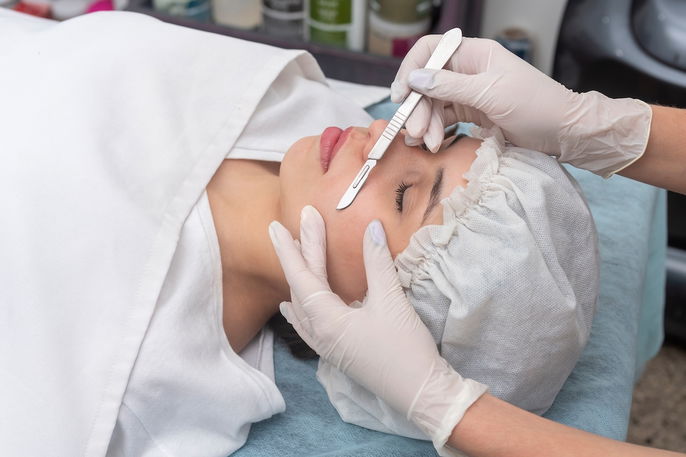
Dermaplaning is a skin treatment in which a doctor uses a scalpel-like blade to gently scrape the top layers of the skin. This removes dead skin cells and fine hair from the face and neck, and is used for facial rejuvenation.
This treatment can offer several benefits because it exfoliates the skin and can help reduce the appearance of fine lines, expression lines, and acne scars. As a result, the skin may look firmer, smoother, and healthier.
Dermaplaning is a simple procedure performed in-office by a dermatologist or plastic surgeon. After the procedure, some care is needed, such as avoiding sun exposure, using sunscreen every day, and applying moisturizers recommended by the doctor.
What is dermaplaning?
Dermaplaning is a facial treatment used for facial rejuvination that gently removes the superficial layers of the skin. This can help the face look younger, healthier, softer, and brighter, although it does not stop the skin’s natural aging process.
Dermaplaning can also be done to remove vellus hair, which is the fine, light-colored hair on the skin commonly known as “peach fuzz.”
Main benefits
The main benefits of dermaplaning are:
-
Minimizing acne scars
-
Unclogging pores
-
Improving skin texture
-
Minimizing fine wrinkles and expression lines
-
Promoting skin cell turnover
-
Restoring the skin’s glow, radiance, and softness
-
Reducing dark spots and skin damage caused by the sun
-
Preventing sebaceous gland blockage in cases of actinic keratosis
-
Removing facial hair that can trap impurities and oil
Dermaplaning can also help dermatologic and cosmetic products penetrate the skin more easily, which may improve hydration.
How to prepare
To prepare for dermaplaning, it is recommended to avoid tanning and sun exposure for at least 1 week before the procedure. Waxing and smoking should also be avoided, as they can interfere with the results. Makeup should not be worn on the day of the procedure.
It is also important to tell the doctor about any health conditions and all medications used regularly. The doctor may recommend stopping certain skin products, such as retinols, glycolic acid, or salicylic acid, a few days before the procedure.
Any questions about dermaplaning, recovery, expectations, and expected results should also be discussed with the doctor before treatment.
How the procedure is done
Dermaplaning is performed in-office by a dermatologist or plastic surgeon using a sterile scalpel-like blade called a dermatome. The procedure does not cause pain, so anesthetics are not needed.
To perform dermaplaning, the doctor usually follows steps such as:
-
Deeply cleansing the skin with glycolic acid to remove impurities or oil
-
Applying salicylic acid to the skin to promote exfoliation
-
Applying an oil or cream to the skin so the dermatome glides more easily
-
Passing the sterile blade over the skin at a 45-degree angle, using upward movements
-
Applying a hydrating mask to the skin, such as aloe vera, to soothe the skin at the end of the procedure
-
Applying sunscreen with SPF 50
Dermaplaning usually takes 30 to 60 minutes. If the procedure needs to be repeated, the interval between sessions should be at least 21 days, as this is the time needed for cell renewal.
Can dermaplaning be done at home?
Dermaplaning can be done at home using kits with blades made for the procedure.
However, doing this type of treatment at home is not recommended, as it can increase the risk of complications and may not produce results as satisfactory as those achieved when the procedure is performed by a doctor.
For this reason, dermaplaning should be performed by a dermatologist or plastic surgeon with experience in this type of procedure.
Results and recovery
After dermaplaning, the face may be slightly red and swollen for about a week. This happens because the superficial layer of the skin, called the stratum corneum, has been removed, and this layer acts as a natural protective barrier.
Removing the stratum corneum stimulates skin cells to produce collagen, which helps make the skin firmer, smoother, and more rejuvenated-looking.
Dermaplaning results may appear about 1 week after the procedure, although this can vary depending on the characteristics of the skin. It is important to follow the doctor’s recommendations after treatment to avoid complications.
Aftercare instructions
After dermaplaning, certain precautions can help protect the skin and support recovery, such as:
-
Avoiding sun exposure for 3 to 7 days
-
Keeping the skin hydrated with the moisturizer or serum recommended by the doctor
-
Applying SPF 50 sunscreen every day, including on cloudy days
-
Not exfoliating, rubbing, or pulling the skin for 1 week
-
Washing the skin with mild soap or a soothing cleansing gel
-
Avoiding physical exercise for at least 2 days
-
Avoiding swimming pools for at least 1 week
It is also recommended to avoid using facial products that contain salicylic acid or glycolic acid for at least 1 week, and to drink plenty of water to keep the body and skin hydrated.
According to the American Academy of Dermatology Association, dermatologists recommend using sunscreen with an SPF of at least 30, which supports the recommendation to apply SPF 50 sunscreen every day after dermaplaning.
Potential risks
According to the American Society of Plastic Surgeons, dermaplaning is generally safe when performed by a qualified, experienced board-certified physician, although skin discoloration can occur.
Other possible complications may include small cuts from the blade, scars or keloids, or infections.
Who should avoid it
Dermaplaning should be avoided if the skin has any of the following conditions:
-
Active acne breakouts
-
Burns
-
Active cold sores
If there is a history of cold sores (herpes simplex), even in the absence of active lesions, a healthcare provider should be informed before scheduling dermaplaning. Preventive antiviral treatment may be recommended to reduce the risk of reactivation.
