


- A chemical peel helps reduce fine lines, dark spots, acne scars, and uneven skin tone.
- Chemical peels can be superficial, medium, or deep, depending on how far they penetrate the skin.
- Aftercare includes avoiding sun exposure, not picking at peeling skin, and using SPF 30 or higher sunscreen.
A chemical peel is a cosmetic treatment used for facial rejuvenation. It helps soften or reduce wrinkles, fine lines, and dark spots on the skin.
This type of peel is done by applying acids that exfoliate the outer layers of the skin. This helps stimulate collagen production and tissue remodeling.
A chemical peel is usually performed in a dermatology office or medical spa under medical supervision. It may be superficial, medium, or deep, depending on the skin type and treatment goal.
Main benefits
A chemical peel may be recommended for:
-
Wrinkles and fine lines
-
Enlarged pores
-
Acne vulgaris or acne scars
-
Rosacea or lentigo
-
Seborrheic keratosis or actinic keratosis
In addition, chemical peel may be recommended for pseudofolliculitis barbae, which is the development of ingrown beard hair.
A chemical peel should be discussed with a dermatologist, as other types of peels or cosmetic procedures may be recommended based on your skin type and treatment goals.
Facial chemical peel
A chemical peel on the face is usually done to promote facial rejuvenation. It stimulates collagen production, helping reduce or soften wrinkles and fine lines for a more youthful appearance.
In addition, a facial chemical peel can help reduce dark spots on the face and acne scars, for example.
How to prepare
Preparation for a chemical peel usually starts 2 to 4 weeks before the procedure, with creams prescribed by the doctor to promote skin renewal and improve the effectiveness of the treatment.
In addition, the doctor may recommend antiviral medication for people with a history of cold sores to help prevent herpes outbreaks.
It is also important to apply the sunscreen recommended by the dermatologist before and after the chemical peel.
On the day of the procedure, it is recommended not to apply makeup to the face and to wash only with water and mild soap.
How it's done
Chemical peels are usually performed by a dermatologist in an office setting. Deeper peels may need to be done in a surgical setting with sedation, local anesthesia, or general anesthesia.
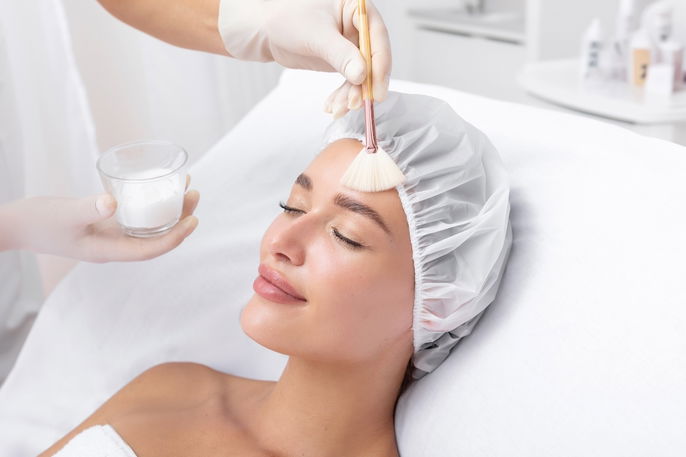
To perform a chemical peel, the doctor should generally follow these steps:
-
Ask the person to put on a disposable cap.
-
Clean the skin with an antiseptic solution.
-
Place the peeling agent (acid) in a clean, dry glass container.
-
Ask the person to close their eyes (sterile gauze may be placed over the closed eyelids).
-
Apply the acid to the skin using a brush, gauze, or spatula.
-
Leave the acid on the skin for a few minutes, according to the product and protocol used.
-
Neutralize the acid by applying sterile gauze moistened with saline or a 5% sodium bicarbonate solution, depending on the type of acid used.
After the procedure, the person can usually go home. If anesthesia or sedation was used, they may need to stay for observation for a few hours before discharge.
Main types
Chemical peels are classified into different types according to how deeply they penetrate the skin. The main types are:
1. Superficial chemical peel
A superficial chemical peel removes the outermost layer of the skin and is a good option for lightening spots and reducing acne marks or superficial wrinkles.
Acids used: glycolic acid, salicylic acid, or retinoic acid/tretinoin. Trichloroacetic acid (TCA) may also be used at a concentration of 10% to 20%.
2. Medium chemical peel
A medium chemical peel removes the outer layer and part of the middle layer of the skin and is used to treat acne, deeper wrinkles, and uneven skin tone.
Acids used: TCA at a concentration of 20% to 35%, glycolic acid at 70%, or Jessner solution.
3. Deep chemical peel
A deep chemical peel penetrates deeper layers of the skin and may be recommended for sun-damaged skin and some scars, such as acne scars or scars from injuries.
In general, this type of peel requires extra caution in people with medium, dark, or very dark skin tones due to the higher risk of dark spots, scars, or keloids.
Acids used: TCA at higher concentrations, croton oil, or phenol, which should only be used by trained professionals.
Also recommended: Phenol Peel: Uses, Procedure & Recovery tuasaude.com/en/phenol-peelChemical peel before and after
Results from a superficial or medium chemical peel can be seen starting from the second treatment session.
In the case of a deep chemical peel, results may be seen after a single session.
However, the results of any type of peel are not permanent, as they do not stop the skin’s natural aging process.
Recovery time
After a chemical peel, the skin is typically sensitive, red, swollen, and may peel. The healthcare provider may recommend cold compresses to help relieve discomfort.
In the case of a deep chemical peel, blisters or crusts may also appear on the skin.
Aftercare instructions
After a chemical peel, it is important to follow these precautions:
- Do not pick, rub, or exfoliate the skin.
- Do not pull off peeling skin or crusts, and do not pop blisters.
- Wash your face with lukewarm water in the morning and at night.
- Use mild, fragrance-free cleansers recommended by your doctor.
- Apply moisturizers recommended by your dermatologist.
- Use a broad-spectrum, water-resistant sunscreen with SPF 30 or higher, according to the American Academy of Dermatology.
In addition, avoid direct sun exposure even when using sunscreen, and avoid strenuous physical activity or activities that cause sweating for the period recommended by your doctor, depending on the type of chemical peel performed.
Possible complications
Chemical peels can cause complications such as blisters or crusts on the skin, dark or light spots, scars, keloids, or infections caused by bacteria, viruses, or fungi.
In addition, because acids are used, severe allergic reactions or anaphylactic shock, arrhythmias, or liver or kidney damage may also occur.
According to the FDA, chemical peel products with high acid concentrations should only be used under the supervision of a dermatologist or licensed and trained practitioner, as they can cause serious skin injuries.
This helps reduce the risk of complications and ensures that severe reactions can be treated immediately with the appropriate equipment and medications.
Contraindications for use
Chemical peels are contraindicated for:
-
Children and adolescents
-
Active infections, wounds, or injuries on the skin to be treated
-
History of allergic reaction to previous peels
-
Allergy to the acids used for the peel
-
Treatment with isotretinoin in the last 6 months
-
Recent facial surgery
In addition, chemical peels are contraindicated for people who are pregnant or breastfeeding, as well as for those with psoriasis, connective tissue diseases, or atopic dermatitis.
Chemical peels should also not be done in people with uncontrolled diabetes, those who use corticosteroids daily, smoke, have poor skin healing, or have a tendency to develop keloids.
