


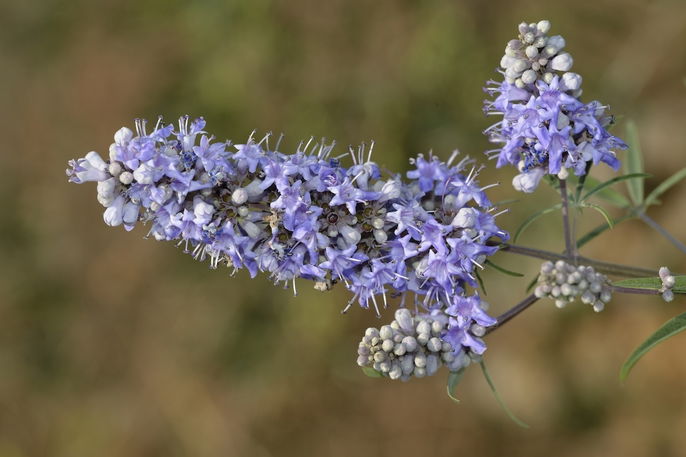
Chaste tree (Vitex agnus-castus) is a medicinal plant commonly used to help regulate the menstrual cycle, reduce symptoms of premenstrual syndrome (PMS) and menopause, or support infertility treatment. It is also sometimes called chasteberry.
This plant may help regulate levels of prolactin, progesterone, and estrogen in the body. These effects are linked to naturally occurring compounds in the plant, such as flavonoids, essential oils, diterpenes, and glycosides.
Chaste tree is sold as tea, capsules, tablets, or a tincture, and it may be found in pharmacies, compounding pharmacies, or natural health stores. It should be used under the supervision of a gynecologist or a healthcare professional with training in herbal medicine.
Main benefits
Chaste tree is typically indicated for:
1. Regulating the menstrual cycle
Chaste tree may help regulate the menstrual cycle in those with very long intervals between periods (oligomenorrhea), very short intervals between periods (polymenorrhea), or absence of menstruation (amenorrhea).
This is because chaste tree is rich in flavonoids, essential oils, diterpenes, and glycosides, which promote the release of the hormones LH and FSH, leading to increased progesterone levels. These hormones play a key role in regulating the menstrual cycle.
2. Premenstrual syndrome (PMS)
Chaste tree works by decreasing prolactin production, which may help balance estrogen and progesterone levels in the body.
In this way, chaste tree may help relieve symptoms of PMS or premenstrual dysphoric disorder (PMDD), such as mood changes, headaches, and increased breast tenderness.
3. Excess prolactin production
Chaste tree may also help reduce prolactin production by acting on dopaminergic receptors in the hypothalamus and in the pituitary gland in the brain.
This can inhibit prolactin release and may help in the treatment of hyperprolactinemia, for example.
4. Infertility
By reducing prolactin release, chaste tree may be helpful in supporting female infertility treatment.
This benefit is especially relevant in cases of very short intervals between menstrual cycles or luteal phase conditions caused by high prolactin levels in the body.
In addition, by regulating prolactin levels, chaste tree increases progesterone levels in the body, which, when low, can make it harder to become pregnant.
5. Menopause
By regulating prolactin, estrogen, and progesterone levels, chaste tree may also help relieve menopause symptoms.
In this way, it may help improve symptoms such as hot flashes, night sweats, mood changes, or trouble sleeping, for example.
6. Polycystic ovaries
Chaste tree also appears to help with polycystic ovary syndrome, as it may help regulate hormone levels and the menstrual cycle.
In this way, chaste tree may reduce symptoms such as irregular or absent menstruation, and the appearance of excess hair on the face and body.
How to use
The part of chaste tree most commonly used is the fruit or seed, from which active substances are extracted. It can be consumed as herbal tablets or capsules or as a tea.
The main ways to use this medicinal plant are:
1. Chaste tree tea
Chaste tree tea should be prepared using the fruits of this medicinal plant.
Ingredients
-
1 teaspoon of chaste tree fruits;
-
300 mL of filtered water.
Directions
Combine the ingredients in a pot and bring to a boil for 3 to 4 minutes. Cover and let steep for 10 minutes. Strain and drink up to 2 cups per day.
2. Chaste tree 300 mg capsules
Chaste tree 300 mg capsules should be taken by mouth on an empty stomach before breakfast.
It is generally recommended to take 1 capsule per day.
3. Chaste tree 40 mg tablets
Herbal chaste tree 40 mg tablets should be taken on an empty stomach before breakfast.
The dose most commonly recommended is 1 tablet per day.
How long to use chaste tree depends on medical guidance and indication. According to the U.S. Food and Drug Administration (FDA), dietary supplements are not approved for safety and effectiveness before they are marketed, so product quality and potency can vary by brand.
4. Chaste tree tincture
Chaste tree tincture should be taken by mouth, diluted in water.
The recommended dose of a 20% chaste tree tincture for adults is 20 drops, twice a day, or as directed by a healthcare professional.
Also recommended: How to Make a Tincture: Step-by-Step Guide (& Health Benefits) tuasaude.com/en/how-to-make-a-tinctureSide effects
According to the National Center for Complementary and Integrative Health (NCCIH), chasteberry is generally well tolerated in the short term (used safely in research for up to 3 months), and reported side effects are usually mild, such as nausea, stomach pain, diarrhea, headache, or itching.
However, during treatment, if it is taken too often, in amounts greater than recommended, or for more than 3 months, side effects may occur.
In these cases, headaches, allergic reactions, eczema, hives, acne, hair loss, itching, skin blisters, nausea, vomiting, diarrhea, stomach pain, and dry mouth may occur.
Contraindications for use
Chaste tree should not be used by people under 18 years of age, pregnant or breastfeeding women, women undergoing hormone replacement therapy, women who take oral contraceptives or sex hormones, or people who are allergic to this plant.
In addition, some chaste tree tablets contain lactose and should be used with caution by people with lactose intolerance.
Because it contains alcohol, chaste tree tincture should not be used by people in treatment for alcohol use disorder or by those who use the medication disulfiram.
It is important to use chaste tree under the guidance of a doctor, an herbalist, or a healthcare professional with specific knowledge of medicinal plants.