


Centella asiatica is a medicinal plant used to improve circulation, promote wound healing, and help treat conditions like rheumatoid arthritis, acne, psoriasis, and atopic dermatitis. It may also help regulate blood sugar levels.
Also known as Gotu Kola, this plant is rich in asiatic acid, asiaticoside, madecassoside, and vitamin C, which have antioxidant, anti-inflammatory, soothing, and neuroprotective properties.
Centella asiatica is commonly used in the form of a tea, tincture, capsules, or creams that can be found in pharmacies and health food stores. It should only be used under the guidance of a doctor or licensed herbal medicine specialist.
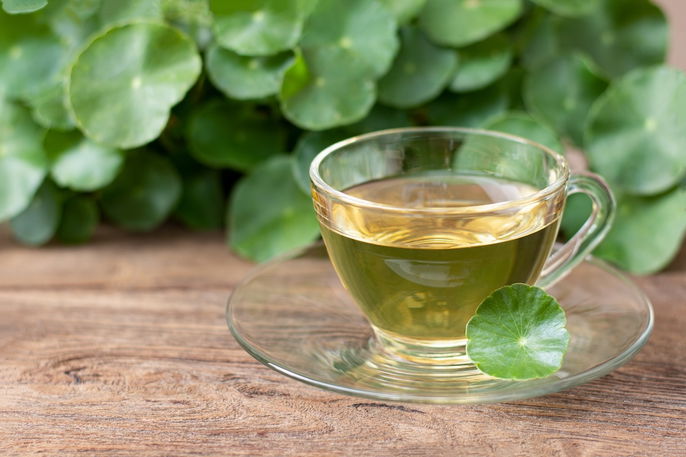
Health benefits
The main health benefits of Centella asiatica include:
1. Promoting wound healing
Centella asiatica contains triterpenoids such as asiaticoside and brahmoside, which promote skin repair and can speed up the healing of minor wounds and mild burns.
It also helps reduce inflammation and stimulates collagen production, supporting faster and more effective skin recovery. Learn more about wound care.
2. Helping treat skin problems
Centella asiatica has anti-inflammatory and antioxidant properties due to compounds such as asiaticoside, madecassoside, asiatic acid, and madecassic acid.
These substances help decrease inflammation and oxidative stress in skin cells, making it useful for managing skin problems like acne, psoriasis, eczema, and atopic dermatitis.
3. Relieving arthritis symptoms
Thanks to its anti-inflammatory effects, Centella asiatica may help reduce pain and swelling in people with rheumatoid arthritis.
This benefit is mainly due to madecassoside, which helps lower the levels of inflammatory substances in the body.
4. Reducing sagging skin and stretch marks
Rich in triterpenoids that boost collagen production, Centella asiatica may help prevent and reduce stretch marks.
It also helps combat sagging and wrinkles due to its flavonoids, antioxidants, and vitamin C that work together to prevent premature aging and keep the skin firm and hydrated.
5. Improving circulation
Centella asiatica helps strengthen veins and improve blood flow, which may be beneficial for people with varicose veins and hemorrhoids.
It also helps reduce swelling, numbness, heaviness, tiredness, and leg cramps.
6. Preventing cardiovascular disease
Centella asiatica may help prevent or support the treatment of cardiovascular diseases, such as atherosclerosis, high blood pressure, stroke, and heart attack.
Its asiaticoside and asiatic acid help reduce inflammation in blood vessels, prevent fat buildup, and promote better circulation.
7. Treating gastrointestinal problems
The triterpenoids in Centella asiatica have antioxidant and anti-inflammatory effects that can help manage digestive issues like colitis, pancreatitis, or damage to the stomach lining.
It also has wound-healing and antibacterial properties that may help reduce Helicobacter pylori (H. pylori) bacteria in the stomach and improve ulcer healing.
8. Regulating blood sugar levels
Madecassoside and asiatic acid in Centella asiatica may help control blood sugar levels and reduce insulin resistance, which can benefit people with type 2 diabetes.
However, more research is needed to confirm this benefit, and Centella asiatica should not replace medical treatment prescribed for diabetes.
9. Supporting osteoporosis treatment
Centella asiatica can help reduce bone resorption by lowering the formation of osteoclasts, which are cells responsible for breaking down bone tissue. This supports stronger bones and helps prevent fractures.
10. Improving memory
Centella asiatica may help improve memory due to its anti-inflammatory and antioxidant actions, which protect neurons from damage caused by free radicals.
This neuroprotective effect is mainly attributed to asiatic acid.
11. Preventing neurodegenerative diseases
The asiatic acid, asiaticoside, and madecassoside in Centella asiatica help protect brain cells, reduce inflammation in neurons, and improve nerve communication.
These effects may help prevent neurodegenerative diseases such as Alzheimer’s and Parkinson’s.
Centella asiatica also has neurotrophic effects, helping maintain neuron survival and regulate neurotransmitters in the brain.
12. Reducing anxiety and improving mood
Centella asiatica acts on the nervous system with calming, revitalizing, and mood-enhancing effects. It is often used to help reduce anxiety, improve sleep, and support mental clarity.
13. Preventing and fighting cancer
The antioxidants and vitamin C in Centella asiatica help protect cells from free radical damage, which may lower the risk of developing certain types of cancer.
Some studies also suggest that compounds like asiatic acid and asiaticoside may help slow tumor growth and inhibit cancer cell activity in the colon, liver, prostate, and breast.
However, more scientific research is needed to confirm these potential effects.
Does Centella asiatica help with weight loss?
Centella asiatica may help reduce food intake and body weight by acting on appetite control centers in the brain.
It can also help lower stress levels, which may decrease stress-related overeating.
Additionally, its circulation-boosting properties can reduce swelling and fatigue in the legs caused by excess weight.
For these reasons, Centella asiatica can be a helpful supplement to support a healthy weight-loss plan when combined with a balanced diet and regular exercise.
How to use
Centella asiatica can be consumed as a tea, tincture, or capsules, and can also be applied to the skin in the form of creams, lotions, or serums.
1. Centella asiatica tea
Centella asiatica tea can help reduce water retention, improve circulation, boost memory, and support blood sugar control.
Ingredients
-
1 Tbsp dried Centella asiatica leaves;
-
2 cups (500 mL) of water.
Preparation
Boil the water, add the Centella asiatica leaves, and remove from the heat. Cover and let steep for 10 to 15 minutes. Let it cool and drink 2 to 3 times per day.
2. Centella asiatica capsules
Centella asiatica capsules should be taken orally (by mouth). A typical adult dose is 2 capsules of 300 mg of dry leaf extract, twice a day with meals.
Capsules should only be used under the supervision of a doctor or herbal medicine specialist for the recommended period of time.
3. Centella asiatica cream
Centella asiatica cream, available in pharmacies and natural product stores, can help reduce swelling and heaviness in the legs, improve varicose veins, and reduce cellulite and fluid retention.
Examples include over-the-counter products labeled as “Gotu Kola” or “Centella asiatica cream.”
4. Centella asiatica serum
Centella asiatica serum can be applied to the face to reduce or prevent wrinkles and fine lines, making it a valuable part of a skincare routine.
It should be used after cleansing and toning the skin, followed by a daily facial moisturizer.
Products containing Centella asiatica are often labeled as “Cica Serum” or “Centella Ampoule.”
5. Centella asiatica tincture
Centella asiatica tincture should be taken orally at a dose of 4 to 10 drops diluted in water, once or twice daily.
Because tincture concentrations vary, it should only be used under the guidance of a doctor or licensed herbal medicine specialist.
Also recommended: How to Make a Tincture: Step-by-Step Guide (& Health Benefits) tuasaude.com/en/how-to-make-a-tincturePrecautions for use
Product safety reports generally state that safe oral doses for adults are typically between 60–180 mg daily of extract, and 600–1800 mg daily when using capsules or powders of dried leaves.
Duration of use should be determined by a doctor or licensed herbal medicine specialist.
Side effects
Side effects mainly occur with topical use and may include redness, itching, and increased sun sensitivity.
Taking high doses may cause nausea, dizziness, headaches, stomach pain, or vomiting.
Contraindications to use
Centella asiatica should be avoided by children and teenagers under 18 as well as people who are pregnant or breastfeeding.
People with hepatitis, liver or kidney problems, or a history of skin cancer should not use Centella asiatica.
Centella asiatica should be discontinued at least 2 weeks before surgery or any medical or dental procedures.
Because the tincture contains alcohol, it should not be used by people in recovery for alcohol use disorder or those taking disulfiram.