


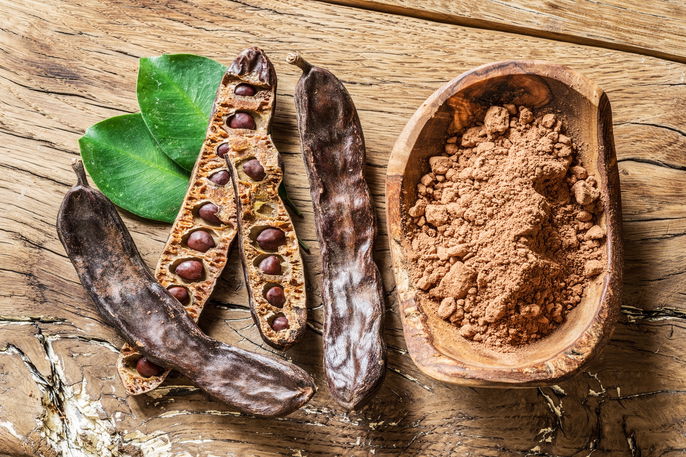
Carob is a naturally sweet fruit that grows on the carob tree and produces dark pods with edible seeds. It has a flavor similar to cocoa and is often used as a caffeine-free alternative to chocolate.
This fruit is rich in antioxidants, especially polyphenols, and provides fiber, B vitamins, calcium, and magnesium. Because carob is low in fat and calories, it is commonly included in diets focused on digestive health, blood sugar control, bone strength, and weight management.
Carob is available as powder, gum, or cream and can be found in grocery stores, health food stores, or online. It is often added to milk, baked goods, and desserts, and is also used in processed foods such as cereal bars and jellies.
Health benefits
The main health benefits of carob are:
1. Improving gastrointestinal health
Because it contains fiber and tannins, carob supports digestive health. It can help reduce diarrhea, heartburn, and vomiting, while also promoting a balanced gut microbiome.
2. Managing cholesterol
Carob is rich in antioxidants, which help regulate LDL cholesterol and triglyceride levels.
According to the CDC, eating foods that are high in fiber and low in saturated fats can help prevent high cholesterol. Because carob contains fiber, it can be part of a heart‑healthy diet.
Its antioxidants may also help prevent cardiovascular diseases, such as atherosclerosis, by reducing fat deposits in the arteries and limiting fat absorption in the body.
3. Regulating blood sugar levels
Because it is high in fiber, particularly pectin, carob can help manage diabetes by supporting healthy blood glucose levels. Foods made with carob usually have a lower glycemic index, making them a good choice for a diabetic diet.
4. Maintaining healthy bones
Carob is rich in calcium and magnesium, minerals that support bone density and help strengthen bones and teeth. Regular consumption may also help prevent fractures and osteoporosis.
5. Promoting weight loss
Carob is low in calories and fat but high in fiber. When included as part of a healthy, balanced diet, it can help you feel fuller for longer and support weight loss.
6. Improving sleep quality
Because carob is naturally caffeine-free and has a sweet flavor, it can serve as a substitute for chocolate or cocoa. It can also be enjoyed at night without affecting sleep quality, especially for people sensitive to caffeine.
7. Preventing cancer
Because carob is rich in antioxidants, it may help protect cells from damage caused by free radicals and also has anti-inflammatory properties that could aid in cancer prevention.
However, further research is needed to confirm these potential effects.
Nutrition facts
The table below shows the nutritional values for 100 grams of carob powder (carob flour):
To gain the full benefits of carob, it should be consumed as part of a healthy, balanced diet combined with regular physical activity.
How to consume
Carob powder can be used in recipes for cakes, puddings, cookies, and other sweets. It’s often used as a substitute for cocoa powder or chocolate. Furthermore, carob gum acts as a thickening, emulsifying, and gelling agent in various processed foods.
Based on the Pediatric Gastroesophageal Reflux Clinical Practice Guidelines, carob bean-based thickeners can be used to thicken breast milk when thickening is being considered, with specific age-related precautions noted in the guidance. It is also used in certain infant formulas to help reduce reflux and vomiting by increasing the formula’s thickness.
Carob milk
Carob milk is a caffeine-free alternative to chocolate milk, offering a similar flavor. To make it, mix 1 teaspoon of carob flour into a glass of milk and sweeten to taste, if desired.
Carob gum for vomiting or reflux
Mix 1 tablespoon of carob gum in a glass of water and drink the mixture. For infants, use 1.2 to 2.4 grams of carob gum per 120 milliliters of milk.
Carob flour for diarrhea
Mix 25 g of flour in one glass of water or warm milk. Drink after each episode of diarrhea. When combined with sunflower seed flour and rice flour, this carob flour mixture can also be used to help manage diarrhea in babies and pregnant people.
Healthy recipes
Below are some healthy recipes that use carob flour:
1. Gluten-free carob cake
This recipe is simple to prepare and completely gluten-free, making it suitable for people with gluten intolerance or celiac disease.
Ingredients:
- 1¾ cups of brown sugar;
- 5 eggs;
- ⅔ cup soybean oil;
- ¾ cup plain yogurt;
- ¼ cup carob powder;
- 1¾ cups rice cream;
- 1 cup sweet cassava starch;
- 1 cup potato starch;
- 10 drops vanilla extract;
- 2 teaspoons baking powder.
Directions
Blend the eggs, oil, sugar, yogurt, and vanilla extract until smooth. Add the dry ingredients and mix until the batter is uniform. Finally, add the baking powder and stir gently to combine. Pour into a greased and floured pan, and bake for 25 minutes at 410°F (210°C).
2. Carob cream
Ingredients
- ¾ cup of cold milk;
- 2 tablespoons of cornstarch;
- 2 tablespoons of carob powder;
- 1 tablespoon of sugar;
- 1 cinnamon stick.
Directions
Mix the cornstarch with the cold milk until fully dissolved. Then add the remaining ingredients and cook over low heat, stirring constantly, until the mixture thickens. Remove from heat, discard the cinnamon stick, pour into serving cups, and refrigerate for 1 hour. Serve chilled.
3. Carob and quinoa pancakes
Ingredients
- 1 tablespoon of carob flour;
- 1 cup of quinoa, oat or almond flour;
- 1 egg white;
- 1 cup of rice milk or any other plant-based milk;
- 1 teaspoon of stevia;
- 1 pinch of salt;
- 1 pinch of baking soda.
Directions
Beat the egg white, then add the milk, stevia, and salt, mixing well. Next, stir in the dry ingredients until the batter is smooth and well combined. Heat a frying pan over medium heat and lightly grease it with a little olive oil.
Pour a ladleful of batter into the pan and cook each side for about 5 minutes, or until bubbles form on the surface. Serve with cheese, honey, or jam.