


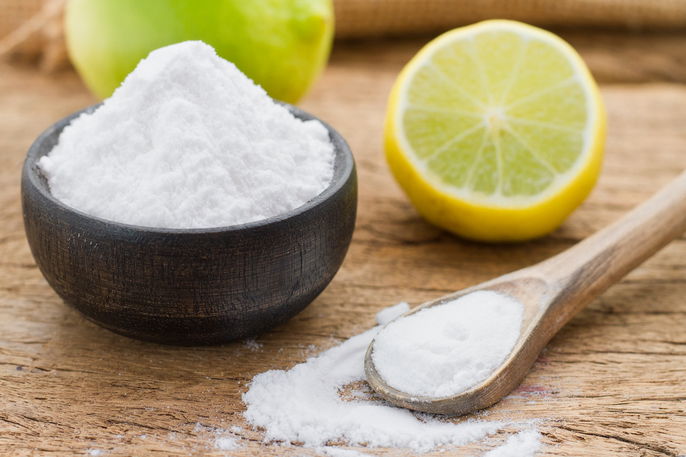
Baking soda mixed with lemon is often used to whiten teeth, fade scars, or alleviate gastroesophageal reflux symptoms like stomach pain and chronic heartburn. Many people turn to this home remedy for quick relief or cosmetic improvements.
However, few scientific studies validate the specific benefits of combining baking soda and lemon, so this mixture should only be used under medical supervision. Unproven home remedies can sometimes carry risks if not used correctly.
Beyond health uses, baking soda and lemon serve as an effective homemade cleaner for sanitizing various household surfaces. This combination can also help lift stains from carpets or clear clogged sink drains.
What it is for
Based on the individual properties of lemon and baking soda, we explain the possible effects of these ingredients for each of the most common uses:
1. Whiten teeth
Several studies on sodium bicarbonate and oral health show that the substance can eliminate excess bacteria in the mouth, reducing plaque and effectively making teeth whiter.
Additionally, a 2017 investigation into toothpastes containing sodium bicarbonate concluded that these pastes could eliminate superficial stains on teeth due to the presence of the bicarbonate.
Regarding lemon, a 2015 study demonstrated that the fruit contains acids capable of eroding tooth enamel, which increases the risk of tooth sensitivity and cavities.
Precautions: although no specific study evaluates the effect of mixing baking soda with lemon on dental health, its use is discouraged, especially due to the risks of applying lemon directly to the teeth.
The ideal approach is to consult a dentist for professional whitening.
2. Relieve reflux and heartburn
Due to its basic pH of 9, sodium bicarbonate is a substance that has demonstrated the ability to raise the pH of gastric contents, making the stomach environment less acidic.
Consequently, the substance can help relieve typical reflux symptoms, which occur when stomach contents back up into the esophagus.
Furthermore, although lemon is acidic, it may have an alkalizing effect when diluted in water, potentially reducing stomach acidity and helping to decrease reflux symptoms.
However, there are over-the-counter antacids that combine baking soda with citric acid in precise amounts; when combined, these ingredients produce sodium citrate, a buffer that prevents sudden shifts in stomach pH.
Precautions: since it is difficult to correctly measure the ratio of sodium bicarbonate to lemon at home, it is advisable to use a commercial antacid rather than mixing these ingredients yourself to avoid using too much lemon.
If the homemade mixture contains too much baking soda, it could make the stomach pH too basic, hindering digestion and increasing gas formation. Conversely, if the mixture has too much lemon, the pH may remain acidic, failing to relieve symptoms.
3. Remove scars
Lemon is an ingredient containing natural acids, such as vitamin C, which is widely used in peeling creams to exfoliate the superficial skin layer and help disguise scars.
However, when used in its natural form without other lab-stabilized ingredients, vitamin C is not correctly absorbed by the skin and therefore does not produce an effective peeling result.
Additionally, if used in excessive amounts, lemon juice can alter the skin's pH, making it more acidic. When this happens, the skin tends to stain or become irritated, and sensitivity to UV rays increases, raising the risk of sunburns.
As for baking soda, no studies demonstrate a beneficial action on the skin. However, because it has a basic pH, it can also disrupt the skin's pH balance, increasing the risk of dryness or even excess oil production.
Precautions: to remove scars, it is important to consult a dermatologist, as a doctor can evaluate the scar type and indicate the best available treatment, which may not include a peel. Even if a peel is indicated, it is best to use products with a pH that does not damage the skin.
4. Clean surfaces
A mixture of sodium bicarbonate and lemon can also be used to clean surfaces, remove stains from carpets or towels, or unclog sink drains.
To boost the cleaning effect, vinegar can be added to the mixture and applied to countertops, tables, sinks, stoves, or dishes.
Precautions: when preparing a mixture of baking soda, lemon, and vinegar, you should wear gloves to prevent the lemon from contacting your skin, as it can cause chemical burns or irritation.
Possible risks
When taken for a prolonged time, more than 2 weeks, baking soda with lemon can cause side effects, such as acid rebound and worsening heartburn or reflux symptoms.
Additionally, using baking soda with lemon on the skin can result in burns, particularly when the treated area is exposed to sunlight.