


- At ten months, babies develop significant physical and cognitive skills such as the pincer grasp, crawling, sitting independently, and responding to their names.
- Nutrition transitions toward five daily meals featuring fruit purees and savory dishes with proteins and grains to support rapid growth and healthy eating habits.
- Establishing a calming bedtime routine without screens helps infants distinguish between day and night, leading to better sleep quality and self-soothing skills.
By 10 months, your baby is likely using a pincer grasp to pick up small objects and food with their thumb and index finger. They can typically sit up without help, stand while holding onto furniture, and point toward the things they want.
While breastfeeding remains a healthy part of their diet, solid foods now provide the essential nutrients needed for continued growth. At this stage, you should offer fruit purees for snacks and savory meals for lunch and dinner.
Every baby follows their own unique timeline for reaching physical and cognitive milestones. If you have concerns about your child's progress, it is always best to consult your pediatrician for a professional evaluation.
Growth references
The following table outlines the ideal weight and growth ranges for a 10-month-old baby based on World Health Organization standards. These figures include height, head circumference, and expected monthly weight gain.
If your baby’s measurements fall outside these ranges, your pediatrician can help determine if their growth is on the right track.
Suggested diet
A 10-month-old's diet generally consists of five daily meals. This includes two snacks featuring fresh fruit and two savory meals containing fresh vegetables, grains, legumes, and proteins for lunch and dinner.
Below is a sample 3-day meal plan for a 10-month-old baby:
At 10 months, most babies can transition from smooth purees to foods that are finely chopped or lightly mashed. Always follow the specific dietary advice provided by your pediatrician or a pediatric nutritionist.
Current guidelines suggest that a 10-month-old needs approximately 800 ml (about 27 oz) of total fluid daily. This total includes breast milk or formula, liquids from soups, and plain water that has been filtered or boiled.
It is important to avoid offering certain foods like gelatin, chocolate, candy, added salt, and added sugar. Introducing these early can lead to poor eating habits and increase the long-term risk of obesity, diabetes, and high blood pressure.
Sleep patterns
Sleep patterns at 10 months vary by child as they begin to distinguish between day and night. Most babies sleep about 11 hours at night and take about 3 hours of naps during the day, often learning to self-soothe if they wake up.
To encourage a restful night, establish a calming routine by dimming the lights and reducing noise levels as bedtime approaches. A warm bath can also be an effective way to help your baby relax before being put down to sleep.
Avoid stimulating activities or screen time, such as television or phones, which can interfere with sleep quality. Instead, opt for quiet activities like reading a short story or listening to gentle music.
Development and movement
By 10 months, most babies are crawling, sitting up independently, and waving "bye-bye." They have a firm grip on objects and use their thumb and forefinger to pick up small items, often enjoying "cruising" by holding onto furniture.
Babies are also becoming more social, imitating their parents' actions and pointing at objects they find interesting. You may hear them say "mama" or "dada" specifically to get your attention, and they should respond when they hear their name.
You can support their development by teaching simple gestures like clapping or nodding "yes" and "no." Narrating your day and pointing to familiar people or objects also helps build their vocabulary and understanding.
Games and activities
Play is vital for a baby's creativity and social skills, especially when interacting with other children. Engaging in play with your baby strengthens your bond and improves their communication and emotional health.
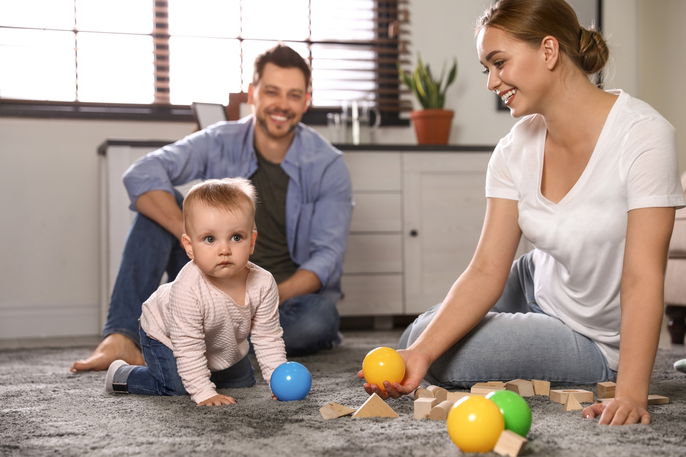
Ten-month-olds often enjoy rubber toys, bells, and plastic spoons. They are also fascinated by stacking blocks or pushing objects; letting them push a toy stroller or explore a large box full of toys can provide great entertainment.
Reading together is another excellent way to help them identify animals and body parts. Simple picture books, singing songs, and dancing are all effective ways to introduce new words and support intellectual growth.