


Xanthelasma is characterized by the appearance of yellowish plaques or small raised spots caused by cholesterol deposits beneath the skin, most commonly on the eyelids.
Also known as xanthelasma palpebrarum, these plaques can be associated with high cholesterol levels, hyperlipoproteinemia, diabetes, or primary biliary cholangitis.
Treatment should be supervised by a dermatologist, who may recommend removing the lesions through minor surgery, chemical peels, laser therapy, or electrocautery.
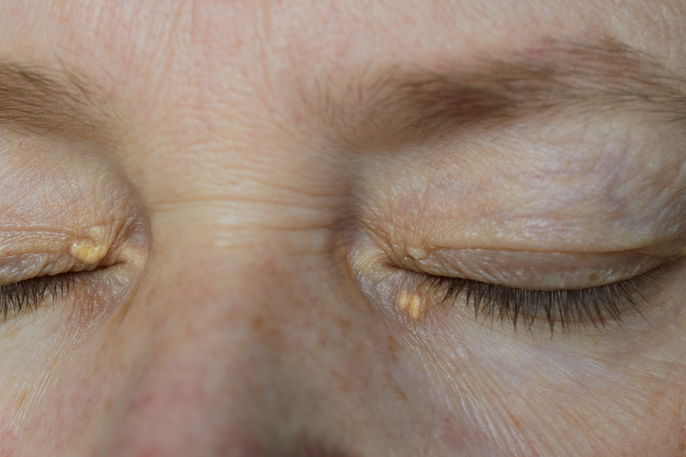
Main characteristics
Xanthelasma causes the formation of yellowish plaques or small raised bumps on the upper or lower eyelids.
In some cases, it may also appear on other areas of the face or body, such as the neck, shoulders, armpits, and chest.
Although xanthelasma usually does not cause pain or itching, its appearance can affect self-esteem and lead to emotional distress.
Confirming a diagnosis
A dermatologist or primary care provider can diagnose xanthelasma by examining the characteristic lesions on the skin.
To confirm the diagnosis and identify possible underlying conditions, a provider may order blood tests to measure cholesterol, glucose, and thyroid function levels.
In some cases, a skin biopsy may be requested to rule out other conditions, such as chalazion, sebaceous hyperplasia, or certain types of skin cancer.
Possible causes
The main causes of xanthelasma include:
-
High cholesterol;
-
Low HDL (good cholesterol) levels;
-
Primary biliary cholangitis;
-
Use of retinoids or estrogen therapy;
-
Sarcoidosis.
Xanthelasma can also develop as a result of acquired hyperlipoproteinemia, which may be linked to conditions such as diabetes, hypothyroidism, or nephrotic syndrome.
Treatment options
Depending on the location and size of the lesions, treatment options for xanthelasma may include:
-
Surgery: The dermatologist removes the plaques through small incisions under local anesthesia. This method is generally used for deeper lesions;
-
Laser ablation: Commonly used to remove superficial xanthelasma lesions;
-
Chemical peel: The dermatologist applies trichloroacetic acid (TCA) to destroy the cholesterol deposits on the skin;
-
Cryotherapy: Involves applying liquid nitrogen to the plaques, which freezes and eliminates the lesions;
-
Radiofrequency or fractional CO2 laser: These methods can also be used to improve cosmetic appearance and reduce the likelihood of recurrence.
To prevent recurrence or worsening of xanthelasma, it is important to maintain healthy habits, such as reducing the intake of saturated fats and alcoholic beverages; exercising regularly, ideally 3 to 5 times per week; and avoiding or quitting smoking.