


Whole grain rice, often called brown rice, is a whole grain that offers several health benefits, such as supporting digestion, helping with weight management, protecting heart health, and helping regulate blood sugar. These benefits are linked to the nutrients and compounds naturally present in this grain.
Unlike white rice, whole grain rice retains its protective outer layer and the germ, which provide meaningful amounts of fiber, minerals, and bioactive compounds. These include flavonoids and gamma-oryzanol, which have antioxidant and cardioprotective properties.
To cook whole grain rice, it is recommended to soak it for at least 3 hours and use enough water during cooking. A common ratio is at least 3 parts water to 1 part rice.
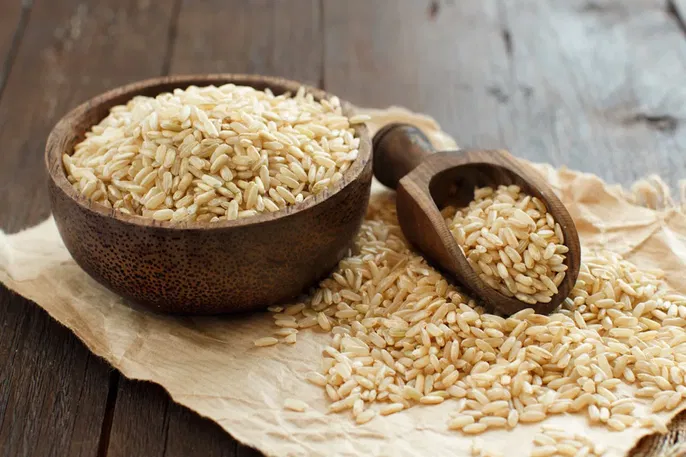
Main benefits
The main health benefits of whole grain rice are:
1. Improving gut health
Whole grain rice supports gut health because it contains the bran layer, which is rich in insoluble fiber.
This type of fiber helps increase stool bulk and stimulates intestinal motility, helping prevent constipation and making it easier to have a bowel movement.
In addition, whole grain rice also serves as food for beneficial ("good") gut bacteria, promoting a healthy gut microbiota.
2. Supporting weight loss
Whole grain rice contains carbohydrates but also fiber, which promotes fullness and can help limit overall food intake when eaten in moderation, aiding weight loss.
This rice variety retains bioactive compounds like gamma-oryzanol from its bran layer. These compounds link to better insulin sensitivity and more efficient metabolism. Together, they may help support weight control.
3. Improving cardiovascular health
Whole grain rice improves cardiovascular health thanks to its fiber content, antioxidants, and essential minerals, which protect the heart and blood vessels.
The fiber in whole grain rice helps support a healthy lipid profile by lowering total cholesterol and LDL levels and increasing levels of HDL cholesterol in the blood.
Antioxidant and anti-inflammatory compounds in whole grain rice, such as gamma-oryzanol, can help reduce vascular damage and lower the risk of atherosclerosis. In addition, magnesium and potassium help maintain healthy blood pressure.
4. Helping regulate blood sugar
Thanks to its fiber content, whole grain rice slows digestion and the absorption of carbohydrates, releasing glucose gradually into the bloodstream and helping prevent blood sugar spikes.
Whole grain rice also provides magnesium and compounds such as gamma-oryzanol, which help improve insulin activity and protect the pancreatic cells responsible for insulin production.
Its fiber promotes a feeling of fullness, helping to control calorie intake and body weight. This, in turn, supports better blood sugar regulation.
5. Lowering cancer risk
Whole grain rice contains bioactive compounds with antioxidant and anti-inflammatory properties, such as phenolic compounds and flavonoids, which help reduce oxidative stress and cellular damage caused by free radicals.
In addition, the high fiber content of whole grain rice has been associated with a lower risk of some types of cancer, especially colorectal cancer.
6. Supporting cognitive health
Whole grain rice supports cognitive health because it contains antioxidants and the mineral manganese, which help protect brain cells against oxidative damage.
Because of this, whole grain rice may help prevent age-related decline and reduce the risk of neurodegenerative diseases such as Alzheimer’s and Parkinson’s disease.
Does brown rice cause weight gain?
When included as part of a well-balanced diet, along with regular physical activity, brown rice does not cause weight gain.
This is because no single food alone can cause weight gain or weight loss. Weight gain happens when calorie intake is consistently higher than calorie use, such as by increasing overall calories in the diet or not being physically active.
Nutrition facts
The table below provides nutritional information for 100 g (about ½ cup) of cooked brown rice:
To get the full health benefits of whole grain rice, include it as part of a balanced, healthy diet.
How many calories are in brown rice?
The calorie content in 100 g of brown rice varies mainly based on whether it is raw or cooked, since it absorbs significant water during cooking.
Therefore, 100 g of raw brown rice has 367 calories, while 100 g of cooked brown rice has 123 calories.
How to prepare
To cook brown rice, it is recommended to soak the grain in water for 3 to 5 hours and cook it using an average ratio of 1:3, meaning the amount of water should always be three times the amount of rice.
To prepare, place 1 to 2 Tbsp of vegetable oil in a pot and, when hot, add 1 cup of brown rice and stir well, sautéing briefly.
Then add 3 cups of water and a pinch of salt, cooking over medium heat until the water starts boiling. Once it boils, reduce to low heat, cover the pot, and cook for about 30 minutes, or until fully cooked.
Finally, turn off the heat and let the rice sit for another 5 to 10 minutes with the lid on before serving.
Healthy recipes
Some healthy recipes with brown rice are:
1. Pressure cooker brown rice
Ingredients:
-
1 cup brown rice;
-
2 cups boiling water;
-
½ onion, diced;
-
1 Tbsp vegetable oil;
-
½ tsp salt;
-
1 bay leaf.
Directions:
Place a pressure cooker on medium heat without the lid and add the vegetable oil, onion, bay leaf, salt, and rice. Stir well with a spoon for 1 minute.
Add the water, stir again, cover the pot, and increase the heat. When the cooker comes up to pressure (starts whistling), lower the heat and cook for 15 minutes.
Turn off the heat and wait until all steam releases and the cooker stops whistling. Open the pot, fluff the grains with a fork, and serve.
2. Brown rice cookies
Ingredients:
-
500 g cooked brown rice;
-
2 eggs;
-
6 Tbsp honey;
-
120 g ground almonds;
-
100 g chopped nuts;
-
4 Tbsp cornstarch;
-
2 Tbsp butter;
-
1 Tbsp vegetable oil.
Directions:
In a bowl, mix all ingredients together except the vegetable oil. Grease a baking sheet with the vegetable oil and form small balls using a dessert spoon.
Bake in a preheated oven at 350°F (180°C) until golden. Let cool slightly and serve.
Frequently asked questions
Some common questions about whole grain rice are:
1. Does brown rice have carbohydrates?
Yes, brown rice has carbohydrates. Each 100 g of brown rice contains about 25.6 g of carbohydrates.
2. What is the difference between brown rice and white rice?
White rice goes through a milling and polishing process that removes the husk, bran, and germ, leaving only the endosperm, which is the white, starch-rich part. As a result, white rice is generally low in fiber and minerals.
This milling and polishing is done to change flavor, extend shelf life, and reduce cooking time.
Brown rice, on the other hand, is the hulled grain, where only the inedible outer hull is removed. Because it retains the bran and germ, brown rice has a higher content of fiber, minerals, and antioxidants.
3. Does brown rice contain gluten?
Like any other type of rice, brown rice does not contain gluten, a protein found specifically in wheat, rye, and barley.
Because of this, this grain can be part of a gluten free diet for people with gluten allergy or intolerance.