


- A white spot on the eye paired with blurry vision, trouble seeing, or new “spots” in vision should be checked promptly by an ophthalmologist.
- Eye pain, strong discomfort, light sensitivity, or increasing redness can signal a more serious problem, such as a corneal ulcer or infection.
- In children, a new white spot on the pupil, especially with crossed eyes or vision changes, needs urgent evaluation to rule out rare but serious causes like retinoblastoma.
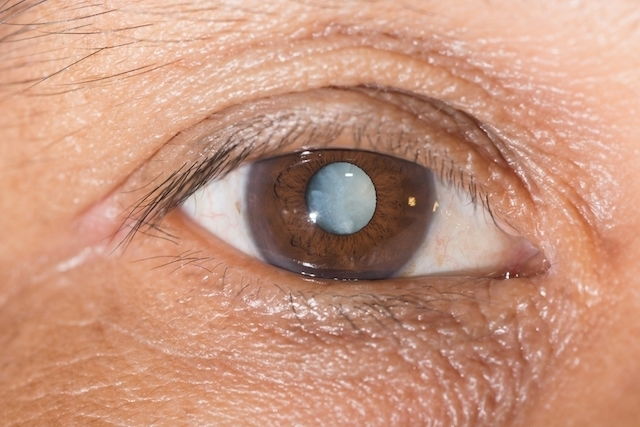
A white spot on the eye is often noticed on the pupil or cornea and can be linked to several eye conditions, ranging from infections to age-related changes. Common causes include cataracts, corneal ulcers, pterygium, toxocariasis, and rare conditions such as retinoblastoma.
A white spot on the eye may occur along with other symptoms such as blurry vision, redness, itching, pain, or difficulty seeing. The specific signs can vary depending on the underlying cause and may appear in one or both eyes.
Treatment for a white spot on the eye depends on the cause and may involve eye drops, medications, laser therapy, surgery, or close medical monitoring. An ophthalmologist can confirm the diagnosis through an eye exam and recommend the most appropriate treatment to prevent vision problems.
What causes a white spot on the eye?
The most common causes of a white spot on the eye are:
1. Retinoblastoma
A retinoblastoma is a rare type of cancer that affects one or both eyes. It is most commonly diagnosed in children.
This condition is usually easy to identify in newborns, either right after birth or during their first check-up with the pediatrician. It often presents with symptoms such as vision difficulties, eye redness, crossed eyes, and a noticeable white spot in the eye.
What to do: It is essential to consult an ophthalmologist for early diagnosis and treatment to prevent complications.
Treatment for retinoblastoma depends on how advanced the disease is. In some cases, lasers or cold therapy can be used to destroy the tumor. More severe cases may require chemotherapy.
2. Cataracts
Cataracts is a condition that causes gradual loss of vision. It most often occurs in people over 60 due to changes and clouding of the eye’s natural lens.
However, cataracts can also develop soon after birth, in which case they are called congenital cataracts. This form results from abnormal fetal development and can affect one or both eyes.
The characteristic sign of cataracts is a whitish opacity or sheen on the pupil, which can impair visual acuity and lead to blurred vision or, in severe cases, complete loss of vision.
What to do: Treatment for cataracts should be initiated as soon as the diagnosis is confirmed to prevent complications such as total vision loss and typically involves surgical removal of the affected lens.
3. Toxocariasis
Toxocariasis is an infectious disease caused by Toxocara parasites, primarily from canine or feline hosts. According to the Centers for Disease Control and Prevention (CDC), ocular toxocariasis can cause eye redness or irritation, seeing spots or flashes of light, vision loss, and an abnormally colored pupil, and it typically affects only one eye.
This condition is more common in children who play on floors, in sand, or with dirt contaminated by Toxocara eggs.
What to do: Cases of toxocariasis can be treated with corticosteroid eye drops to treat symptoms, as prescribed by an ophthalmologist, to alleviate symptoms and prevent disease progression.
4. Pterygium
Pterygium involves a white or yellowish fleshy growth that extends from the conjunctiva onto the cornea. It commonly causes symptoms such as blurry vision, discomfort during blinking, a foreign body sensation like sand in the eyes, and difficulty seeing clearly.
What to do: Consultation with an ophthalmologist is recommended to determine the most suitable treatment, which may include analgesic or lubricant eye drops. In severe cases that threaten vision, surgical intervention may be necessary.
5. Corneal ulcer
A corneal ulcer is a serious open sore on the cornea, the eye's clear front surface, often triggered by infection, injury, or irritation. It typically produces a foreign body sensation, blurry vision, light sensitivity, tearing, and a white or gray spot visible on the cornea.
According to the American Academy of Ophthalmology, corneal ulcers are commonly linked to eye infections and require urgent medical evaluation to help prevent complications.
What to do: Treatment for corneal ulcers varies based on the underlying cause. Doctors may prescribe antibacterial ointments or eye drops for infection, corticosteroids to reduce inflammation, or surgery in severe cases.
Red flags
It is important to see an ophthalmologist if you notice any of the following:
- Eye pain or discomfort;
- Difficulty seeing;
- Blurry vision;
- Night blindness;
- Spots in the eyes;
- Itchiness of the eye.
An ophthalmologist can confirm the diagnosis through a comprehensive eye exam and any necessary additional tests. Once the diagnosis is verified, treatment can be started promptly.