


Traps exercises are strength movements that target the trapezius muscle, which runs from the base of the skull to the middle of the back and across the shoulders. These exercises work the upper, middle, and lower trapezius, as well as nearby muscles that help control the shoulder blades, such as the serratus anterior and deltoid.
Research shows that different movements activate different parts of the trapezius. Shoulder shrugs tend to increase upper trapezius activity, while prone Y and T raises and scapular-focused movements better engage the middle and lower fibers.
Studies also show that targeted trapezius strengthening can improve neck and shoulder pain, posture, and muscle function, especially in people with desk jobs or chronic trapezius discomfort . Both gym-based and elastic-band home programs have been shown to increase strength and improve function when performed regularly.
Warm-up
A proper warm-up prepares the trapezius and shoulder muscles for traps exercises and may reduce stiffness and discomfort.
1. Shoulder blade squeezes
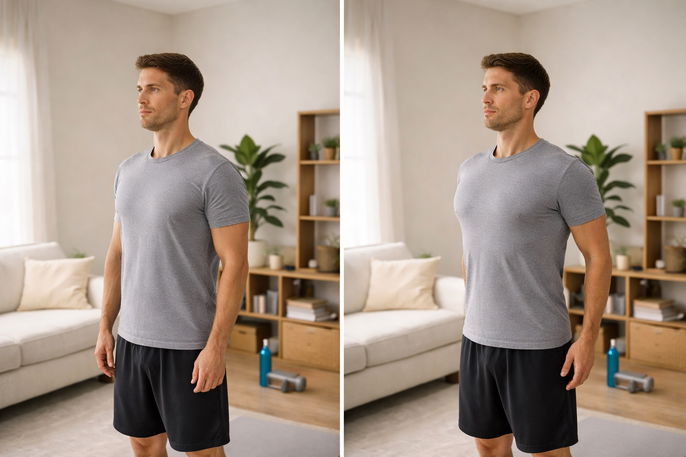
This movement activates the middle trapezius and improves control of the shoulder blades.
Start in a standing or seated position with arms relaxed at the sides. Gently pull the shoulder blades back and slightly down, hold for 3 to 5 seconds, then return to the starting position. Perform 2 to 3 sets of 10 to 15 repetitions, 3 to 5 days per week.
2. Light band shoulder abduction
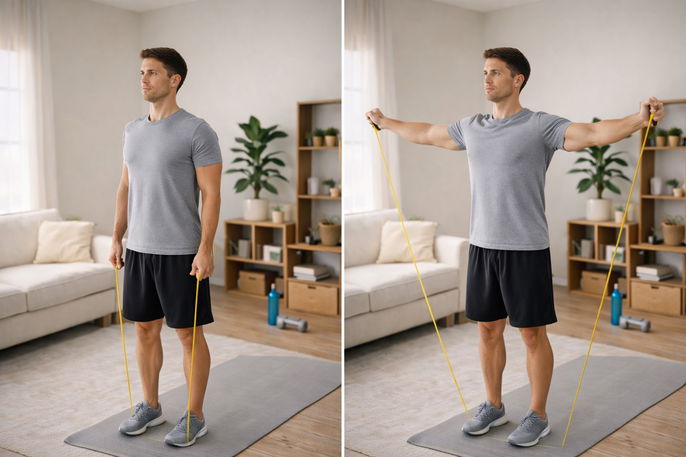
This exercise increases blood flow and gently activates the upper and middle trapezius.
Stand on a light resistance band and hold one end in each hand. With arms at the sides and elbows slightly bent, raise the arms out to about shoulder height, then slowly return. Perform 2 sets of 10 to 12 repetitions before the main workout.
Home exercises
Home-based traps exercises using elastic bands have been shown to improve trapezius strength and shoulder function.
1. Band shrugs
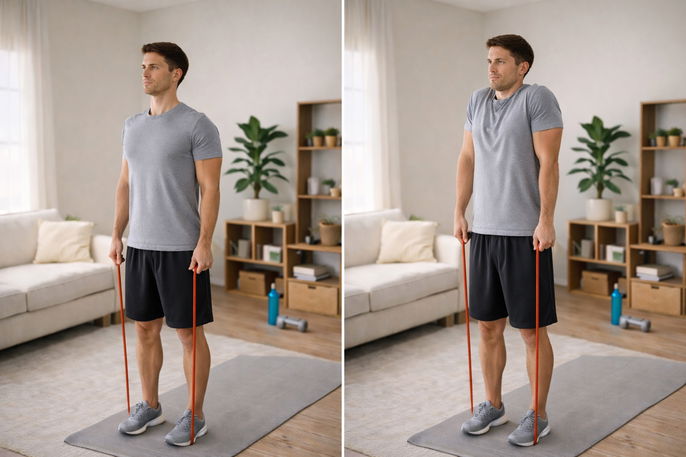
Band shrugs mainly target the upper trapezius, which lifts the shoulders.
Stand on a resistance band with feet hip-width apart and hold the ends in each hand. With arms straight, lift the shoulders toward the ears, pause briefly, then lower slowly. Perform 3 sets of 8 to 12 repetitions, 2 to 3 times per week.
2. Band Y-raise
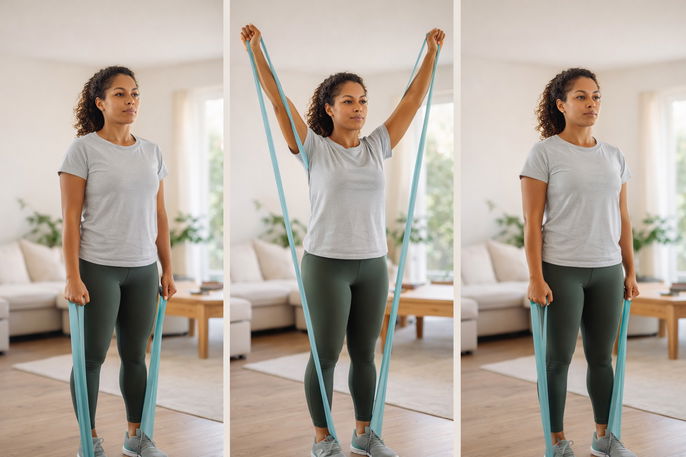
This exercise emphasizes the lower trapezius, which helps control shoulder blade position.
Secure a band under the feet or to a low anchor. With arms straight, raise them diagonally overhead to form a Y shape, keeping shoulders down and back. Slowly return to the start. Perform 2 to 3 sets of 8 to 12 repetitions.
3. Band row
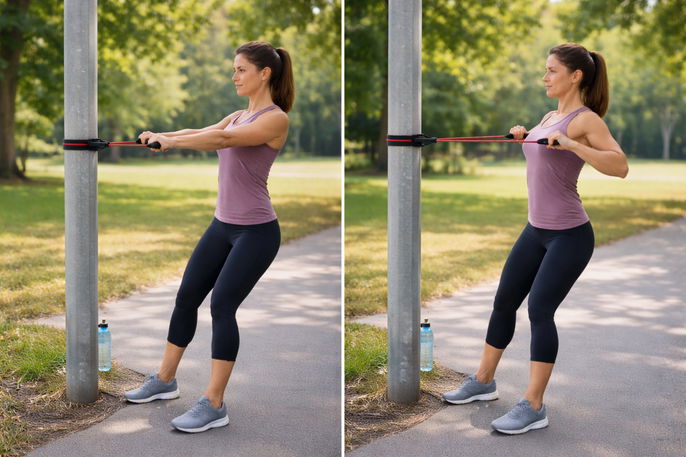
Band rows activate the middle trapezius and support better posture.
Attach the band in front at chest height. Hold the ends with arms extended, pull the elbows back while squeezing the shoulder blades together, then return with control. Perform 3 sets of 10 to 15 repetitions.
Gym exercises
Gym-based traps exercises allow heavier loading, which has been shown to improve strength and function in painful trapezius muscles.
1. Dumbbell or barbell shrug
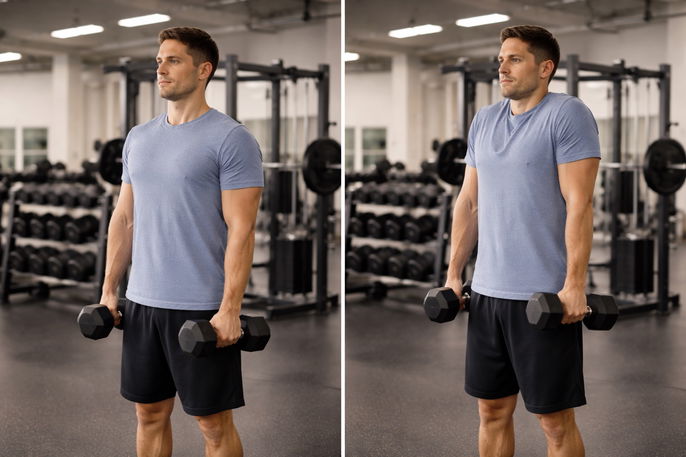
Heavy shoulder elevation strongly activates the upper trapezius.
Stand upright holding dumbbells at the sides or a barbell in front of the thighs. Lift the shoulders straight up without rolling them, pause briefly, then lower slowly. Perform 3 to 4 sets of 6 to 10 repetitions, 2 to 3 times per week.
2. Prone Y-raise on bench
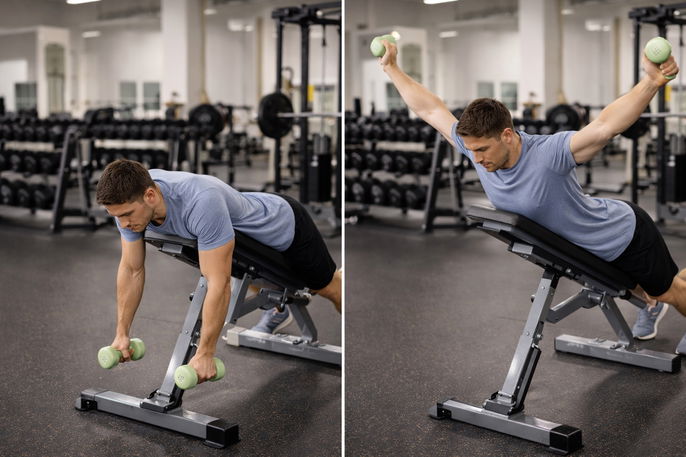
This movement is considered one of the most effective for lower trapezius activation.
Lie face down on an incline bench with light dumbbells in each hand and arms hanging down. Raise the arms overhead in a Y shape with thumbs pointing up, then return slowly. Perform 2 to 3 sets of 8 to 12 repetitions.
3. Face pull or cable row with scapular focus
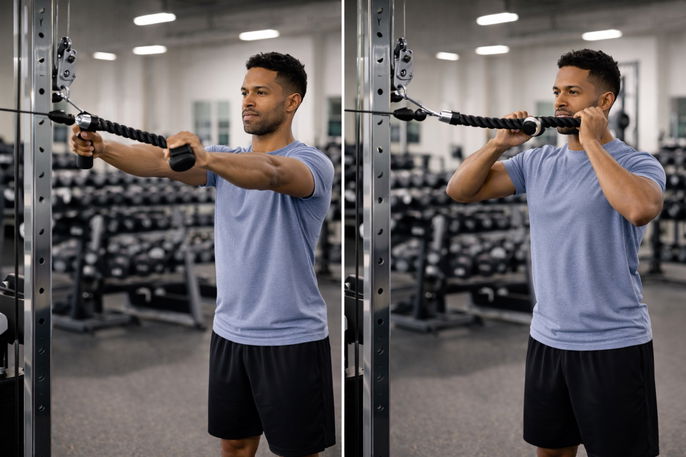
These exercises emphasize middle trapezius activation and improve scapular control.
Using a cable machine at chest or face height, pull the handle toward the chest or face while squeezing the shoulder blades together and slightly down. Return with control. Perform 3 sets of 10 to 12 repetitions.
Cool down
Cooling down after traps exercises helps relax tight fibers and maintain balance between upper and lower trapezius activity.
1. Upper trapezius stretch
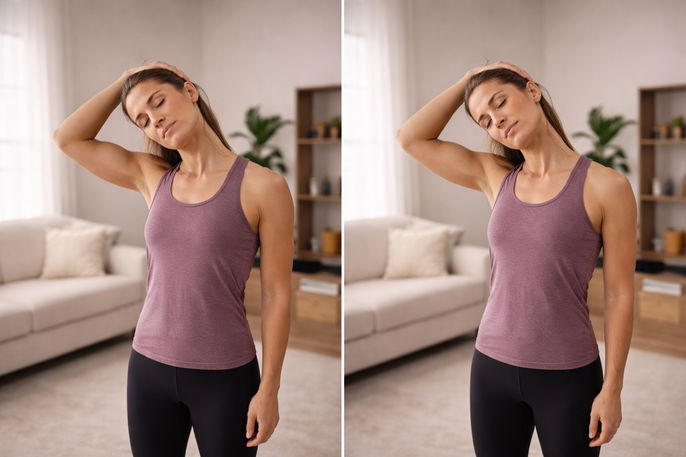
Sit or stand upright. Gently tilt the head to one side, bringing the ear toward the shoulder until a stretch is felt along the side of the neck. Hold for 20 to 30 seconds and repeat on the other side. Perform 2 to 3 rounds, especially if there is neck tightness.
2. Child’s pose with arm reach
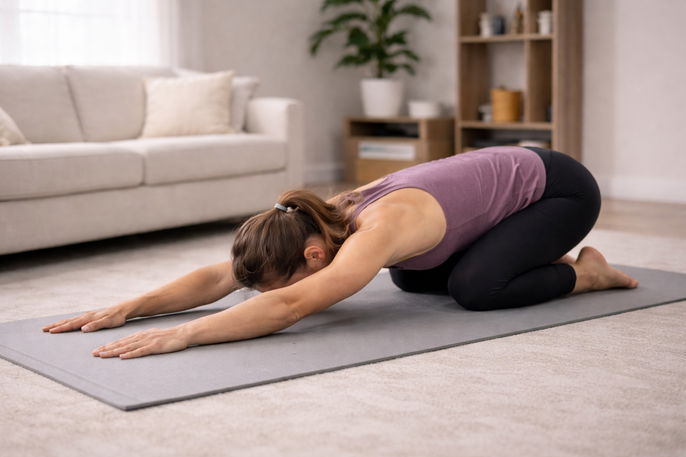
This stretch gently lengthens the upper back and shoulder muscles.
Kneel on the floor, sit back on the heels, and reach the arms forward on the ground. Hold for 30 seconds while breathing normally, then return slowly.
Free workout plans
A balanced traps exercises routine should target upper, middle, and lower fibers and include both strengthening and stretching.
Home plan example
-
Band shrugs: 3 sets of 10 repetitions
-
Band Y-raise: 3 sets of 10 repetitions
- Band row: 3 sets of 12 repetitions
Perform 2 to 3 times per week.
Gym plan example
-
Barbell or dumbbell shrugs: 4 sets of 8 repetitions
-
Prone Y-raise: 3 sets of 10 repetitions
-
Face pulls or cable rows: 3 sets of 12 repetitions
Perform 2 to 3 times per week with at least one rest day between sessions.
Regular practice of traps exercises, combined with attention to posture and balanced muscle training, may improve strength, reduce neck and shoulder discomfort, and support long-term shoulder health.