


- A tracheostomy creates a direct airway through the neck when normal breathing is blocked or narrowed, and the tube may be connected to oxygen or a ventilator in the hospital.
- It may be needed for conditions like head and neck trauma, throat or upper airway cancers, vocal cord paralysis, prolonged intubation, or severe swelling from anaphylaxis or infection.
- Seek urgent medical care for trouble breathing through the tube, new bleeding, the tube coming out, or signs of infection like redness, swelling, or drainage around the site.
A tracheostomy is a small opening created in the front of the neck, through the windpipe (trachea), to allow air to reach the lungs when the normal breathing path is blocked or narrowed. Sometimes, the tracheostomy tube is connected to a machine that supplies oxygen.
A tracheotomy is a surgical procedure usually performed in a hospital by a doctor. It may be recommended for conditions such as a throat tumor, paralysis caused by neurological disorders, severe injury to the face or neck, anaphylaxis, or a serious COVID-19 infection. Depending on the underlying cause, the tracheostomy may be needed temporarily or for the rest of a person’s life.
If a tracheostomy needs to stay in place for a long time, it is important to learn how to care for it properly to prevent serious problems, such as choking or lung infection. This care can be provided by a caregiver if the person is bed bound, or by the person themselves if they are able to do it safely.
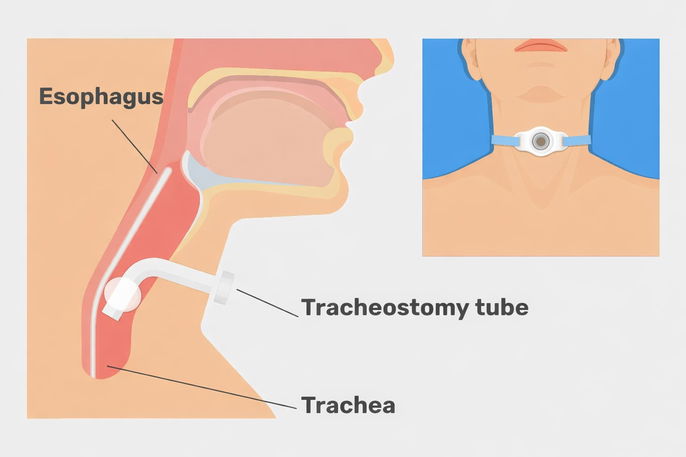
Indications for use
A tracheostomy is used to help air enter the lungs or to deliver oxygen, which helps support breathing and keep the airways open.
A tracheostomy is commonly recommended in the following situations:
-
Congenital malformations of the larynx;
-
A foreign object in the upper airway;
-
Trauma, or preparation for head and neck surgery;
-
Cancer of the throat, larynx, pharynx, or the upper part of the trachea;
-
Vocal cord paralysis;
-
Prolonged orotracheal intubation, usually longer than 1 to 2 weeks;
-
Swelling of the glottis due to burns, infections, or anaphylaxis;
-
Obstructive sleep apnea (OSA).
In addition, a tracheostomy can be used to suction and clear the airways in cases of paralysis or neurological conditions that make it hard to cough and remove mucus from the throat or trachea.
A tracheostomy may also be considered for people hospitalized with severe COVID-19 infection who are on mechanical ventilation.
Procedure steps
A tracheostomy is performed in the hospital with general anesthesia, although in some cases the doctor may choose local anesthesia depending on how complex the procedure is and how long it is expected to take.
A small cut is made in the neck to expose the trachea, and then a second cut is made in the tracheal cartilage to allow the tracheostomy tube to pass through. In the first phase, or when the person only needs a tracheostomy while in the hospital, the tube may also be connected to machines that help with breathing, according to the American Thoracic Society (ATS).
While it is possible to go home with a tracheostomy, it is more commonly used in people with more serious conditions who need to stay in the intensive care unit (ICU) for an extended period, for example.
Tracheostomy care
To reduce the risk of serious complications, it is important to keep the tracheostomy tube (cannula) clean and free of secretions, and to replace all tracheostomy parts as directed by the doctor.
It’s also important to watch the tracheostomy site for redness, swelling, or any fluid coming from the area. If these signs appear, they may suggest an infection and should be reported to a doctor right away.
1. How to clean the cannula
To keep the tracheostomy cannula clean and free of secretions, which can lead to choking or infection, you should:
-
Put on clean gloves;
-
Remove the inner cannula and place it in a container with soap and water for 5 minutes;
-
Suction the inside of the outer cannula using a secretion suction device. If you do not have a suction device, you can inject 2 mL of normal saline into the outer cannula if the person can cough, to trigger coughing and help remove built-up secretions from the airways;
-
Insert a clean, sterilized inner cannula;
-
Scrub the dirty inner cannula (the one you removed) inside and out using a sponge or a small brush;
-
Place the dirty cannula in boiling water for about 10 minutes;
-
Dry the cannula with sterile gauze and store it in a container disinfected with alcohol, so it can be used at the next change.
The outer tracheostomy cannula should only be changed by a healthcare professional, because there is a high risk that the opening can close and cause choking. For this reason, the person should go to the hospital at least once a week to change the full tracheostomy set, or as directed by the doctor.
2. How to change the padded dressing
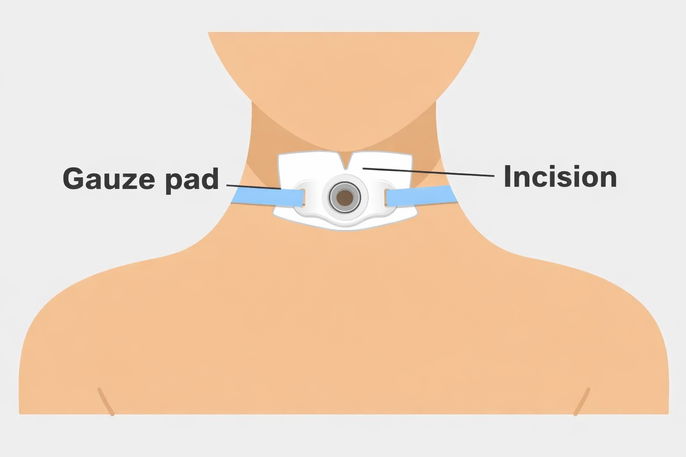
The padded tracheostomy dressing, which prevents the tube from rubbing directly against the skin, should be changed whenever it becomes dirty or wet. After removing the soiled dressing, clean the skin around the tracheostomy with a small amount of normal saline and apply a small amount of fragrance-free moisturizing cream.
To place a new dressing, you can use tracheostomy-specific pads, or you can use 2 clean gauze pads with a small cut at the top.
Warning signs
Some signs that mean you should go to a hospital or emergency room right away include:
-
Trouble breathing through the tube;
-
Pain or discomfort at the tracheostomy site;
-
The outer cannula becomes blocked by secretions;
-
The outer cannula comes out by accident;
-
The tube changes position;
-
Mucus (phlegm) with blood;
-
Bleeding at the tracheostomy site;
-
Signs of infection, such as redness or swelling of the skin around the tracheostomy.
If the person only has mild shortness of breath, you can try removing the inner cannula and cleaning it properly. If the symptom does not improve, go to the emergency room right away.
Possible complications
A tracheotomy is generally safe, but because it is a surgical procedure, complications can happen during or soon after surgery, such as:
-
Bleeding;
-
Pulmonary edema;
-
Injury to the trachea, the thyroid gland, or nerves in the neck;
-
Incorrect placement of the tube or tube displacement;
-
Subcutaneous emphysema, when air becomes trapped under the skin of the neck;
-
Pneumothorax, which is a buildup of air between the chest wall and the lungs;
-
A neck hematoma that can press on the trachea.
These complications are more likely when a tracheostomy is done in an emergency, because it has to be performed quickly using whatever equipment is available, such as in cases of glottic swelling.