


Tinea versicolor is a common skin condition caused by the overgrowth of a fungus called Malassezia furfur. This fungus affects the skin’s ability to produce melanin, leading to lighter or discolored patches that become more noticeable after sun exposure.
Tinea versicolor usually causes white, pink, or slightly red spots on the chest, back, neck, or arms, and may be associated with mild itching or flaking. These patches can grow over time and merge into larger areas, especially in warm and humid conditions.
Tinea versicolor is not contagious, but it can persist or return without proper treatment. Management typically includes antifungal soaps, creams, or oral medications, depending on the extent and severity of the condition.
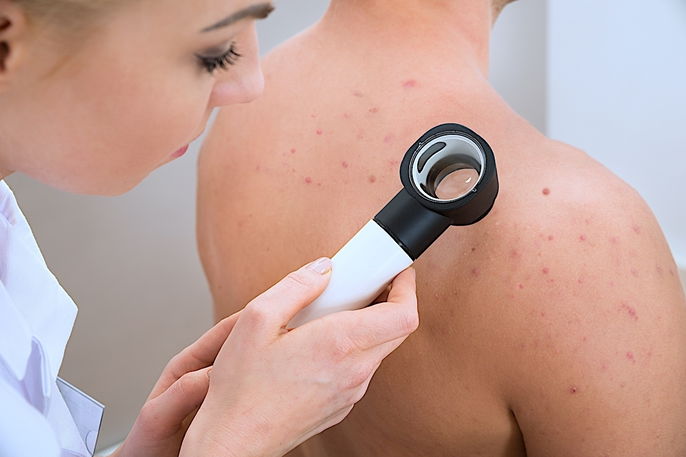
Tinea versicolor symptoms
The main symptoms of tinea versicolor are:
- Circular, white spots on the trunk, neck, and arms
- Skin peeling or flaking in the affected areas
- Spots that fade after summer
- Itching in the affected areas that worsens in warm or humid conditions
The spots caused by tinea versicolor may sometimes appear reddish. They are usually oval-shaped and can gradually increase in size, often merging to form larger patches over time.
Even though tinea versicolor usually causes few symptoms, a dermatologist can confirm the diagnosis and recommend the most appropriate treatment.
Possible causes
Tinea versicolor is usually caused by an overgrowth of a fungus called Malassezia furfur. This fungus is naturally found on the skin, especially in oily areas like the face, scalp, and back.
Some people may be more likely to develop this overgrowth due to genetics. Heat, humidity, excessive sweating, low immunity, pregnancy, and adolescence can also increase the risk.
Is it contagious?
Tinea versicolor is not contagious, as the fungus that causes it is normally present on the skin and usually does not cause problems. However, it can multiply quickly under certain conditions, leading to visible spots.
Confirming a diagnosis
A dermatologist usually diagnoses tinea versicolor by examining the skin and looking at the color, shape, and location of the patches. In some cases, a Wood’s lamp may be used to help detect changes in the affected skin.
The doctor may also gently scrape a small sample of skin and send it to a lab. This can confirm whether fungus is present and help guide treatment.
Treatment options
Tinea versicolor treatment may include:
1. Antifungal soaps and shampoos
Soaps and shampoos with selenium sulfide, zinc pyrithione, or sulfur and salicylic acid may be used to help reduce the fungus on the skin. They work on the outer layer of the skin, where the fungus is usually found, and help improve symptoms over time.
2. Antifungal ointments
Based on the CDC, topical azole products, selenium sulfide shampoo, or topical zinc pyrithione are recommended treatments for tinea versicolor. Topical antifungal creams, such as ketoconazole, may be prescribed to eliminate the fungus and prevent it from spreading. These treatments are typically applied for 2 to 3 weeks.
3. Oral antifungals
Oral antifungal medications, such as itraconazole or fluconazole, may be prescribed when tinea versicolor affects large areas of the body or does not improve with topical treatments.
These medications are used less often than topical options because they may cause side effects and are not always needed. According to the FDA, oral ketoconazole is generally avoided and limited to certain serious fungal infections due to the risk of potentially fatal liver injury and drug interactions.
