


- Do not undergo a thyroid uptake scan during pregnancy or if pregnancy is possible.
- Get emergency care for trouble breathing, face/throat swelling, widespread hives, or fainting after the tracer/contrast.
- Call a clinician for worsening injection-site swelling, severe pain, or persistent vomiting or fever.
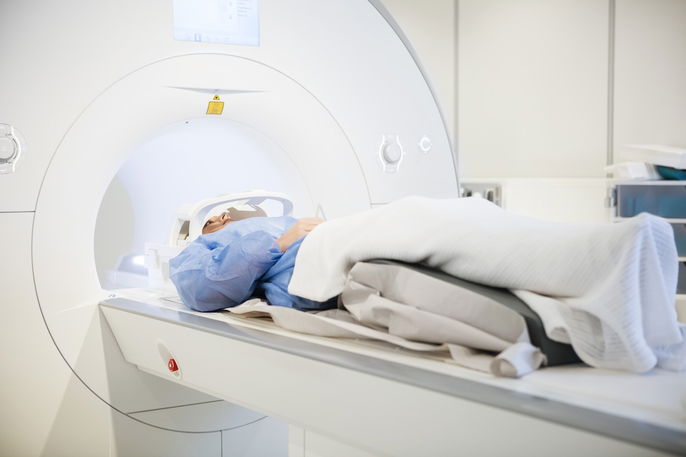
A thyroid uptake scan is an imaging test that shows how well your thyroid gland is functioning. It helps identify thyroid nodules, tissue changes, thyroid cancer, and conditions that cause overactive, underactive, or inflamed thyroid tissue.
The test uses a small amount of radioactive material, such as iodine-131, iodine-123, or technetium-99m pertechnetate. A special camera called a gamma camera then captures images based on how your thyroid absorbs the tracer.
This test may be performed in hospitals or specialized imaging centers when ordered by a healthcare provider. The images are typically reviewed by a nuclear medicine specialist, and the results are interpreted together with an endocrinologist.
Indications for the procedure
A thyroid uptake scan is used to evaluate thyroid function and help identify conditions such as:
-
Ectopic thyroid, when the gland is located outside its usual position;
-
Substernal thyroid (retrosternal goiter), when the gland is enlarged and may extend into the chest;
-
Hyperthyroidism, when the gland produces too much thyroid hormone;
-
Hypothyroidism, when the gland produces less thyroid hormone than normal;
-
Thyroiditis, which is inflammation of the thyroid;
-
Thyroid cancer, and to check for tumor cells or metastases after the thyroid has been removed.
This test may also be used to help plan radioiodine therapy for hyperthyroidism or thyroid cancer.
A thyroid uptake scan is one of several tests used to assess thyroid function. Depending on your situation, your healthcare provider may also order blood tests to measure thyroid hormone levels, a thyroid ultrasound, or a thyroid needle biopsy.
How the procedure is done
A thyroid uptake scan may be performed in a single day or divided over two days, and you’ll need to fast for at least 2 hours beforehand.
According to the procedure standards of the European Association of Nuclear Medicine (EANM) and the Society of Nuclear Medicine and Molecular Imaging (SNMMI), technetium is usually used to create thyroid images, while iodine is used to measure how much tracer the thyroid absorbs (uptake).
If the test spans two days, you’ll take the iodine tracer orally on day 1, with the first uptake measurement about 2 hours later, and return on day 2 for the 24-hour measurement.
Test preparation
Some steps can help you prepare for a thyroid uptake scan, such as:
-
Avoid foods high in iodine for 2 weeks before the test, such as saltwater fish, seafood, seaweed, canned foods, processed meats, smoked meats, packaged seasonings, and soy products like soy sauce, tofu, and soy milk;
-
Tell your provider if you take heart medications such as amiodarone, since your provider may recommend stopping them for a period of time;
-
Do not use medicines or products that contain iodine, such as some cough syrups or multivitamins, or topical iodine products such as povidone-iodine (PVP-I) or iodine tincture on the skin;
-
Tell your provider if you take thyroid medicines such as levothyroxine (for example, Synthroid or Levoxyl), methimazole (Tapazole), or propylthiouracil, since your provider may recommend temporarily stopping them;
-
Tell your provider if you have had imaging tests that used iodinated contrast in the last 3 months, such as contrast X-rays or CT scans, excretory urography, cholecystography, bronchography, colposcopy, or hysterosalpingography;
-
Tell your provider if you have any allergies, including to iodine or other radiology contrast agents, latex, medications such as penicillins, or foods such as shellfish/seafood;
-
Tell your provider if you take oral diabetes medicines such as metformin (for example, Glucophage), since your provider may recommend stopping them;
-
Tell your provider if you have health conditions such as kidney failure;
-
Tell your provider if you are pregnant, think you may be pregnant, are trying to get pregnant, or if you are breastfeeding;
-
Avoid dyeing your hair or wearing dark lipstick or dark nail polish for 1 month before the test;
-
Avoid ocean swimming, beach trips, or using tanning products for at least 15 days before the test;
-
Avoid taking medicines that were not recommended by your provider, including home remedies and herbal teas;
-
Fast for about 4 to 6 hours before the test, as directed by your provider;
-
Do not wear earrings, watches, or other jewelry on the day of the test.
A whole-body scan (WBS) is very similar, but it uses equipment that creates images of the entire body. It is especially used to look for metastases from tumors or thyroid cells in other parts of the body.
Interpreting results
An endocrinologist interprets the results by reviewing how the thyroid absorbed the radioactive tracer on the images. Uptake may be increased throughout the entire gland, as may happen in hyperthyroidism (Graves’ disease), or it may be normal or reduced.
If thyroid nodules are present, the scan can help determine whether a nodule is hyperfunctioning and produces thyroid hormones (“hot nodules”) or does not (“cold nodules”).
Aftercare instructions
After a thyroid uptake scan, drink plenty of water or other non-alcoholic fluids and urinate often to help your body clear the remaining tracer.
If you are breastfeeding, your provider may recommend stopping breastfeeding for 48 hours after the test discard any milk you pump during that time.
Possible side effects
Side effects are uncommon and usually mild. They may include nausea, vomiting, fever, abdominal pain, headache, facial flushing, itching, or fainting, and there may also be pain or inflammation where the injection was given.
When iodine contrast is used, allergic or anaphylactic reactions can happen in rare cases. For that reason, the test should be performed in a clinic or hospital equipped to provide immediate medical care if a complication occurs.
Contraindications for the procedure
A thyroid uptake scan should not be performed during pregnancy or when pregnancy is suspected. This is because thyroid scan and uptake testing is not performed in pregnancy due to the risk of fetal radiation exposure, according to the Radiological Society of North America and the American College of Radiology.