


- Telogen effluvium is usually temporary and causes diffuse hair shedding across the scalp.
- Hair loss often starts 2 to 3 months after a trigger, such as illness, surgery, stress, weight loss, or hormonal changes.
- Hair usually grows back once the underlying cause is treated and the hair cycle returns to normal.
Telogen effluvium is a type of diffuse hair loss that is usually temporary. It happens when many hairs enter the telogen phase at the same time, which is when the hair becomes inactive before naturally falling out.
Under normal conditions, hair follows a balanced cycle of growth and shedding. In telogen effluvium, this balance is disrupted by a trigger, such as an infection, surgery, intense stress, or significant weight loss.
In most cases, hair starts growing back normally once the cause is resolved and the body recovers. However, a dermatologist may recommend treatments that help stimulate growth, such as topical hair products and, in some cases, supplements.
Main symptoms
Symptoms of telogen effluvium may include:
-
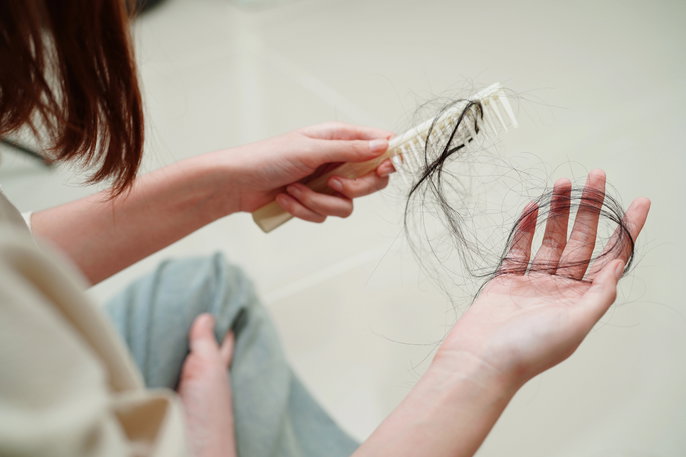
Increased hair shedding when combing or washing
-
More hair on the pillow or in the shower drain
-
Reduced overall hair volume
-
Visible thinning
-
Diffuse hair loss across the scalp, without specific bald patches
Hair loss usually begins about 2 to 3 months after the trigger and can last several months, typically around 6 to 9 months.
During this period, some hairs shed while new ones are already growing in, which is why short, new hairs are often visible on the scalp.
Chronic telogen effluvium
Chronic telogen effluvium is a type of hair shedding that lasts longer than usual, typically more than six months. It can also occur in repeated episodes, often without an obvious trigger.
Even so, the scalp continues to produce new hair, meaning the follicles are not permanently damaged.
This condition is more common in women and can be very distressing because of its long duration and the way shedding levels can vary over time. However, it rarely progresses to permanent baldness.
Confirming a diagnosis
Telogen effluvium is diagnosed by a dermatologist, mainly through a clinical history. The doctor will evaluate the pattern and onset of hair loss, as well as any possible recent triggers.
During the appointment, a hair pull test may be performed to check whether hairs come out easily. The dermatologist may also perform trichoscopy, an exam that uses a magnifying device to analyze the scalp and hair follicles.
In some cases, blood tests may be ordered to check for nutritional deficiencies, such as low zinc or iron levels, or hormonal changes that may be associated with hair loss.
Possible causes
The main causes of telogen effluvium are:
-
Infections, such as the flu, COVID-19, or other illnesses that cause fever
-
Hormonal changes, which are common during menopause, pregnancy, and the postpartum period
-
Thyroid disorders
-
Surgeries and medical procedures
-
Intense physical or emotional stress
-
Rapid weight loss or restrictive diets
-
Nutritional deficiencies, such as low iron, vitamin D, or zinc
-
Medications, in some cases, such as anticoagulants or retinoids
According to the American Academy of Dermatology, telogen effluvium can occur when physical or emotional stress pushes more hairs into the shedding phase.
Telogen effluvium can also occur after chemical hair treatments, such as bleaching, straightening, or harsh hair coloring. These procedures can stress the hair follicle and contribute to premature shedding.
Treatment options
In most cases, telogen effluvium is temporary, and hair tends to recover on its own over time without aggressive treatment.
However, a dermatologist may recommend:
1. Treating the cause
The main treatment for telogen effluvium is identifying and treating the factor that triggered the hair loss.
This may include treating an active infection, adjusting or replacing medications that may be contributing to hair loss, or correcting hormonal changes, such as thyroid problems.
When there is a deficiency of iron, vitamin D, or other nutrients, supplements and dietary changes may be necessary.
In cases of intense physical or emotional stress, stress management and recovery of the body are also important.
In most cases, once the cause is resolved, the hair cycle gradually returns to normal and hair volume slowly recovers.
2. Hair care
Gentle care for the scalp and hair is recommended during the shedding period, such as:
-
Avoiding excessive use of heat tools, such as blow dryers and flat irons at high temperatures
-
Avoiding tight hairstyles that pull on the hair
-
Reducing harsh chemical treatments, such as bleaching and straightening
These measures help minimize breakage and preserve hair health while the hair cycle returns to normal.
3. Topical treatments
In some cases, the dermatologist may recommend topical treatments, such as minoxidil, to stimulate the hair growth phase and help restore hair density.
This medication works by prolonging the anagen phase, which is the growth phase of the hair cycle. It may help shorten the recovery period after hair shedding.
It is usually used continuously for several months. Results are not immediate and may take weeks to months to become noticeable.
Topical treatment is generally considered supportive, especially in longer-lasting cases or when hair loss has a major cosmetic or emotional impact.
Is there a cure?
In most cases, telogen effluvium is temporary and reversible. When the underlying cause is identified and corrected, the normal hair cycle tends to be restored, and the hair gradually grows back.
In general, the hair follicles are not destroyed, which means permanent baldness does not occur.
