


- Mild sunburn may be soothed with cool compresses, calamine, aloe vera, or other gentle topical products.
- Blisters should not be popped, and peeling skin should not be pulled off.
- Extensive blistering, fever, chills, headache, or confusion requires prompt medical care.
Sunburn treatment may include calamine, aloe vera, thermal spring water, and other soothing products when the skin has not blistered. These options may help relieve pain, redness, itching, and irritation.
Before applying anything to the skin, take a cool shower or place a cool compress on the affected area. This helps cool the skin and relieve discomfort.
Drink plenty of water, avoid further sun exposure, and wear loose-fitting clothing while the skin heals. Do not pop any blisters or pull off peeling skin, and consult a dermatologist before applying products to blistered or broken skin.
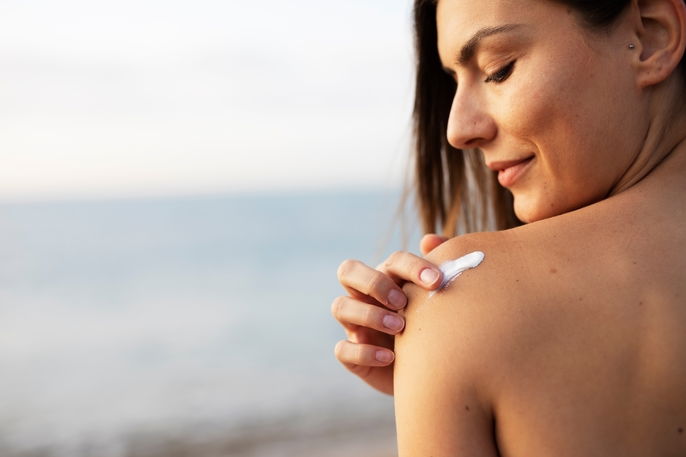
What to apply
Products that may be applied to the skin for a mild sunburn include:
1. Calamine lotion
Calamine lotion contains zinc oxide, which helps relieve itching caused by sunburn. It also has skin-protective and soothing properties.
Some calamine products may also contain ingredients such as camphor or other skin protectants that can help relieve burning, itching, and irritation.
Ask a healthcare provider before using calamine on children younger than 2 years of age. Do not apply it to broken skin, extensive blistering, or areas near the eyes, mouth, or inside the nose.
2. Dexpanthenol
Dexpanthenol is found in some moisturizing creams, ointments, and lotions. It helps moisturize and protect the skin and may support the skin’s natural repair process.
It may be applied to mild sunburn that has not developed blisters, according to the product label or a healthcare provider’s instructions.
3. Zinc oxide ointment
Zinc oxide ointment forms a protective barrier over the skin. It may help soothe, moisturize, and protect mildly sunburned skin while it heals.
Apply a thin layer to the affected area 2 to 3 times a day, according to the product label or as directed by a healthcare provider.
Do not apply zinc oxide to extensive burns, large open wounds, or severely damaged skin unless instructed by a healthcare provider.
4. Aloe vera
Aloe vera lotions and gels may help moisturize sunburned skin. According to the American Academy of Dermatology, applying a moisturizer that contains aloe vera while the skin is still damp may help soothe the skin.
After showering, gently pat the skin dry before applying the product to the sunburned areas according to the label directions.
Choose a product intended for topical use and stop using it if it causes additional redness or irritation.
5. Thermal spring water
Thermal spring water sprays may help cool and soothe redness, irritation, and discomfort caused by a mild sunburn.
Hold the container about 12 inches, or 30 cm, from the skin and spray the affected area. Allow the water to absorb or dry naturally before covering the skin with clothing.
Keep your eyes closed when spraying it on your face.
6. Petrolatum skin protectant
Petrolatum ointment may be used to protect dry, peeling, or irritated skin after a mild sunburn. It helps reduce moisture loss and supports the skin’s natural protective barrier.
Apply a thin layer according to the product label. Do not use it on blistered, infected, or severely burned skin unless recommended by a healthcare provider.
7. Hydrogel
Hydrogel products provide a moist, cooling layer that may help soothe superficial first-degree burns and protect small areas of damaged skin.
A hydrogel may be used on a limited area of mild sunburn according to the manufacturer’s instructions. It should not be used to manage a burn that covers a large portion of the body without medical guidance.
For a small second-degree burn with broken skin, clean the area with sterile saline before applying an appropriate hydrogel dressing and covering it with sterile gauze. Medical evaluation is recommended for blistering or open burns.
8. Roman chamomile essential oil
Roman chamomile essential oil, or Chamaemelum nobile, is traditionally used in skin-care products for its soothing properties.
To use it on a small area of unbroken skin, dilute 1 to 3 drops in 1 tablespoon of a carrier oil, such as sweet almond, coconut, or jojoba oil. Do not apply undiluted essential oil directly to the skin.
Stop using it if irritation occurs. Roman chamomile essential oil should not be used in children or during pregnancy or breastfeeding unless recommended by a qualified healthcare professional.
Additional care tips
In addition to applying creams, lotions, or other topical products, protect the skin from further irritation while it heals.
According to the CDC, sun protection should include seeking shade, wearing protective clothing, a wide-brimmed hat and sunglasses, and applying broad-spectrum sunscreen.
Continue these precautions even after the skin has healed to help prevent future sunburns. Ultraviolet radiation can damage the skin and increase the risk of skin cancer.
When to see a doctor
Go to an emergency department if the burn causes extensive blistering or appears to have damaged several layers of skin.
Seek immediate medical care if you develop fever, chills, headache, or confusion. These symptoms may indicate heatstroke, which is more serious than sunburn and requires prompt medical treatment.
Also recommended: Sun Poisoning: Symptoms, Treatment & Prevention tuasaude.com/en/sun-poisoning