


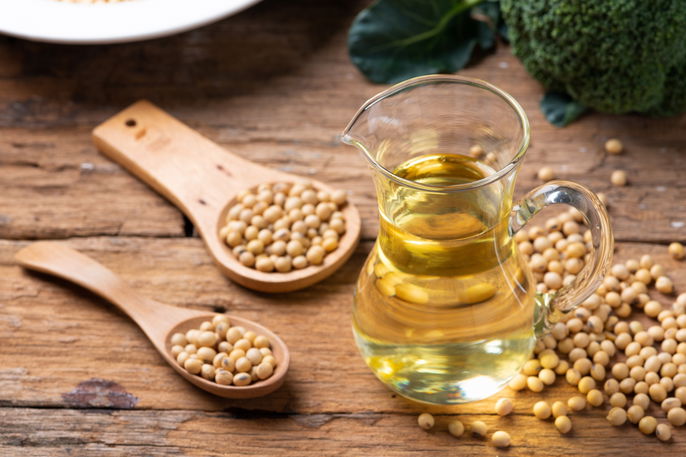
Soy lecithin is an emulsifier derived from soybean oil that supports women’s health. It is frequently used to manage PMS symptoms and alleviate discomfort associated with menopause.
This product is primarily rich in phosphatidylcholine, acting as a major source of choline. Choline is a vital nutrient necessary for the proper functioning of the brain, liver, and metabolism.
Soy lecithin is available in powder, liquid, and capsule forms for versatile use. It can be taken as a dietary supplement or incorporated into foods like breads, cakes, and sauces.
Health benefits
The main health benefits of soy lecithin include:
1. Relieving menopause symptoms
Because it is rich in choline, soy lecithin is a supplement that can assist with the hormonal changes common during menopause.
Supplementing with 1200 mg of soy lecithin may improve energy and physical conditioning, reduce fatigue, and help regulate diastolic blood pressure in middle-aged women.
Also recommended: 6 Best Menopause Supplements (Food & Supplementation Tips) tuasaude.com/en/best-menopause-supplements2. Decreasing cholesterol levels
Soy lecithin is an emulsifier that helps reduce fat absorption and facilitates its elimination. This contributes to lowering "bad" cholesterol (LDL) and maintaining "good" cholesterol (HDL) levels.
However, moderation is recommended, and lecithin should be consumed with fiber, as excessive choline metabolism can increase TMAO, a vascular risk marker, in people with unbalanced intestinal flora.
3. Improving PMS symptoms
Phosphatidic acid and phosphatidylserine, key components of soy lecithin, have been shown to modulate cortisol, the body's stress hormone.
This helps reduce symptoms of stress, depression, and fatigue that occur during PMS, promoting a greater sense of well-being.
4. Preventing fatty liver
The choline present in lecithin is essential for the liver to process and export accumulated fats. Adequate lecithin consumption helps prevent hepatic steatosis (fatty liver) and supports the organ's detoxification function.
5. Preventing mastitis during breastfeeding
Lecithin decreases the viscosity of breast milk, helping to prevent the formation of fat plugs. This can reduce duct obstruction and recurrent mastitis in breastfeeding women.
6. Improving cognition and memory
Phosphatidylserine and choline are precursors to brain neurotransmitters.
Therefore, it is believed that choline supplementation may improve cognition, memory, and reasoning in older adults, helping to delay mild age-related cognitive decline.
Nutritional information
The following table provides information equivalent to one 500 mg capsule of soy lecithin:
The table above is only an example, as the amount of soy lecithin per capsule varies by supplement brand.
In addition to capsules, daily consumption of whole soybeans also offers nutritional benefits.
How to take soy lecithin
The methods for taking and using soy lecithin vary based on the type.
1. Soy lecithin powder
Soy lecithin powder can be used as a supplement added to yogurts, cereals, and juices. Generally, taking 3 teaspoons of this supplement per day is recommended, though one should always consult a doctor or registered dietitian regarding the ideal dosage.
This product is also used as a natural emulsifier, stabilizer, thickener, and preservative, making doughs more elastic and uniform.
Consequently, the powder can be used to incorporate air into preparations such as cakes, breads, pancakes, sauces, and cookies. Use 0.3% to 1% relative to the flour weight; for example, for every 1 kg (2.2 lbs) of wheat flour, add 3 to 10 g of soy lecithin powder.
2. Liquid soy lecithin
Similar to the powder form, liquid soy lecithin can serve as an emulsifier, stabilizer, and humectant.
This type is generally used commercially in the manufacturing of foods such as ice creams, breads, dairy drinks, porridges, granolas, and powdered chocolate drinks.
3. Soy lecithin capsules
Soy lecithin capsules are used exclusively as a dietary supplement. In general, the recommendation is to ingest two 500 mg capsules, 2 to 3 times a day, with water during meals.
The dosage can vary between 1 g to 2.4 g per day, depending on the specific health goal. In cases of mammary duct obstruction, a doctor may suggest temporarily higher doses, followed by a reduction to a maintenance dose.
It is important to always consult a physician or dietitian for an evaluation and a personalized dosage prescription.
Possible side effects
Soy lecithin is generally well tolerated. However, in sensitive individuals, it may cause side effects such as stomach pain and diarrhea if the ingested dose is too high.
Additionally, some people may be allergic to soy and present symptoms such as difficulty breathing, swelling of the throat and lips, or red skin rashes. In these cases, discontinue use immediately and seek medical attention.
Who should avoid it
Soy lecithin should not be taken by people with a soy allergy.
Furthermore, this supplement should only be used by pregnant or breastfeeding women and children under medical guidance.
Lecithin is the fatty component of the soybean and does not affect the thyroid gland; therefore, it can be consumed by individuals with hypothyroidism.