


A skin biopsy is a quick, straightforward procedure done with local anesthesia. A dermatologist may recommend it to evaluate skin changes that could suggest cancer or that affect quality of life.
When a suspicious change is detected, the clinician takes a small tissue sample from the area and sends it to the lab for analysis to determine the severity of the abnormality.
The biopsy technique depends on what the lesion looks like and where it is located. Common approaches include excisional, incisional, shave, aspiration, and punch biopsy.
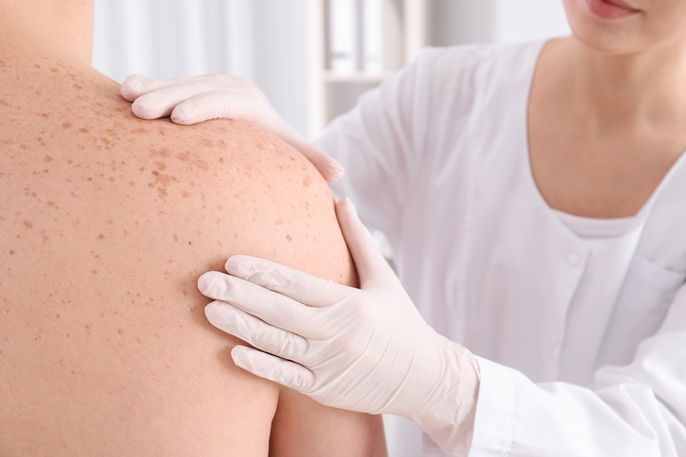
What is a biopsy?
A skin biopsy helps diagnose the cause of concerning skin changes. These include asymmetrical spots or moles, irregular borders, non-healing wounds, scaling, or blisters.
Dermatologists use this procedure to diagnose a range of skin conditions and choose the most appropriate treatment.
When it's recommended
A skin biopsy may be recommended by a dermatologist in the following situations:
-
Dark spots on the skin that grow over time;
-
Inflammatory changes on the skin;
-
Unusual skin growths, including moles;
-
Cysts with features that raise concern for cancer;
-
Fungal or bacterial skin infections;
-
Inflammatory skin conditions, such as dermatitis or eczema;
-
Skin cancer.
A skin biopsy is often recommended after skin changes are identified during a dermoscopy exam.
Also recommended: Signs of Skin Cancer (Melanoma & Nonmelanoma) tuasaude.com/en/signs-of-skin-cancerPreparation instructions
No special preparation is usually needed. Still, it is important to tell your clinician if you have a bleeding or clotting disorder or if you take medications regularly, especially blood thinners, because they can increase bleeding risk.
Also mention any allergies to anesthetics, other medications, or materials used for bandages and wound care.
What to expect
A skin biopsy is typically done in an office setting and does not require hospitalization. It is performed by a dermatologist using local anesthesia.
You should not feel pain during the procedure, but you may feel a brief burning or stinging sensation for a few seconds when the anesthetic is injected. After the sample is collected, it is sent to a laboratory for analysis.
Different types
Several biopsy types can be used depending on the lesion. The main types include:
-
Punch biopsy: a circular cutting tool is pressed into the skin to remove a cylindrical sample that may reach the layer of fat under the skin;
-
Shave biopsy: a scalpel is used to remove the top layer of skin, which is then sent to the lab. Even though it is superficial, the sample can be larger than the one taken with a punch biopsy;
-
Excisional biopsy: a larger and deeper piece of tissue is removed. This approach is commonly used to remove tumors or moles;
-
Incisional biopsy: only part of a lesion is removed, usually when the affected area is large.
Aspiration biopsy may also be used, in which a needle is inserted to withdraw a tissue sample for testing. However, it is generally not used to evaluate skin lesions and is typically considered only when earlier biopsy results suggest cancer.
In these situations, a dermatologist may request an aspiration biopsy to estimate how extensive the cancer is.
Aftercare instructions
After a skin biopsy, it is usually recommended to keep the bandage on at least until the next day or for as long as your dermatologist advises.
Keep the area clean and dry until it has fully healed to reduce infection risk. During this time, avoid swimming pools and soaking in a bathtub. According to the American Academy of Dermatology, careful wound care after a skin biopsy helps prevent infection and other complications and supports proper healing.
In some cases, an allergic reaction to the anesthetic can happen and is treated immediately by the clinician.
Possible risks
A skin biopsy can cause bleeding, pain, or bruising at the site, but these usually improve within a few days.
Scarring or infection at the biopsy site may also occur.