


Ringworm is a contagious fungal infection that affects the skin, scalp, or nails. Despite its name, it’s not caused by a worm but by dermatophyte fungi such as Trichophyton, Epidermophyton, and Microsporum, which feed on keratin found in the outer layers of the skin, hair, and nails.
The infection is common in both children and adults and usually appears as circular, red, scaly patches with clear centers. It spreads through direct contact with infected people, animals, or contaminated surfaces, especially in warm and humid environments.
Treatment for ringworm includes antifungal creams or oral medications, depending on the severity and location of the infection. Good hygiene and avoiding the sharing of personal items can help prevent transmission. In most cases, ringworm is mild and clears up with proper treatment, but persistent or widespread infections may require medical attention.
Main symptoms
Ringworm symptoms can appear on any part of the body and usually develop a few days after exposure to the fungus. The most common symptoms include:
-
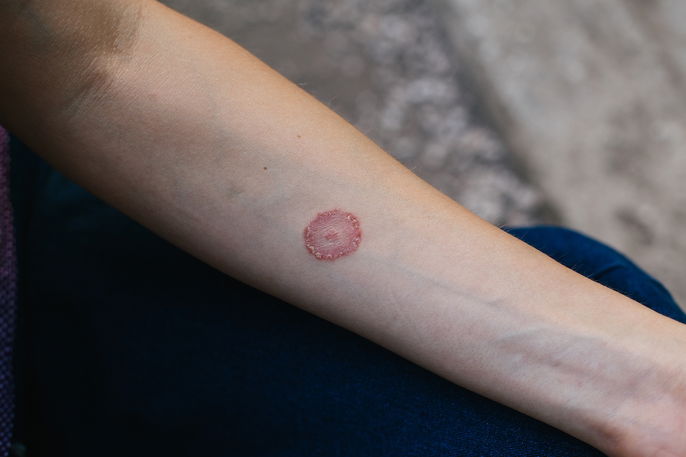
Circular or ring-shaped red patches with raised edges and clear centers
-
Itching, burning, or discomfort in the affected area
-
Dry, flaky, or scaly skin
-
Cracking or peeling skin, especially between the fingers or toes
-
Hair loss or bald patches when the scalp is infected
Symptoms may worsen if left untreated or if the infection spreads to other parts of the body. In most cases, ringworm improves with appropriate antifungal treatment.
What a ringworm rash looks like
A ringworm rash often begins as a small red spot that gradually expands outward, forming a ring-like shape. The edges are usually raised, scaly, and red, while the center appears lighter or clearer. On the scalp, ringworm can cause circular bald patches, while on the nails it may lead to discoloration and thickening. Severe infections may cause multiple overlapping rings or inflamed pustules.
Common causes
Ringworm is caused by dermatophyte fungi that thrive in warm, moist environments. The infection can spread through several routes:
-
Person-to-person contact: Direct skin contact with someone who has an infection
-
Animal-to-human transmission: Touching infected pets, such as cats, dogs, or farm animals
-
Object-to-human contact: Sharing contaminated items like towels, clothing, or gym equipment
-
Soil exposure: In rare cases, ringworm can spread through contaminated soil
Certain factors increase the risk of infection, such as excessive sweating, tight clothing, poor hygiene, a weakened immune system, and living in humid climates.
Confirming a diagnosis
Ringworm is often diagnosed based on its characteristic appearance. A healthcare provider may confirm the diagnosis using a potassium hydroxide (KOH) test, which detects fungal elements under a microscope, or a fungal culture to identify the specific species involved.
For resistant or recurring infections, antifungal susceptibility testing may be recommended to help choose the best treatment.
Treatment options
Treatment for ringworm depends on the location and severity of the infection. In most cases, topical antifungal medications are effective, but oral antifungal drugs may be needed for widespread or persistent cases.
1. Topical antifungal treatment
Mild infections can be treated with antifungal creams, lotions, or sprays that contain clotrimazole, miconazole, terbinafine, or ketoconazole. These medications are usually applied for 2 to 4 weeks, even after symptoms disappear, to prevent the infection from coming back.
2. Oral antifungal medication
Oral antifungals such as terbinafine, itraconazole, or griseofulvin are prescribed for severe, recurrent, or scalp infections. Treatment may last several weeks and should be monitored by a healthcare professional to check for potential side effects.
3. Supportive care
Keeping the affected area clean and dry, avoiding scratching, and washing clothes and bedding in hot water can help reduce fungal growth and prevent reinfection.
Prevention measures
Preventing ringworm involves good hygiene habits and regular cleaning of shared environments. Helpful measures include:
-
Washing hands regularly, especially after touching animals
-
Avoiding the sharing of towels, clothes, or grooming tools
-
Keeping skin dry, particularly in skin folds and between the toes
-
Wearing breathable fabrics to reduce moisture buildup
-
Checking pets for signs of infection and seeking veterinary care if needed
Cleaning gym equipment and other communal surfaces frequently can also help to reduce transmission and recurrence.
Is ringworm dangerous?
Ringworm is generally not dangerous and usually responds well to treatment. However, if left untreated, it can spread to other areas of the body or to other people, cause persistent itching and inflammation, and occasionally lead to bacterial infections.