


- A rash on the hands can show up as redness, intense itching, dryness, cracks, and sometimes small blisters, and symptoms may take up to 3 days to appear after exposure.
- Common triggers include soaps, detergents, cleaning chemicals, and materials like latex, with higher risk in people who wash their hands often or have sensitive skin or a family history of eczema.
- Seek medical care if your hand rash is severe, recurs frequently, spreads to other areas, or shows infection signs like pus, warmth, or increasing pain. Also contact a doctor for deep cracks, significant swelling, or nail changes.
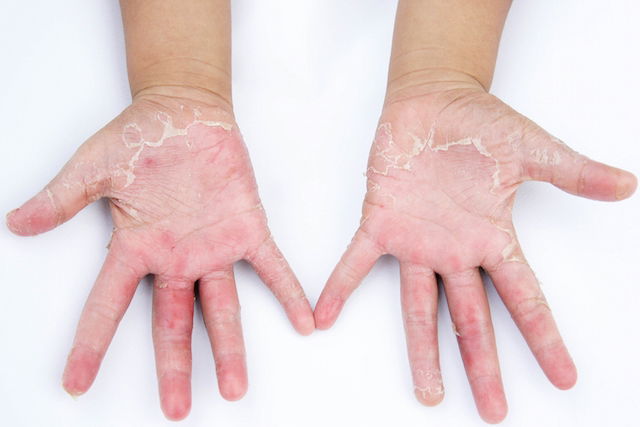
A rash on the hands, also known as hand eczema, is a common skin condition that occurs when the skin becomes inflamed after contact with irritants or allergens. Symptoms may include redness, itching, dryness, cracking, and occasionally small blisters.
Common triggers include frequent exposure to soaps, detergents, cleaning products, chemicals, or materials such as latex. The condition is more likely to develop in people with sensitive skin or a family history of eczema or dermatitis.
A dermatologist typically diagnoses hand eczema by examining the skin and, when needed, performing a patch test to identify specific allergens. Treatment options can include topical corticosteroids, calcineurin inhibitors (such as tacrolimus or pimecrolimus), phototherapy, and preventive skin care measures to reduce flare-ups.
Common symptoms
The main symptoms of a rash on the hands are:
-
Red or pink patches;
-
Severe itching;
-
Dry, flaky skin;
-
Cracks or fissures on the hands;
-
Blisters that may burst and form crusts;
-
Swelling and thickening of the skin;
-
Pain and a burning sensation.
Symptoms can vary widely depending on the cause of the irritation and how long it has been present.
In many cases, the reaction can take up to 3 days to appear after contact with an irritating product or material. It may affect both hands or only specific areas, such as the palms or fingertips.
When a rash on the hands isn’t treated properly, it can become chronic and lead to thickened skin, deep cracks, and even nail deformities.
Confirming a diagnosis
A dermatologist usually diagnoses a hand rash by examining your skin and asking about your medical history.
To confirm the diagnosis or rule out other conditions, the doctor may order a patch test, because according to the American Academy of Dermatology, patch testing helps identify what is causing an allergic skin reaction when contact allergy is suspected.
In some cases, the doctor may also take a small skin scraping from the affected area to look for fungal infections or other skin diseases, such as psoriasis.
Possible causes
The main causes of a rash on the hands include:
-
Contact with chemicals: According to the American Academy of Dermatology, common irritants that can trigger irritant contact dermatitis include soaps, detergents, and bleach, which can damage the skin barrier and lead to dryness and irritation;
-
Genetic predisposition: People with a family history of hand dermatitis or generally sensitive skin are more likely to develop irritation;
-
Environmental and physical factors: Exposure to extreme temperatures (heat or cold) and constant friction on the skin;
-
Allergy to materials: Wearing costume jewelry (such as rings and bracelets) or using gloves made from certain materials, such as latex or rubber.
People who frequently wash their hands or handle harsh substances, such as cleaning staff, hairdressers, painters, butchers, and healthcare workers, are at higher risk for developing hand rashes.
However, anyone can develop a rash on the hands at some point in life.
Stress-related rash
Stress-aggravated hand eczema often worsens during emotional stress or anxiety. Patients may notice flares during periods of excessive worry or sleep disruption.
Treatment options
Treatment for a rash on the hands is guided by a dermatologist and depends on the cause and severity of symptoms.
1. Creams and ointments
To manage flare-ups, initial treatment often involves high-potency corticosteroids in cream or ointment form.
These medicines can quickly reduce inflammation, redness, and itching, but they should be used under medical supervision and for short periods to help prevent skin-related side effects.
When long-term corticosteroid use isn’t recommended, the doctor may prescribe calcineurin inhibitors such as tacrolimus ointment or pimecrolimus. These creams help reduce inflammation without thinning the skin and may be used for longer-term maintenance.
2. Phototherapy
If the rash becomes chronic or doesn’t improve with creams, a doctor may recommend phototherapy.
This treatment uses controlled ultraviolet light (narrowband UVB or PUVA) to reduce immune system activity in the skin of the hands.
3. Oral medications
For severe, hard-to-treat cases, the doctor may recommend oral medications.
Traditional immunosuppressants or biologic therapies may also be prescribed in very specific situations.
4. Home care
Home care for rash on hands includes:
-
Wearing vinyl or nitrile gloves (latex-free) with a cotton lining when doing household chores, washing dishes, or handling cleaning products;
-
Avoiding excessive handwashing and avoiding very hot water and scented soaps;
-
Applying fragrance-free moisturizers right after washing your hands;
-
Avoiding scratching to help prevent open sores or skin infections.
It’s also important to identify and avoid materials and products that make irritation worse, such as wool or nylon.
Finally, it can help to replace regular soap with gentle cleansers, detergent-free cleansing products, or cleansing oils.