


Quince fruit (Cydonia oblonga) belongs to the Rosaceae family and has long been used to help prevent and treat several health conditions, including diabetes, gastritis, respiratory infections, allergies, and certain types of cancer. It is rich in antioxidant compounds that protect cells from damage caused by free radicals.
Quince also has antibacterial, antifungal, anti-inflammatory, cardioprotective, and diuretic properties that help fight infections, reduce inflammation, and protect the cardiovascular system.
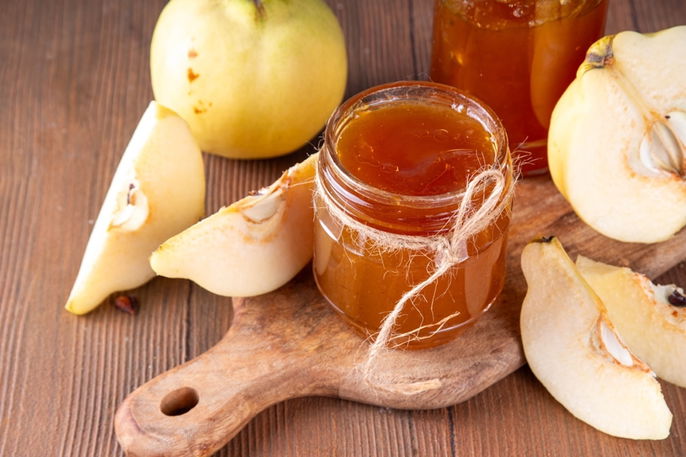
It can be eaten fresh, cooked, or used to make quince jelly, which is commonly used in cookies, pies, and pastries.
Health benefits
Quince fruit offers several health benefits, including:
1. Protecting the intestines
Quince fruit and its juice are rich in chlorogenic acid and flavonoids, which have antioxidant and anti-inflammatory properties. These compounds help protect the intestinal lining and reduce inflammation, making quince useful as a supplement for inflammatory bowel diseases such as ulcerative colitis, according to animal studies.
It also contains pectin, a type of soluble fiber that helps protect the intestinal walls and supports a healthy balance of gut bacteria.
2. Relieving acid reflux symptoms
Quince juice or syrup can help reduce heartburn and acidity caused by gastroesophageal reflux. Clinical studies show that quince syrup may help relieve reflux symptoms, especially in children, due to its soothing and protective effect on the esophageal lining.
3. Helping prevent gastritis
Quince contains antibacterial compounds that may help inhibit the growth of Helicobacter pylori, one of the main causes of gastritis and stomach ulcers.
Its protective effect is also related to its content of tannins and pectin, which help reduce stomach inflammation and improve digestion.
4. Fighting infections
The peel, pulp, and seeds of quince fruit contain phenolic compounds with antimicrobial and antifungal properties that can inhibit the growth of bacteria such as Escherichia coli, Staphylococcus aureus, and Klebsiella pneumoniae, according to laboratory studies. These properties help strengthen the immune system and prevent mild infections.
5. Supporting heart health
Quince contains polyphenols and caffeoylquinic acid, substances that protect the arteries and reduce damage caused by free radicals. Regular consumption may help prevent cardiovascular diseases such as heart attack and stroke, especially when combined with a balanced diet.
6. Regulating blood pressure
Animal studies suggest that extracts made from quince fruit and leaves may help lower blood pressure and improve circulation due to their antioxidant and relaxing effects on blood vessels. However, more research in humans is still needed to confirm these benefits.
7. Promoting weight loss
Quince fruit is low in calories (about 57 kcal per 100 g) and rich in fiber and water, which help increase satiety and control appetite. This makes it a good addition to weight-loss diets, as long as it is part of a balanced eating plan. However, quince jelly or marmalade is high in sugar and is not recommended for people trying to lose weight.
8. Lowering cholesterol
Concentrated extracts from quince fruit and leaves contain polyphenols that may help reduce LDL (“bad”) cholesterol and triglycerides, preventing fat buildup in the arteries and reducing the risk of atherosclerosis. These effects have mainly been observed in animal studies.
9. Protecting body cells
The pulp, peel, and seeds of quince have strong antioxidant activity that helps neutralize free radicals and prevent cellular damage. Regular consumption of quince fruit may help prevent premature aging and diseases linked to oxidative stress, such as diabetes, arthritis, and heart disease.
10. Promoting wound healing
Quince seeds contain mucilage, a natural substance with soothing and healing effects. Studies suggest that quince seed extract can stimulate the production of fibroblasts, which are cells responsible for forming new skin tissue, helping wounds heal faster.
Because of these properties, quince seed extract is sometimes used to make creams or ointments with skin-regenerating benefits.
Properties of quince fruit
Quince fruit provides several health-promoting properties, mainly due to its content of antioxidant, anti-inflammatory, and antimicrobial compounds, such as phenolic acids, flavonoids (including quercetin, rutin, and kaempferol), and pectin. These substances protect body cells and help prevent disease.
Nutritional information
The table below shows the nutritional composition of 100 g of raw quince fruit:
To gain the health benefits of quince fruit, it should be consumed as part of a balanced diet and accompanied by regular physical activity.
How to eat
Quince is usually eaten cooked because, when raw, it has a hard texture and a very tart flavor.
Once cooked, it can be eaten on its own or added to foods like yogurt, cereal, or granola. It is also commonly used to make quince jelly, which can be used as a filling for pies, cookies, or pastries. However, because it is high in sugar, it should be eaten in moderation.
To cook quince, cut it into slices and place them in a pot with a little water and sugar. Simmer over low heat until the pulp is soft. Spices such as cinnamon or star anise can be added for more flavor.
Another option is to bake quince fruit by wrapping it in foil or cutting it in half, sprinkling sugar on top, and baking until tender.
Healthy quince recipes
1. Quince jelly
Quince jelly is commonly used as a filling for pastries and cookies. Due to its high sugar content, it is not recommended for people with diabetes or those trying to lose weight.
Ingredients:
-
500 g quince (about 3 fruits)
-
500 g sugar (about 2½ cups)
-
15 g apple pectin
-
Juice of 1 lemon
Preparation:
Clean the quince skin with a cloth to remove its fuzz. Peel if desired, cut into quarters, remove the core, and chop into small pieces to cook faster.
Place 2 cups of sugar in a heavy-bottomed pot and set aside the remaining half cup mixed with pectin. Cook the quince with sugar over medium heat for 15 minutes, keeping it simmering. Then add the sugar-pectin mixture and cook until it boils again. Add lemon juice and cook for 3 more minutes.
Blend with an immersion blender until smooth, pour into an airtight container, and let cool until it sets. Store in the refrigerator.
2. Healthier quince jelly
Ingredients:
-
500 g quince (2–3 fruits)
-
2–3 tablespoons of natural syrup (maple, agave, or light honey)
-
Juice of 1 lemon
-
1 teaspoon cinnamon (optional)
-
Water to partially cover the fruit
Preparation:
Wash the quince and rub the surface to remove fuzz. Cut into quarters, remove the core, and chop the pulp.
Place the pieces in a pot, add enough water to partially cover, and cook over medium-low heat until soft, stirring occasionally. Once tender, blend until smooth. Return to the pot and add lemon juice, the chosen syrup, and cinnamon if desired.
Cook over low heat, stirring constantly, until thick. To test consistency, place a few drops on a cold plate; if they wrinkle when cooled, it is ready.
Pour the jelly into a parchment-lined mold or container with a lid. Let it cool to room temperature and refrigerate until firm.
3. Whole-grain quince cookies
Ingredients:
-
1 egg
-
1 cup whole-wheat flour (150 g)
-
100 g brown sugar or ½ tablespoon baking-safe liquid sweetener
-
1 tablespoon honey
-
1 tablespoon vanilla extract or lemon zest
-
1 teaspoon baking powder
-
Quince jelly (as needed)
Preparation:
Mix all ingredients except the quince jelly until a smooth dough forms. Shape into a log and divide into 6 equal pieces. Form small balls, flatten slightly into cookies, and press a small indentation in the center for the jelly.
Place the cookies on a greased or parchment-lined baking sheet. Bake at 400°F (200°C) for 5 minutes, remove from the oven, fill the centers with quince jelly, and bake for 5 more minutes. Let cool before serving.
4. Pumpkin and quince tart
Ingredients:
-
1 sheet of shortcrust pastry
-
700 g pumpkin
-
150 g grated cheese
-
75 g cooked quince
-
3 eggs
-
150 ml heavy cream
-
Olive oil, salt, and pepper to taste
Preparation:
Preheat the oven to 425°F (220°C). Cut the pumpkin into cubes, drizzle with olive oil, season with salt and pepper, and roast for about 30 minutes.
Line a 9-inch tart pan with pastry, prick the base with a fork, and refrigerate for 20 minutes. Cover the pastry with parchment paper and fill with weights such as chickpeas. Bake at 350°F (180°C) for 30 minutes. Remove the paper and weights and bake for 10 more minutes.
Fill the crust with roasted pumpkin, diced quince, and cheese. In a bowl, beat the eggs with cream, season with salt and pepper, and pour over the filling. Bake for about 40 minutes, until set in the center. Let rest before serving.