


- Pseudomembranous colitis is inflammation of the large intestine caused by C. difficile overgrowth.
- Symptoms can include watery diarrhea, abdominal cramps, fever, nausea, and loss of appetite.
- Treatment may involve stopping the antibiotic, taking medication, surgery, or a fecal transplant.
Pseudomembranous colitis is inflammation of the large intestine caused by the bacterium Clostridioides difficile. It can cause symptoms such as diarrhea, fever, and abdominal pain.
This bacterium normally lives in the intestine, but it can multiply when the gut microbiota becomes unbalanced. This can happen after using broad-spectrum antibiotics, such as amoxicillin or clindamycin.
Treatment for pseudomembranous colitis is managed by a gastroenterologist. It usually involves changing or stopping the antibiotic, taking medication, or, in more severe cases, having surgery or a fecal transplant.
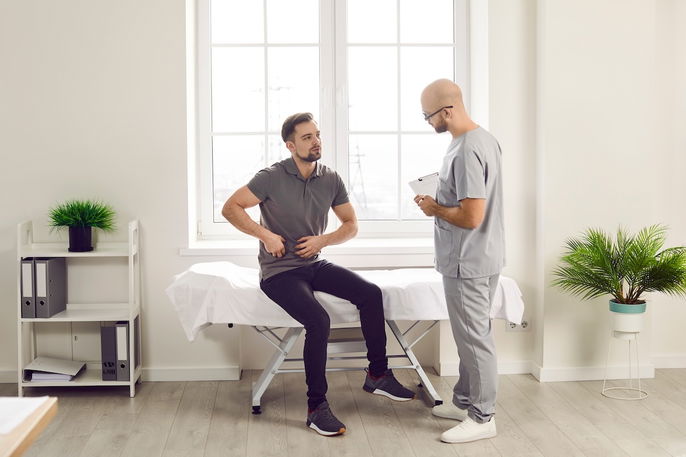
Main symptoms
The main symptoms of pseudomembranous colitis are:
-
Pus or mucus in the stool
-
Severe abdominal cramps
-
Nausea
-
Fever above 100.4ºF (38ºC).
Symptoms of pseudomembranous colitis may appear 1 to 2 days after starting an antibiotic. However, in rarer cases, they may appear up to 10 weeks after finishing antibiotic treatment.
In more severe cases, dehydration, changes in kidney function, colon perforation, peritonitis, or septic shock may also occur.
If symptoms develop after taking antibiotics, it is important to see a gastroenterologist for proper evaluation and treatment.
Confirming a diagnosis
Pseudomembranous colitis is diagnosed by a gastroenterologist or primary care provider through an evaluation of symptoms, health history, antibiotic use, and any recent hospitalization.
The provider will also perform a physical exam and order lab and imaging tests.
Diagnostic tests
The main tests used to detect pseudomembranous colitis are:
-
Stool test to check for C. difficile
-
Complete blood count (CBC), which usually shows an increase in white blood cells
-
Abdominal X-ray or CT scan to check for complications
The provider may also order a colonoscopy or sigmoidoscopy to examine the inside of the intestine. In pseudomembranous colitis, yellow plaques or swelling may be visible.
During these tests, a doctor may also perform an intestinal biopsy if needed.
Possible causes
Pseudomembranous colitis is caused by the overgrowth of Clostridioides difficile (C. diff), a bacterium that normally lives in the intestine, due to an imbalance in the gut microbiota.
This bacterium starts producing toxins that cause inflammation and damage to the cells lining the inside of the intestine, leading to symptoms.
Is it contagious?
The bacterium that causes pseudomembranous colitis can form spores and remain in the environment.
These spores can stick to food or be present in water and may be transmitted when contaminated food or water is consumed.
Risk factors
The main factors that can increase the risk of pseudomembranous colitis are:
-
Use of antibiotics or immunosuppressive drugs
-
Chemotherapy
-
Inflammatory bowel disease
-
Ischemic, collagenous, or cytomegalovirus-induced colitis
-
Vasculitis or chronic kidney disease
Pseudomembranous colitis is more common in people with weakened immune systems. Therefore, it may occur in older adults, children, or people with autoimmune diseases.
Which antibiotics cause pseudomembranous colitis?
Any oral antibiotic can disrupt the gut microbiota and increase the risk of pseudomembranous colitis. According to the CDC, any time antibiotics are used, they can increase the risk of developing a C. difficile infection.
However, the main antibiotics associated with pseudomembranous colitis include amoxicillin, ampicillin, clindamycin, levofloxacin, and ciprofloxacin.
Cephalosporins, such as cefixime, can also cause pseudomembranous colitis.
Treatment options
Treatment for pseudomembranous colitis should be guided by a gastroenterologist and varies according to the severity of symptoms and the person’s overall health.
The main treatments for pseudomembranous colitis are:
1. Stopping antibiotics
Stopping the antibiotic that caused pseudomembranous colitis may often be enough to improve symptoms.
Antibiotics should only be stopped under the guidance of a gastroenterologist.
2. Medications
In cases where colitis does not go away after finishing or stopping the antibiotic, the doctor may recommend another antibiotic.
Antibiotics that may be prescribed include metronidazole or oral vancomycin, as they act against the C. difficile bacterium growing in the intestine.
3. Surgery
In more severe cases, when previous treatments do not help relieve symptoms and the person develops complications, the doctor may recommend surgery.
This surgery is done to remove a small portion of the affected intestine.
4. Fecal transplant
Fecal transplant for pseudomembranous colitis may be recommended in cases of recurrent or severe pseudomembranous colitis.
This type of treatment is done by transferring stool from a healthy person to someone with pseudomembranous colitis.
The main goal of a fecal transplant is to restore the balance of intestinal bacteria.
Is there a cure?
Pseudomembranous colitis can be cured when treatment is started quickly and followed as directed by a gastroenterologist.
Possible complications
The main complications of pseudomembranous colitis are:
-
Intestinal perforation
-
Peritonitis
-
Toxic megacolon
-
Sepsis or septic shock
These complications can occur when pseudomembranous colitis is not treated correctly or is severe.
If complications of pseudomembranous colitis develop, it is important to seek immediate medical care, as they can be life-threatening without prompt treatment.
