


Plantar warts are small growths on the soles of the feet caused by certain types of human papillomavirus (HPV). They can lead to pain, discomfort, and the sensation of stepping on a stone when walking.
These warts are contagious and can spread through direct or indirect contact, especially in places like swimming pools or gyms. Recognizing how plantar warts develop and spread is key for prevention.
Although plantar warts may disappear on their own, many cases require treatment with salicylic acid, cryotherapy, or other medical options. Understanding their symptoms, causes, and treatments can help manage them effectively and reduce the risk of recurrence.
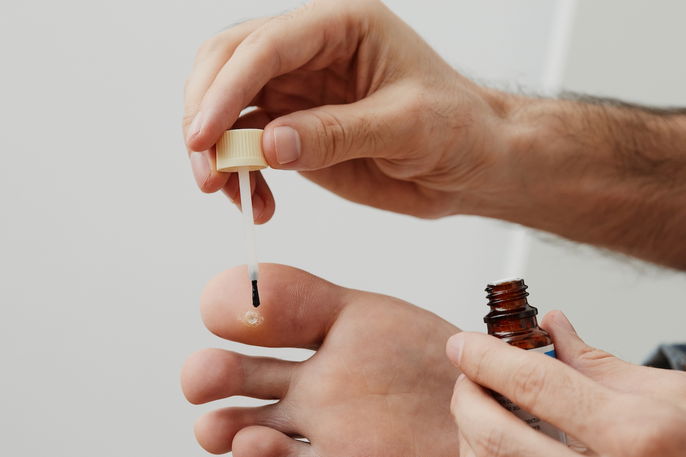
Main symptoms
The main symptoms of plantar warts are:
- A raised lump or wart on the skin at the bottom of the foot
- Thicker skin in the wart area
- The sensation of a rock or mass under the foot
- Pain when stepping on the affected foot
- Yellow or gray skin over the wart
- Black pinpoint spots in the middle of the wart
- Wart growth or new lesions on the other foot
When symptoms like very intense pain or redness occur, it may be related to cancer, although this is rare. If you suspect a plantar wart, you should consult a dermatologist for evaluation and treatment.
Possible causes
Plantar warts are caused by sub-types of HPV, mainly subtypes 1, 4 and 63. These can invade the skin through microcuts on the feet and stimulate the proliferation of keratinocytes (cells that line the skin). This lead to the appearance of a wart.
In addition, people with immune-related diseases, like HPV or people undergoing chemotherapy, are at higher risk for catching HPV and developing plantar warts.
How it spreads
Plantar warts are transmitted through contact with specific HPV subtypes, which can occur in the following situations:
- Walking barefoot on contaminated surfaces, like around public pools or in public showers
- Using socks or shoes that are used by a person with plantar warts
- Sharing towels with people affected with HPV
- Using contaminated sports or gym equipment
HPV can survive for months on surfaces. However the plantar wart can take time to make its first appearance after entering the skin. This depends on how long the virus takes to stimulate keratinocyte proliferation, which is then released through normal skin peeling.
Plantar warts can appear on other areas of the skin, or they can be transmitted to other people indirectly when it is transferred to a common surface.
Can children get plantar warts?
Plantar warts can occur in anybody, no matter the age. As mentioned, plantar warts are easily transmitted to common surfaces, which become contaminated and can be stepped on by other people.
It is important to keep in mind that although it is the same type of virus, the HPV that causes plantar warts is not the same HPV that causes genital warts. These are sexually transmitted and can increase the risk for colon or uterine cancer.
Treatment options
How to get rid of plantar warts
Plantar warts may resolve on their own, but dermatological treatment is often needed when they are painful, persistent, or spreading. Several medical and complementary therapies are available.
1. Salicylic acid
Topical salicylic acid is often the first choice for plantar warts. Applied daily for several weeks or months, it slowly removes the infected skin layers and is sometimes combined with mechanical filing for better results .
2. Cryotherapy
Cryotherapy uses liquid nitrogen to freeze and destroy wart tissue. Multiple sessions may be required, and results are generally comparable to salicylic acid .
3. Laser therapy
CO2 laser and pulsed dye laser have shown high clearance rates, especially in resistant cases. They usually require fewer sessions than cryotherapy and can minimize recurrence .
4. Intralesional bleomycin
This treatment involves direct injection of bleomycin into the wart. Studies show high cure rates in difficult or resistant plantar warts .
5. Immunotherapy
Intralesional immunotherapy with Candida antigen or vitamin D3 stimulates the immune system to fight the HPV infection. These treatments can clear both treated and distant warts .
6. Topical antivirals and chemotherapy creams
Medications like cidofovir or 5-fluorouracil (5-FU) may be prescribed for recalcitrant cases. They interfere with viral replication and abnormal skin growth .
7. Photodynamic therapy
Photodynamic therapy combines a light-sensitizing agent with laser light to destroy wart tissue. It is especially effective for resistant plantar warts .
8. Duct tape occlusion
Applying duct tape over the wart can stimulate local immune activity. It has shown success in children, but results are less consistent in adults .
9. Oral zinc supplementation
Oral zinc sulfate has been studied as an adjunct therapy. It may improve clearance rates and reduce recurrence in recurrent plantar warts .
10. Complementary treatments
Some case reports describe benefit from traditional medicine, topical zinc ointment, and essential oils such as tea tree oil. However, evidence for these approaches is limited and they are considered supportive rather than primary treatments .
Plantar warts typically take up to 2 years to disappear without medical intervention. Treatment choice depends on wart size, number, location, patient age, and immune status.
How to prevent plantar warts
Plantar warts can be prevented with measures such as:
- Not sharing towels, footwear, socks or personal objects
- Using adequate footwear when showering in public spaces
- Wiping down gym equipment before and after use
- Washing socks frequently
- Treating plantar warts that are present
- Avoiding walking barefoot
- Swapping your socks daily
- Keeping your feet clean and dry
The HPV vaccine is also an important prevention measure against plantar warts.